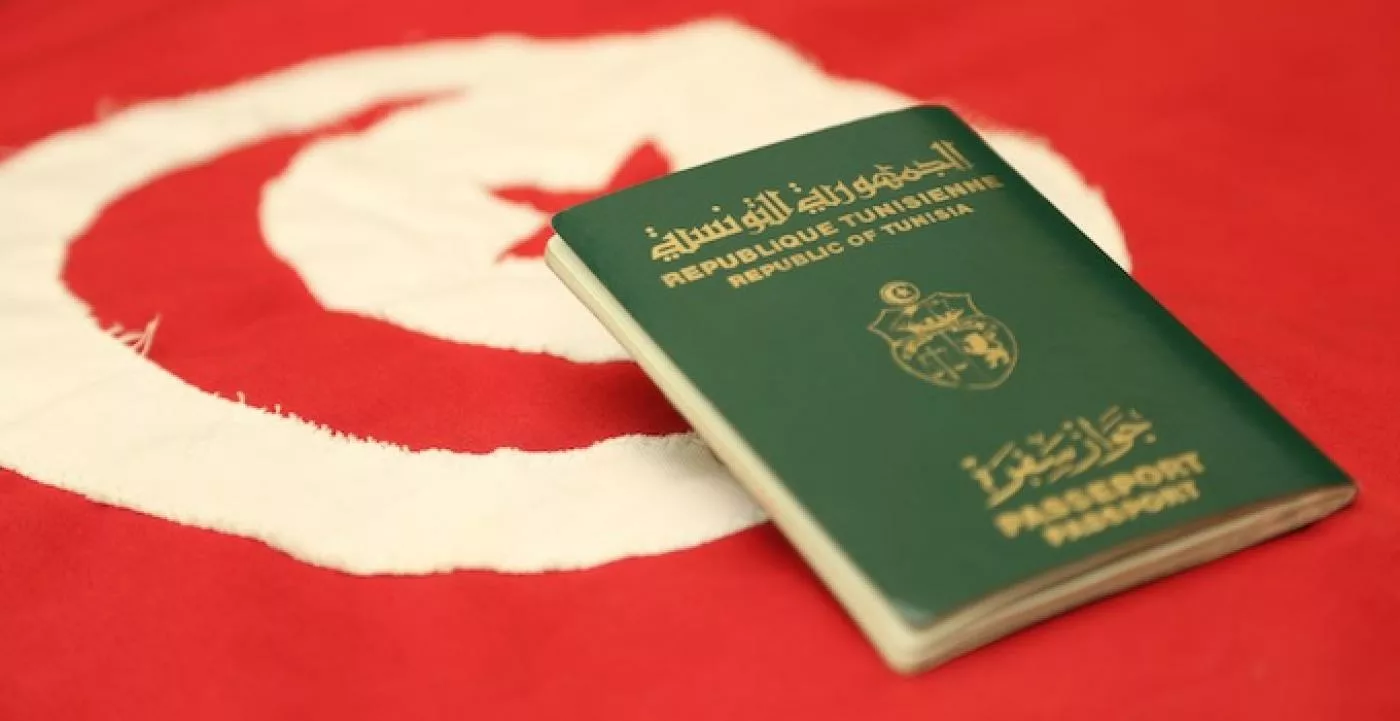
The Criminal Chamber of the Anti-Terrorism Division of the Tunis Court of First Instance has sentenced about ten people in the so-called “fake passports” case to lengthy prison terms.
The facts
Criminal proceedings were initiated following information provided to the district attorney’s office, which opened a judicial investigation through the counterterrorism unit in 2021.
Several defendants are being prosecuted, including:
- Noureddine Bhiri, former Minister of Justice and leader of the Ennahda party’s parliamentary caucus in the last elected Parliament;
- Moaz, son of Rached Ghannouchi;
- the late businessman Youssef Nada;
- Ali Ghaleb Himmat;
- Imen Khlifa;
- as well as several civil servants and even a judge.
The former justice minister is accused of orchestrating an elaborate administrative scheme to improperly issue passports and civil status documents to businessmen of Middle Eastern origin with ties to the Muslim Brotherhood, as well as to the wife of one of them, whom the authorities describe as a terrorist.
The charges
The charges include, among other things:
- facilitating, by any means, a person’s entry into or exit from Tunisian territory for the purpose of committing terrorist crimes;
- the illegal production of documents for the benefit of a terrorist organization;
- encouraging such production;
- forgery and the use of forged documents;
- the fraudulent use of official seals to the detriment of others and their interests;
- the issuance of an administrative certificate for the purpose of obtaining an undue advantage;
- as well as the use by a public official of the powers of his or her office to commit a crime,
all in connection with terrorist crimes and complicity as defined in Articles 1, 3, 5, 10, 13, 34, and 40 of Organic Anti-Terrorism Law No. 26/2015, as well as Articles 32, 82, 172, 176, 177, and 182 of the Penal Code.
The beneficiaries are Tunisians
Contrary to the smear campaign orchestrated by the authorities against the defendants in 2021, it turns out that the recipients of the Tunisian documents issued are Tunisians.
They were activists from the Islamist Muslim Brotherhood movement who had fled Egypt under Gamal Abdel Nasser, who had persecuted and tortured his former Islamist allies. The two businessmen, who at the time had no nationality, had sought the intervention of President Habib Bourguiba, who decided to grant them Tunisian citizenship in recognition of the good relations he had maintained with certain leaders of the Muslim Brotherhood during his exile in Cairo, and certainly also to taunt Nasser’s nationalist regime, particularly after their falling out following the Ariha speech.
Once Ben Ali came to power, orders were issued to strip these individuals of the rights associated with their naturalization. After the revolution, they sought to obtain Tunisian documents again primarily for symbolic reasons, since they had since acquired citizenship in several European countries.
The beneficiaries are not terrorists
As part of the investigation, the investigating judge requested the National Counterterrorism Committee to verify whether these individuals were on the UN list of terrorists established by the Security Council or on the national list.
The Committee clearly stated that Mr. Youssef Nada’s name had been removed from the UN list as of August 10, 2009, and that none of the names in question appeared on the national list.
However, this document issued by the Committee was simply ignored by the investigating judge, the Indictment Division, the Court of Cassation, the public prosecutor’s office, and the Court of First Instance.
Systemic violations
The proceedings in this case are entirely flawed and violate the provisions of the Code of Criminal Procedure. Unfortunately, this has now become the norm—or the modus operandi —of the current regime, even in cases under ordinary law. But the handling of this case has been particularly marked by a series of criminal offenses and serious violations.
Several complaints have been filed by the victims, notably by Noureddine Bhiri, alleging kidnapping, unlawful detention, torture, forgery, and use of forged documents against police officers and judges. However, his lawyer was even denied a receipt or the case numbers assigned to these complaints, as the prosecutor’s office informed members of the Tunis Bar Association.
These abuses have been the subject of several communications submitted to UN mechanisms, including the Working Group on Arbitrary Detention and the African Court on Human and Peoples’ Rights (Case No. 004/2026).
A ruling that came as no surprise
The trial court’s ruling merely upheld all of the violations of the Code of Criminal Procedure, the Organic Anti-Terrorism Law, and the Penal Code.
The harsh prison sentences handed down reflect the irrationality and subservience of a justice system that has been co-opted to crush the regime’s enemies.
Thus:
- Noureddine Bhiri was sentenced to 20 years in prison;
- Fethi Beldi, the former security chief, is also 20 years old;
- while Moaz Ghannouchi was sentenced in absentia to 30 years in prison.
The CRLDHT
- Strongly condemns the systematic violations of the right to a fair trial, as well as the exploitation of a judicial system that lacks any guarantee of independence.
- Considers that this latest wave of repression targeting political activists, civil society, journalists, lawyers, and any dissenting voices is nothing more than an admission of the current regime’s failure and inability to establish even de facto legitimacy.
- Reiterates its call to all Tunisians to reclaim the public sphere in order to save their Republic and secure the future of coming generations, to address the nation’s real problems, and to meet international challenges.