The decision handed down by the Criminal Division of the Tunis Court of Appeal in the so-called "Instalingo" case case" confirms, almost identically, the judgment handed down on February 5, 2025, which was widely denounced by lawyers, human rights organizations, and large segments of public opinion as one of the most emblematic political trials of the period since July 25, 2021.
With this decision, the Court of Appeals did more than simply uphold unprecedentedly harsh sentences: it endorsed an exceptional judicial logic based on the criminalization of dissent, the dangerous elasticity of charges related to state security, and the almost total elimination of fair trial guarantees.
A case constructed as a template for repression
The case originally concerned Instalingo, a digital content and communications production company based in the Sahel region. Its activities—creating media content, managing social media pages, and providing communications services—were gradually reinterpreted by the security and judicial apparatus as a central element of an alleged "plot against the state."
This reclassification was never based on established facts, but rather on:
- an initial accusation made by individuals who had been heavily sentenced for fraud, blackmail, and perjury,
- the proven absence of technical evidence (pages, platforms, digital streams) legally attributable to the company,
- political extrapolations aimed at transforming media activities into subversive acts.
From this fragile basis, the case was methodically expanded to include individuals with no proven organic, functional, or operational link, illustrating a well-known strategy: constructing a comprehensive narrative of a "network" where there is only an artificial juxtaposition of profiles.
A mosaic of defendants for a single narrative: the "conspiracy"
The Instalingo case brings together:
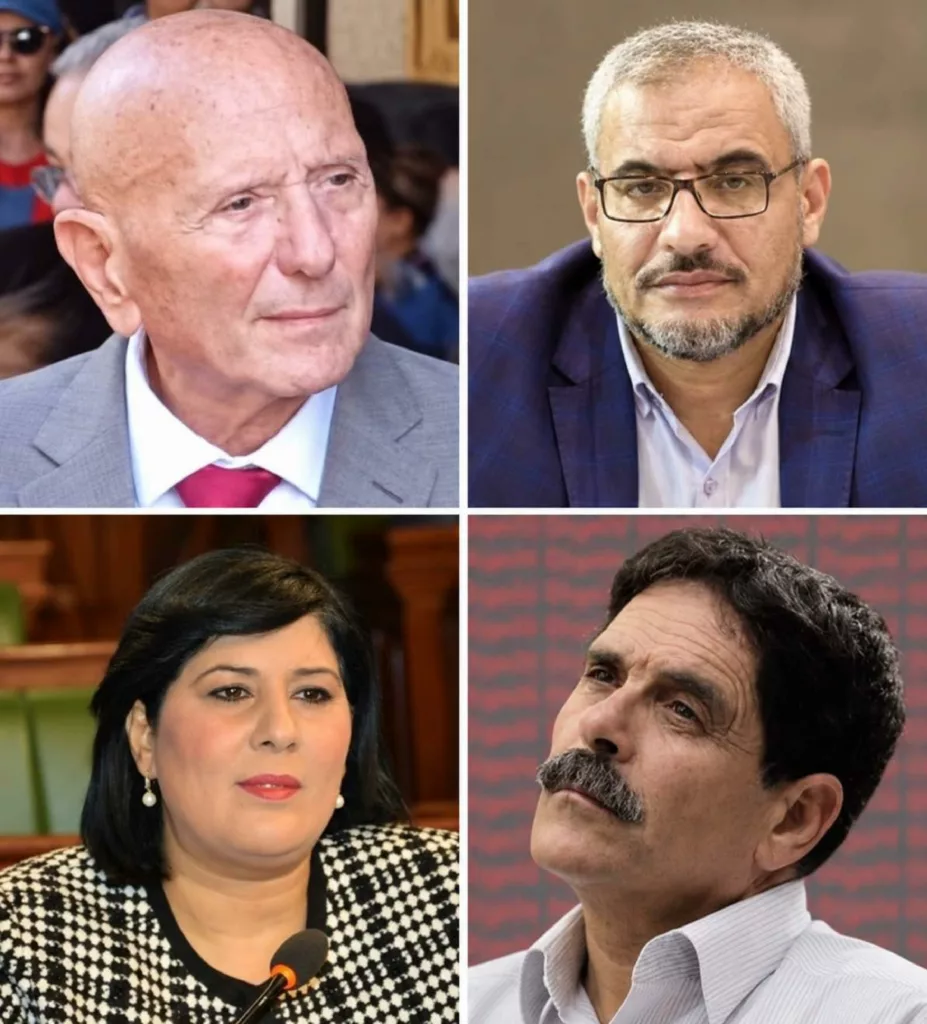
- prominent political figures, foremost among them Rached Ghannouchi, president of the Ennahda movement and former president of the Assembly of the Representatives of the People, sentenced to 22 years in prison,
- members of his family and political entourage (Mouadh and Soumaya Ghannouchi, Lotfi Zitoun), sentenced to up to 35 years in prison,
- Hichem Mechichi, former head of government, sentenced to more than 34 years,
- former senior security officials,
- businessmen accused of illicit financing without conclusive evidence,
- journalists, bloggers, and content creators, some of whom have been sentenced to more than twenty years in prison for acts that mainly relate to expression and media activity.
The total length of the sentences handed down—more than 750 years in prison—continues a repressive approach that began with the so-called “conspiracy against state security” case, in which the cumulative sentences had already reached a higher threshold. In the absence of violence or armed acts, this inflation of penalties reveals the exploitation of criminal law for political intimidation.
An appeal court with no appeal: the reign of "copy and paste"
The Court of Appeals did not conduct any serious review:
- violations of the right to defense,
- irregularities of jurisdiction and procedure,
- arbitrary transfers and sanctions imposed on the judges successively assigned to the case,
- the manifestly disproportionate nature of the criminal charges brought (in particular the articles relating to threats to state security and terrorism).
By confirming almost entirely the judgment of the court of first instance, the Court has established a system of validation, whose function is no longer to interpret the law but to legally legitimize a decision already taken elsewhere.
Chadha Haj Mbarek: an exception that proves the rule
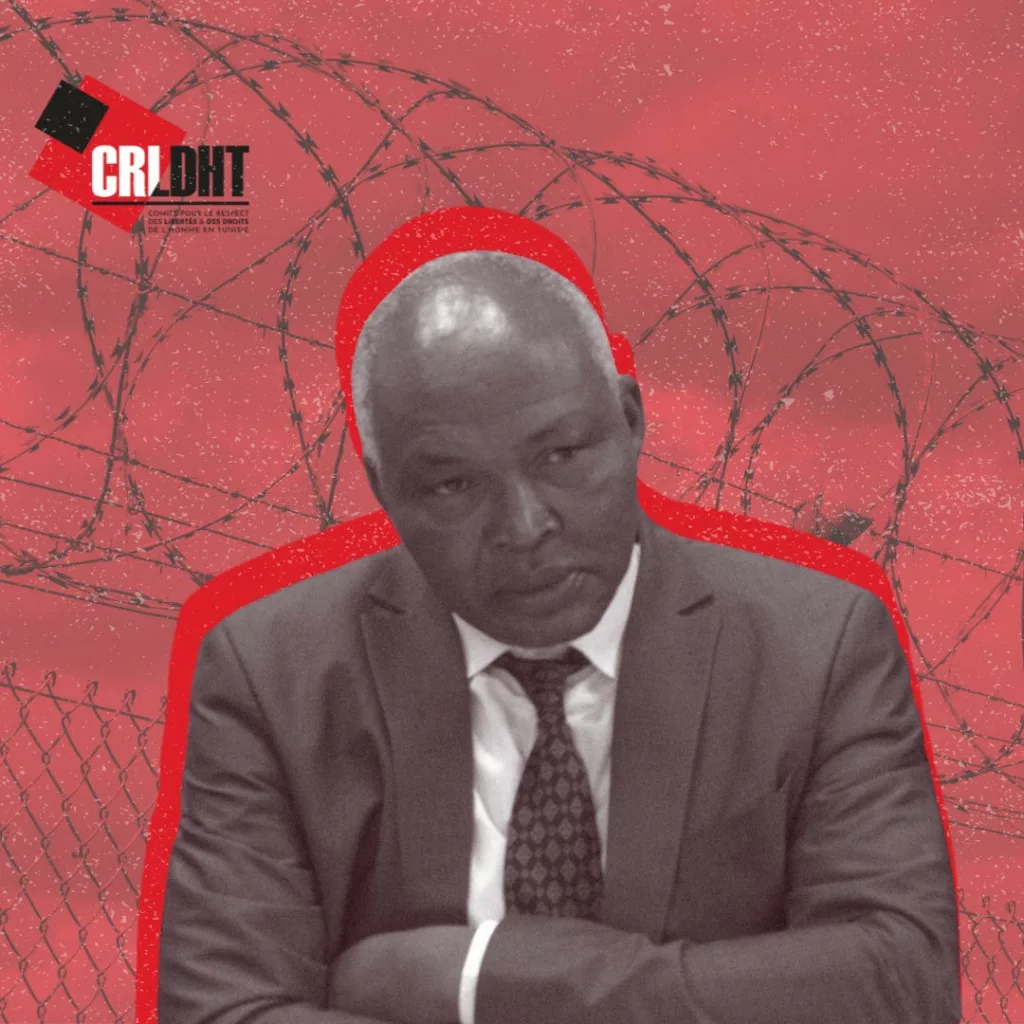
The only notable change concerns journalist Chadha Haj Mbarek, who has been imprisoned since 2023 in an alarming state of health.
As a result of repeated protests in Tunisia and abroad, the Court of Appeals has:
- abandoned the most serious charges (change in the form of government, incitement to armed violence),
- upheld a residual conviction for undermining the external security of the state, reduced to a two-year suspended sentence, resulting in his release.
Far from constituting an act of judicial independence, this decision reveals a well-established mechanism: suspended sentences as a political substitute for acquittal, when prosecution becomes too costly in terms of image.
A judiciary under supervision and an imposed presidential narrative
The Instalingo case illustrates the profound transformation of the Tunisian justice system since Kaïs Saïed concentrated power in his hands:
- dissolution of the High Council of the Judiciary,
- mass dismissals of judges,
- governance of justice through circulars and injunctions,
- inflationary use of offenses related to state security.
In this context, justice is no longer a countervailing power, but a central instrument of the presidential narrative, in which economic, social, and political failures are systematically blamed on internal and external enemies.
Faced with this major shift, the CRLDHT:
- Strongly condemns the transformation of the Tunisian judicial system into an instrument of political repression, in violation of the Constitution, international conventions ratified by Tunisia, and universal principles of justice.
- Expresses its full solidarity with all the victims of the Instalingo case and, more broadly, with all political prisoners and prisoners of conscience who are subjected to inhuman and degrading conditions of detention.
- Alert on the situation of vulnerable prisoners, particularly Rached Ghannouchi, an octogenarian whose prolonged incarceration is akin to a slow death sentence.
- Demands the immediate and unconditional release of all persons prosecuted or convicted without established material evidence.
- Emphasizes that the release of Chadha Haj Mbarek, secured under pressure, cannot be considered a victory as long as his innocence has not been clearly recognized and he continues to be unjustly convicted.
The Instalingo case is neither an isolated aberration nor a miscarriage of justice. It marks a turning point in the establishment of an authoritarian regime, where criminal law becomes a political weapon and where the justice system, stripped of its independence, is used to discipline society, intimidate opponents, and rewrite history.
Paris, January 15, 2026