The statement issued by the Tunisian Ministry of Foreign Affairs on December 10, 2025, on the occasion of the 77th anniversary of the Universal Declaration of Human Rights, is now outdated and anachronistic. The text is perfectly "exportable": universal vocabulary, emphasis on the indivisibility of rights, promise of social justice, strong references to multilateralism and the "international rule of law." It is a carefully calibrated message for foreign chancelleries and UN forums.
But the same political sequence—sometimes the same days—tells a very different story: political trials, prolonged detentions, criminalization of community work, intimidation of the press, repeated attacks on lawyers, deliberate obstacles to transparency. In other words, Tunisia speaks the language of human rights abroad, while practicing punishment at home.
This discrepancy is neither accidental nor clumsy. It constitutes a genuine strategy of double-speak: polite diplomatic rhetoric designed to mask an internal reality in which the judicial and security apparatus functions as an instrument of deterrence through fear.
Defending rights becomes a crime: the cases of Ayachi Hammami and Ahmed Souab
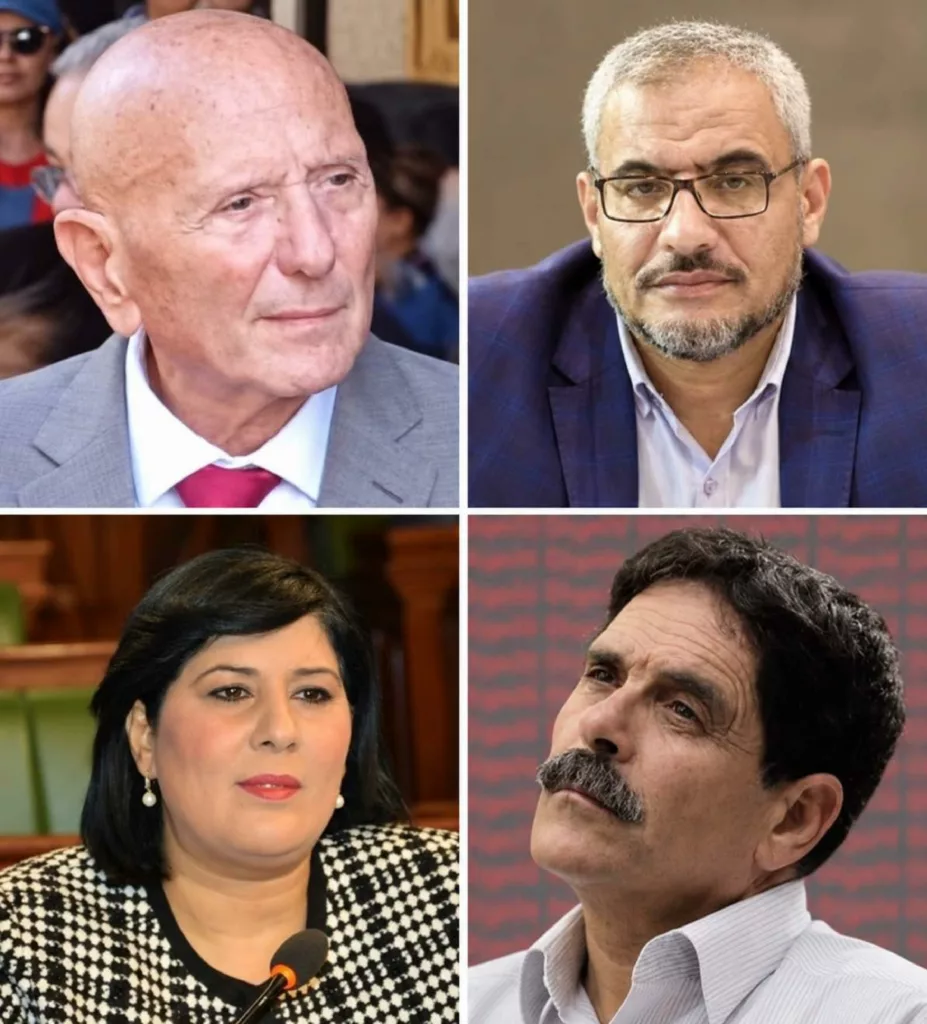
The symbolism is clear. The conviction and imprisonment of lawyer and human rights defender Ayachi Hammami, as well as the prosecution of Ahmed Souab, another prominent figure in the legal profession and the defense of freedoms, have prompted a public reaction from United Nations experts, who have expressed shock at judicial decisions explicitly linked to the practice of law in the context of the so-called "conspiracy against state security" case.
These decisions are part of a series of court rulings marked by extremely harsh sentences. On appeal, on November 27, 2025, thirty-four defendants were sentenced to up to forty-five years in prison. Among those convicted were: Jaouhar Ben Mbarek, Chaima Issa, Issam Chebbi, Ahmed Nejib Chebbi, Ridha Belhaj, Khayem Turki, Abdelhamid Jelassi, and Kamel Letaief.
Following these judgments, Chaima Issa, Ayachi Hammami, and Ahmed Nejib Chebbi were arrested to serve sentences of twenty years, five years, and twelve years, respectively.
The implicit message is crystal clear: the right to defend oneself becomes a criminal risk. And when the act of defense is equated with a "conspiracy," it is the rule of law itself that is overturned. We no longer judge facts, we punish roles—lawyer, opponent, activist—in a system where official legal discourse, invoking fundamental guarantees and principles, now appears outdated and anachronistic, emptied of any real meaning.
Speech as a crime: Decree-Law 54 and the repression of the press
Freedom of expression is no longer simply restricted: it is now treated as a criminal offense. The extensive use of repressive legislation, foremost among which is Decree-Law 54, has led to a surge in prosecutions and convictions of journalists, columnists, and news commentators between 2023 and 2025.
Journalist Chadha Hadj Mbarek was sentenced to a heavy prison term in a case that has become emblematic of the judicial pressure exerted on the press. Similarly, media and political figures such as Sonia Dahmani, Borhane Bsaies, Mohamed Boughaleb, and Mourad Zghidi have been prosecuted and convicted for their public statements, confirming a now recurring pattern: expressing an opinion is treated as a crime, and political commentary becomes grounds for punishment.
This shift reaches a particularly worrying threshold when online expression is reclassified as a threat to national security, exposing citizens to extremely serious prosecution for simple posts on social media. In this context, public speech is no longer a protected right, but a permanent criminal risk.
When speech is thus reclassified as a threat to the state, society as a whole learns to remain silent.
The policy reclassified as a "major crime"
The sentencingof Abir Moussi to twelve years in prison on December 12, 2025, following a simple administrative procedure and a political protest, was a symbolic case of disproportionate punishment and another milestone in the shift toward exceptional criminal penalties applied to political action. This logic reached an unprecedented threshold during the 2024 presidential election, when the electoral competition itself was judicialized.
Several declared or potential candidates for the highest office—including Zammel, Abdelatif Mraihi, Mondher Zenaidi, and others—have been prosecuted, convicted, or dismissed by controversial administrative and judicial decisions. In this context,the Independent High Authority for Elections (ISIE), reconstituted by the executive branch, has systematically invalidated or rejected serious candidacies, going so far as to ignore or circumvent decisions of the Administrative Court, which is the highest court in electoral matters. This circumvention of the judiciary has transformed the electoral process into a mechanism of political exclusion, where standing as a candidate, challenging the conditions of the election, or obtaining a favorable judicial decision becomes an aggravating factor in criminal or administrative proceedings.
In this context, the crackdown on Islamists is part of a broader strategy to dismantle political pluralism. Since 2021, Ennahda leaders and activists, as well as former state officials from this movement, have been the target of a systematic judicial offensive based on the criminalization of political activity, the extensive use of state security charges, and the repeated denial of fair trial guarantees.
The imprisonment of Rached Ghannouchi, despite his advanced age and the exclusively political nature of his positions, aims to signal the end of any legitimacy acquired through past democratic participation. Similarly,Ali Laârayedh's sentencing to 34 years in prison illustrates a particularly serious shift: governing becomes a crime after the fact, based on a retrospective, ideological, and punitive interpretation of public action.
Thus, from the screening of presidential candidates to the imprisonment of leaders who came to power through the ballot box, the same logic is at work: criminal law and electoral administration are mobilized to close off the political space, neutralize any credible alternative, and empty the very principle of popular sovereignty of its substance.
Criminalization of community and humanitarian work
The same repressive logic is now systematically applied to the associative and humanitarian sphere, which is perceived and treated as a potential hotbed of crime rather than a space for solidarity and support for fundamental rights. The Tunisian authorities have stepped up administrative and judicial measures aimed at stifling civil society: suspension of recognized associations, freezing of activities and accounts, financial investigations, and banking restrictions, thus creating a climate of widespread intimidation that hinders the very existence of independent organizations. Between July and November 2025, hundreds of associations, includingthe Tunisian Association of Democratic Women (ATFD), Aswat Nissa, the Tunisian Forum for Economic and Social Rights (FTDES), Nawaat, and the Tunisian branch ofthe World Organization Against Torture (OMCT), had their activities suspended for periods of up to thirty days, often without prior warning or despite corrections to administrative observations.
On the legal front, the trial of Terre d’Asile Tunisie, the Tunisian branch of the French NGO France Terre d’Asile, is emblematic of this escalation. Members of its staff— Chérifa Riahi (former director), Yadh Bousselmi (director), and Mohamed Joo (administrative and financial manager)—as well as former municipal employees who were partners—have been prosecuted since May 2024 for providing essential assistance to refugees and migrants, and three of them have been in arbitrary pretrial detention for nearly two years.
The prosecution and continued detention of Saadia Mosbah, anti-racism activist and president of the M'nemti association, marks a particularly serious turning point: the fight against discrimination and racism is now being treated as a criminal offense. Through M'nemti, all the work being done on the ground to promote equality, dignity, and social cohesion is now under suspicion.
In a society already weakened socially and economically, this offensive against the associative fabric amounts to drying up the last mechanisms protecting vulnerable populations, dismantling spaces for citizen mediation, and intimidating the entire associative ecosystem. It confirms that repression in Tunisia is not only aimed at political speech or partisan opposition, but at all forms of autonomous collective action, including humanitarian, social, and anti-racist action.
At the same time, other human rights organizations face unjustified criminal or financial investigations, frozen accounts, persistent banking difficulties, and constant administrative harassment aimed at hindering their core activities, particularly in the areas of migration, equality, and social rights.
The signal sent by all these measures is formidable: solidarity equals suspicion, and any initiative involving humanitarian action, the defense of rights, or citizen mobilization is exposed to criminal prosecution, administrative blockages, or financial sanctions. In an already fragile society, this amounts to dismantling the last remaining mechanisms of protection for the most vulnerable, dismantling the ecosystem of associations, and intimidating civil society as a whole, destroying the spaces for expression, support, and solidarity that have
Transparency and citizen oversight: the removal of safeguards
Official discourse continues to invoke, in an incantatory manner, references to the "rule of law." But behind this rhetoric, it is precisely the mechanisms of control, transparency, and accountability that are being methodically weakened, even dismantled. Far from strengthening the rule of law, those in power are working to disable the countervailing powers capable of examining, documenting, and challenging public action.
The dissolution in August 2025 ofthe National Access to Information Authority (INAI), an institutional pillar of transparency established after 2011, is a prime example of this drift. This body was not merely a technical organ: it embodied a fundamental right, namely the right of citizens, journalists, and civil society to access public information, question administrative decisions, and demand accountability. Its disappearance marks a structural setback in public accountability and a deliberate break with the principles of transparency that emerged from the post-revolutionary democratic process.
Closing information channels does not just reduce the circulation of administrative data; it prevents evidence from being gathered, hinders the documentation of abuses, and makes it impossible to effectively monitor the actions of the state. Without access to information, there can be no accountability, no informed debate, and no ability to challenge decisions based on facts.
Democracy is not only extinguished by unfair trials or spectacular convictions. It is also eroded, more silently, byorganized opacity, by the neutralization of control tools, and by the transformation of the administration into a closed zone, inaccessible to the public eye. By attacking transparency, those in power are not merely governing without oversight: they are making it impossible to hold them accountable, which is an essential condition for any true rule of law.
Prisons as closed zones: obstacles to independent observation
The prison issue today encapsulates all the abuses of power. It is in prisons that political opponents, journalists, lawyers, activists, and human rights defenders find themselves. It is therefore also there that the state most actively seeks to reduce outside scrutiny, limit independent observation, and close off the space for oversight.
For decades, however, the Tunisian Human Rights League (LTDH) has played a central role in monitoring places of detention, documenting violations, raising awareness about prison conditions, and defending the fundamental rights of persons deprived of their liberty. This mission is part of a long-standing, recognized tradition and is one of the few non-state mechanisms for protection against abuse, ill-treatment, and arbitrary prison practices.
However, in December 2025, controversy surrounding prison visits by the LTDH highlighted a worrying development. Following public exchanges between the Ministry of Justice and the League, it emerged that this independent organization's access to prisons was being restricted, delayed, made conditional, or outright denied, under the guise of administrative, security, or procedural justifications. This situation is not simply a technical dispute: it reflects a political desire to limit citizen oversight of one of the most sensitive areas of state action.
Refusing or hindering visits by the LTDH to prisons is not just blocking an organization; it is organizing prison secrecy. It is depriving prisoners of an independent voice, preventing the documentation of detention conditions, making abusive practices invisible, and weakening the minimum safeguards against torture, ill-treatment, and violations of human dignity. In a context of increasing political detentions and arbitrary prosecutions, this closure of prisons to independent scrutiny takes on a particularly serious significance.
Beyond prisons themselves, this denial of access is part of a broader strategy: the neutralization of countervailing powers and control mechanisms originating in civil society. Where transparency should be strengthened, those in power choose to retreat; where vigilance is essential, they impose silence.
The silent tool: travel bans and widespread harassment
Alongside spectacular arrests and political trials, the authorities resort to more discreet forms of repression that are less visible in the media but extremely effective. These include restrictions on movement, travel bans, various forms of administrative pressure, and coercive measures applied without clear judicial decisions, formal notification, or any real possibility of appeal.
These bans, often discovered at the last minute at a border crossing or airport, function as informal sanctions. They are not based on a conviction, or even an indictment, but on suspicion, an administrative record, or an opaque instruction. The fundamental right to freedom of movement thus becomes conditional and revocable, subject to the arbitrariness of the security apparatus.
This modus operandi makes it possible to punish without trial, to restrict without publicly acknowledging repression, and to circumvent procedural guarantees. It targets political opponents, human rights defenders, journalists, lawyers, and activists in particular, hindering their ability to travel, participate in international meetings, testify, plead cases, or simply lead a normal professional life.
The desired effect is not only individual. These measures produce slow and profound wear and tear, which also affects families, weakens economic situations, isolates people socially, and erodes the capacity for collective organization. They create constant pressure, consisting of uncertainty and diffuse fear, where everyone understands that arbitrariness can strike at any moment, without justification or deadline.
This technique is proven: it does not create visible martyrs or call for large court hearings, but it does permanently neutralize critical actors by immobilizing them, exhausting them, and dissuading them from taking action. It thus complements criminal prosecutions and arbitrary detentions with an arsenal of silent constraints that transform everyday life into a space of surveillance.
By resorting heavily to these bans and widespread harassment, the authorities are not only restricting freedoms: they are normalizing arbitrariness, establishing a culture of punishment without due process, and reminding us that, in this system, the absence of a trial does not mean the absence of punishment.
The crackdown on businesspeople: the private sector under constant suspicion under the guise of fighting corruption
The repression exercised by the Tunisian authorities has gradually spread to the economic sphere, targeting businessmen whose common trait is neither the existence of an established offense nor a final conviction, but rather a financial, relational, or political independence perceived as incompatible with the requirement of allegiance. This offensive is systematically cloaked in the official rhetoric of the "fight against corruption," which has been elevated to a moral and political justification, to the point of becoming a convenient pretext for the arbitrary judicialization of economic activity.
In reality, this anti-corruption rhetoric serves less to clean up public life than to neutralize economic actors deemed too autonomous, by circumventing basic requirements of legality, evidence, and proportionality. Well-documented figures such as Kamel Eltaïef, Mehdi Ben Gharbia, Ridha Charfeddine, and Zammel have been arrested, prosecuted, or kept under judicial pressure in circumstances that raise serious legal questions: extensive and prolonged use of preventive detention, successive renewals without individualized justification, deliberate confusion between criminal responsibility and political suspicion, and the use of broad, expansive, and indeterminate criminal charges (corruption, money laundering, undermining state security).
In several of these cases, preventive detention has ceased to be an exceptional procedural safeguard and has become an anticipated punishment, in clear violation of the presumption of innocence and the principles of necessity and proportionality enshrined in domestic law and Tunisia's international commitments. Added to this abuse is a mechanism that is particularly revealing of the instrumentalization of justice: the misuse of financial bail, presented as a technical measure but used in practice as a tool for exerting pressure and economic exploitation.
These bonds are often set at exorbitant amounts, with no reasonable connection to the alleged offenses or the financial capacity of the individuals concerned, and without any individualized legal justification. Under the guise of preventing corruption or ensuring representation, they function as a financial condition imposed on provisional release, akin to a form of institutional extortion: pay to get out, or remain in detention. The proclaimed fight against corruption is thus transformed into the commodification of freedom, which is profoundly incompatible with the rule of law.
The disproportion between the alleged facts—when established—the severity of the measures depriving individuals of their liberty, and the level of financial guarantees required reveals a punitive judicialization of the economy, where investigations serve less to establish the truth than to permanently weaken independent economic actors, undermine their businesses, and discourage any future autonomy.
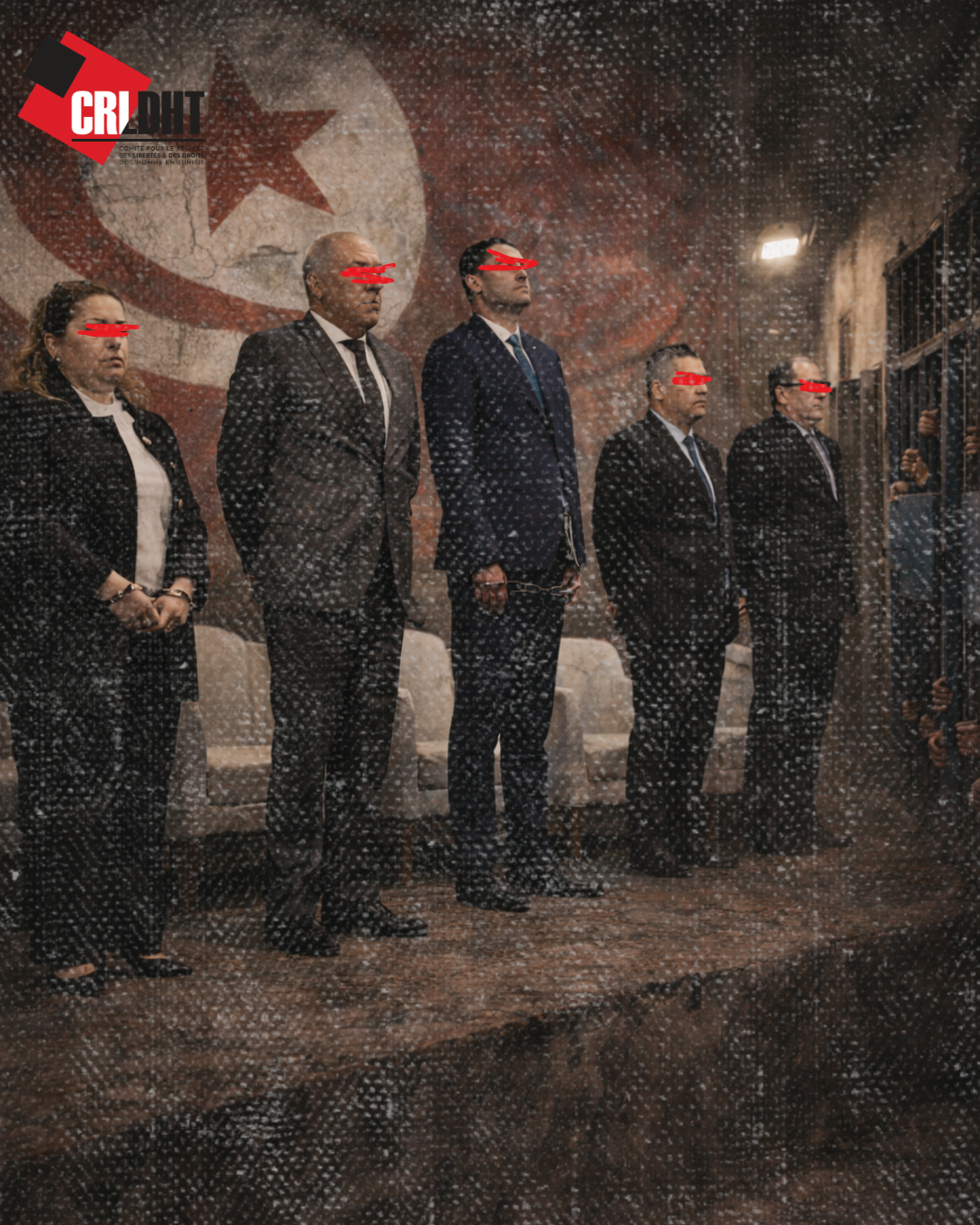
This shift is further confirmed by the involvement of businessmen in the so-called "conspiracy against state security" case, where professional relationships, private exchanges, or simple financing capabilities are reclassified as evidence of subversion. Criminal law loses its primary function of combating economic crime and becomes an instrument of political power management, in which the fight against corruption is no longer a public policy but a repressive alibi.
December 10 in Tunisia: a test of truth
This is where the December 10 showcase finally cracks.
A state that tolerates arbitrary detention, trivializes the abuse of preventive detention, and empties the principle of proportionality of its substance does not commemorate human rights: it organizes their neutralization. And when a government simultaneously targets journalists, lawyers, activists, Islamists, secular opponents, and now businesspeople, it is not security it seeks to guarantee, but the total closure of social, political, and economic space.
December 10 in Tunisia is no longer a universal celebration: it is a dividing line.
On one side, there is diplomatic rhetoric that can be exported; on the other, there is domestic criminal law, used to remind people of a simple and brutal truth: there is no longer any room for autonomy—in whatever form—in a regime that recognizes only obedience.
The statement from the Department of State is aimed at the outside world; the criminal justice and security apparatus operates internally. The two coexist because they pursue the same goal: to buy international respectability while neutralizing, internally, those who embody human rights.
This is precisely why resistance—mobilizations, press releases, coalitions, solidarity between families, lawyers, journalists, and associations—remains today the last space where a simple idea survives: human rights are not diplomatic language. They are concrete protections, or they are nothing.
That is why the speech on December 10 rings hollow:
A state that imprisons opponents of all stripes, including those who have governed through the ballot box, does not protect human rights— it violates them.