In late September 2026, new audio and video recordings began circulating in Tunisia. They show or document insults, humiliations, threats, and abuses of authority against citizens. These are not mere “blunders” or regrettable verbal slip-ups. They are practices that violate people’s dignity and destroy the bond of trust between citizens and those charged with protecting them.
Around September 27, 2026, a recording made at a police station in Tunis revealed an exchange between a citizen and an officer who insulted him, humiliated him, and threatened to fabricate a case against him. This threat is particularly serious. When a government official suggests that he can fabricate a case against a citizen, he is not merely committing an abuse of power—he is turning his authority into a weapon of retaliation.
Around the same time, a video featured a young man claiming to have been subjected to violence at a security center. Other recordings have been reported, notably in Kairouan. They cannot all be dismissed with the convenient label of “isolated incidents.” Their recurrence, the similarity of the reported accounts, and the number of testimonies point to a deep-seated crisis in relations between a segment of the security forces and the population.
In light of these revelations, the response from the General Secretariat of the Internal Security Forces, published on its Facebook page on September 27, 2026, is unacceptable. Instead of prioritizing the protection of citizens, identifying those responsible, and immediately launching independent investigations, this statement chose to denounce an alleged smear campaign. It claims that the recording was edited and that officers were “provoked” or “set up.” It also threatens legal action against those who allegedly disseminated the recordings.
Thus, the humiliated citizen becomes a suspect; the person filming or recording becomes a target; and the officer under scrutiny is portrayed as the victim. That is what denial is. And this denial is already a form of institutional violence.
The public’s reaction speaks volumes about the collapse of trust. Under this post shared on the Facebook page of the General Secretariat of the Internal Security Forces, nearly 14,000 reactions—including about 12,000 “Hahaha”s—were recorded. “The police have never made Tunisians laugh this much,” one comment summarized. This laughter is not lighthearted: it is laughter born of anger, bitterness, and disbelief. It reflects the growing gap between the official rhetoric about a police force that respects citizens and the actual experience of too many Tunisians who face contempt, intimidation, and sometimes violence.
This is not about indiscriminately condemning all law enforcement officers. But the institution will never be defended by remaining silent about abuses, by disregarding testimonies, or by threatening those who bring them to light. It will be defended by the truth, transparency, and effective punishment of those who abuse their authority.
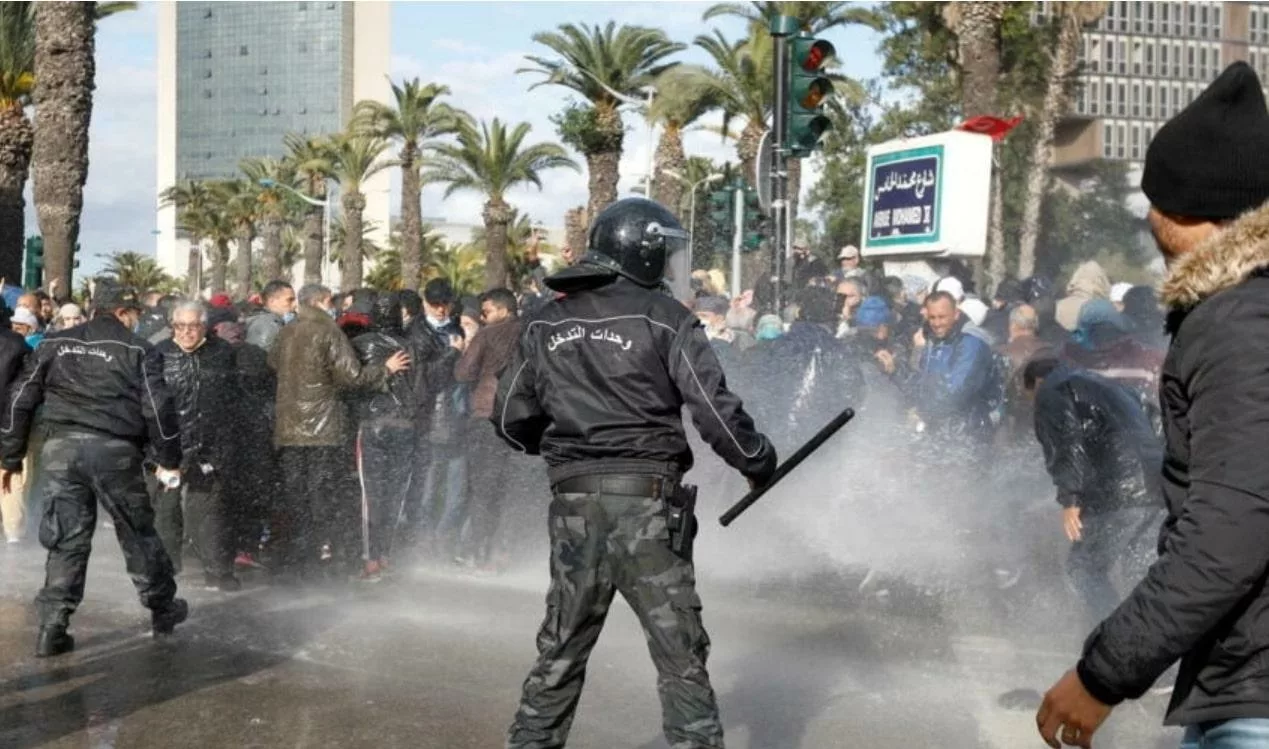
In Tunisia in 2026, where political repression has spread to include opponents, journalists, lawyers, human rights defenders, and protesters, this daily violence is not a minor phenomenon. It is part of a climate in which the security apparatus is encouraged to see itself as the arm of a regime that tolerates neither criticism, oversight, nor dissent.
A police station is not a lawless zone. A uniform is not a license to insult, strike, threaten, or fabricate charges. Security cannot be pitted against freedom and dignity: without respect for citizens, it ceases to be security and becomes oppression.
The authorities must immediately launch impartial investigations into every recording and every testimony; make their findings public; hold those responsible accountable; protect victims and witnesses; and put an end to any prosecution of individuals who, in good faith, expose abuses. Otherwise, calls for respect for the institution will be nothing more than a slogan intended to mask impunity.