On Tuesday, February 3, 2026, at dawn, the criminal appeals chamber of the anti-terrorism division of the Tunis Court of Appeals handed down its ruling in the case known as "Conspiracy Against State Security 2." Unsurprisingly, it upheld almost the entire first instance judgment, thus confirming a procedure marked by its exclusively repressive nature. Once again, the justice system was content to act as a sounding board for the political orientations of the executive branch in a one-sided trial, the outcome of which was a conviction.
Defendants with diverse backgrounds, united by a desire to crush all opposition
This case, which will be investigated starting inSeptember 2022, is based on allegations thatRached Ghannouchiset up a"clandestine apparatus"to infiltrate state institutions, particularly theMinistry of the Interior, with the aim of underminingnational security.
The charges brought against him are particularly serious:
• Conspiracy against the internal security of the state,
• Formation of a terrorist organization,
• Incitement to violence and murder,
• Attempt to change the state regime by violent means,
• Recruitment of young Salafists for indoctrination purposes,
• Alleged coordination with political, media, and security figures.
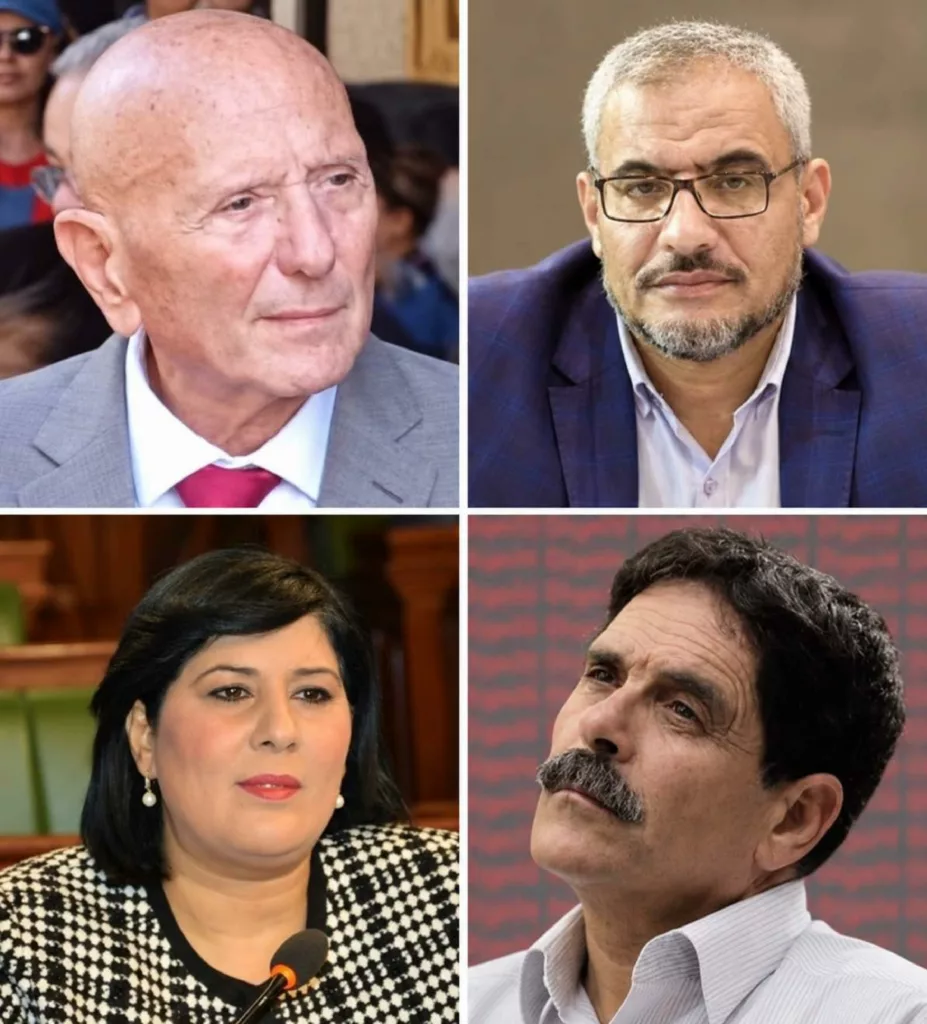
The victims of thisjudicial conspiracy orchestrated by those in powercome from a wide range of political and professional backgrounds. They includeleaders of the Ennahda party, headed byRached Ghannouchi, as well asYoussef Chahed, former prime minister fromNidaa Tounes, andNadia Akacha, former head of the presidential cabinet.
The list extends toMohamed Rayen Hamzaoui, former mayor of the municipalityof Ezzahra, journalists such asCharazed Akacha, and former senior security officials such asKamel Guizani, former director of national security and former Tunisian ambassador toBahrain.
An unlikely conspiracy
No material evidence has ever been presented to support these accusations.The case rests almost exclusively on the testimony of an anonymous, unstable"Witness X," who has repeatedly contradicted himself in his own statements, and whose assertions have beenformally refuted by investigative reports.
No recordings,no intercepted communications,no seizure of weaponsorcompromising documents,no evidence of financing,not even the slightest trace of a structured link between the defendants. This is atrial without facts, without evidence, without real confrontation, based solely on anarrative constructed around security concerns.
As with all so-called conspiracy cases,the prosecution's account defies logic. You don't need to be an expert on Tunisian politics to see thatthese alleged conspirators are irreconcilable figures, most of whom are incapable of sitting down together at the same table, let alone coordinating any kind of secret undertaking.
The case iscompletely devoid of factual evidence. Yet they are accused of a concerted operation aimed atendangering state security, as part of a"terrorist conspiracy." This is afantastical, baseless scenariothat has become arepressive cliché, recycled every time the government seeks to neutralize its opponents.
Obvious disproportion and revised sentences
Whether in the initiation of public proceedings, in investigations, in preliminary inquiries, or in trials on the merits, violations of legal norms, the Code of Criminal Procedure, and the Criminal Code are evident. The disproportionate nature of the decisions handed down reflects the overtly political nature of these trials, in which the judiciary merely rubber-stamps the executive's fabricated accounts, thereby validating preconceived verdicts tailored to corroborate the regime's propaganda, while obscuring its ultimate goal: to suppress all dissenting voices in a freedom-destroying logic.
Although the appeal upheld the ignominious conviction of the defendants, wrongly handed down at first instance, it nevertheless modified certain sentences:
- Reductions:
For Mohamed Rayen Hamzaoui, Abdelkrim Labidi, and Mehrez Zouari, the 12-year sentences were reduced to 3 years in prison. - Additional charges:
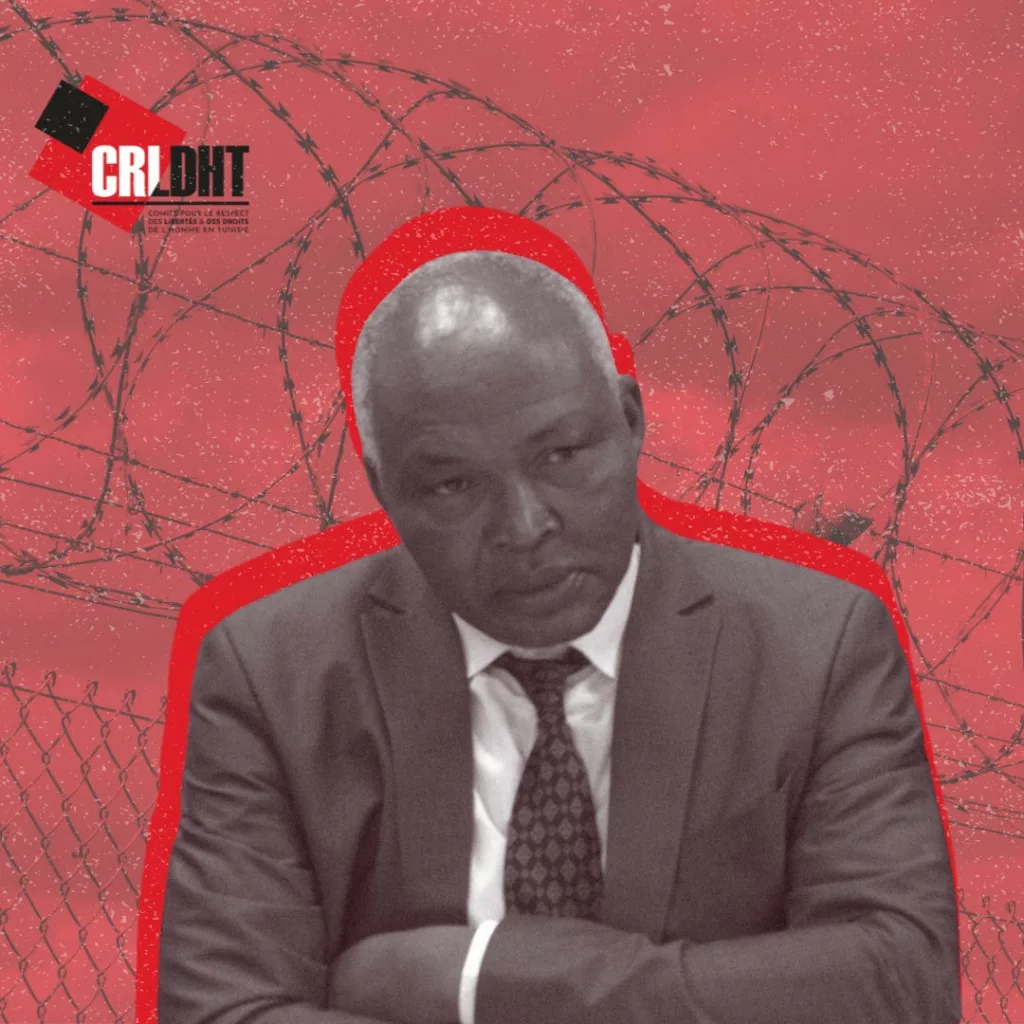
- Rached Ghannouchi: 14 to 20 years in prison,
- Kamel Bedoui: from 12 to 20 years old,
- Fethi Beldi and Samir Hanachi: from 12 to 15 years old.
A five-year administrative control order was also added as an additional penalty for the aforementioned defendants, with the exception of Rayen Hamzaoui, for whom it is limited to two years.
The defendants tried in absentia were sentenced to 35 years in prison, accompanied by five years of administrative supervision.
The Committee for the Respect of Freedoms and Human Rights in Tunisia:
- Strongly condemns this despicable and misguided manipulation of the Tunisian justice system, which is being used to serve a freedom-destroying dictatorship, where the judicial system is becoming a tool for political persecution.
- Reaffirms its full solidarity with all victims of this manifest injustice, as well as with their families, their defenders, and the organizations working alongside them.
- Considers that the current regime continues to discredit itself, adding to its democratic illegitimacy an illegitimacy of results, fueled by arbitrary procedures and spectacular convictions without foundation.
That is why the CRLDHT renews its call to all Tunisian citizens, as well as to organized civil society, to engage in civil and peaceful resistance in order to save the Republic, restore the rule of law, and put an end to the authoritarian drift that today threatens the very foundations of democratic Tunisia.