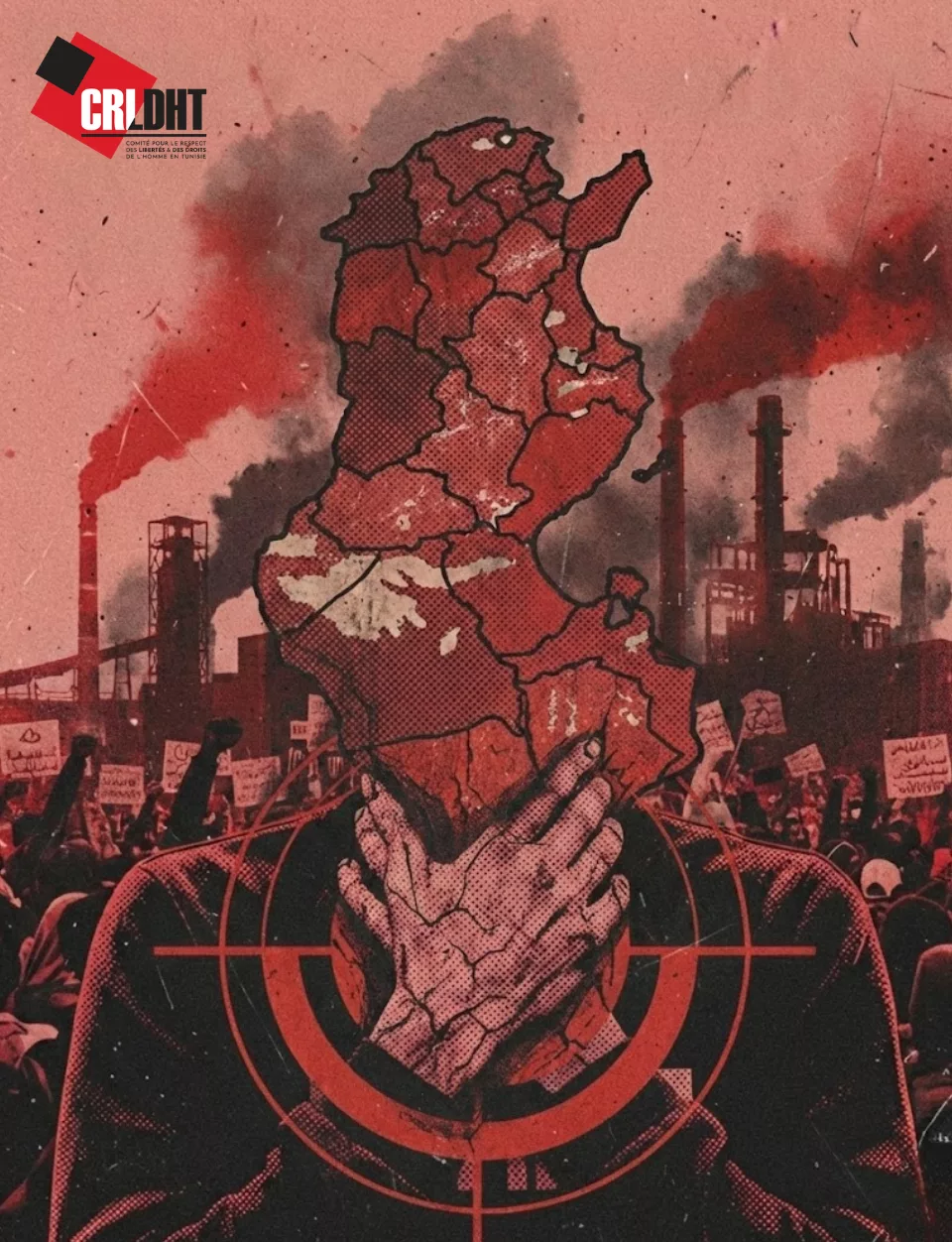
2025: political repression, stifling of civil society, and criminalization of public debate
The year 2025 was marked in Tunisia by intensified repression against political opponents, the gradual crushing of civil society, and the overt criminalization of public debate, in flagrant violation of fundamental human rights.
Fifteen years after a revolution that seemed to bring hope and a break with authoritarianism, the country is plunging back into a regime of personal power. President Kaïs Saïed now holds all executive, legislative, and judicial powers in his hands, in defiance of the basic principles of the rule of law, the separation of powers, and Tunisia's international human rights commitments.
In an extremely tense social climate, and while proving incapable of meeting the economic and social expectations of Tunisians, Kaïs Saïed intends to remain in power at all costs. He continues to present his style of governance as a "restoration of order" in a country whose sovereignty he champions, but protests are growing despite the climate of fear and intimidation that has returned.
Social anger and shrinking freedoms
The fall of 2025 was particularly trying. It was marked both by an acute health and environmental crisis in Gabès, in the southeast of the country, and by extremely harsh sentences handed down to opponents accused of "conspiracy against state security," following proceedings marred by clear violations of the right to a fair trial.
In Gabès, public anger is nothing new, but this year it has reached unprecedented levels. Since 1972, residents have suffered recurrent poisoning due to gas emissions from the Tunisian Chemical Group (GCT), which is responsible for converting phosphate into agricultural fertilizers. These violations constitute a persistent breach of the right to health and the right to a healthy environment, both of which are recognized by international human rights standards.
In 2017, commitments were made by the authorities, including the gradual dismantling of polluting facilities and an end to waste dumping. Eight years later, these promises remain unfulfilled. To denounce what residents describe as "slow poisoning," more than 100,000 people demonstrated in this city, where the cancer rate is three times higher than the national average. This massive mobilization, followed on October 21 by a general strike called by the local branch of the Tunisian General Labor Union (UGTT), marked the return of social protest to the streets, with the explicit support of civil society.
In response, Kaïs Saïed visited the site and gave a long speech promising a few technical measures, while denouncing alleged "saboteurs." Eighteen protesters were arrested. The Ministry of Health announced the creation of an "oncology center" in Gabès, without questioning the activities of the Tunisian Chemical Group. On the contrary, fertilizer production is expected to increase fivefold by 2030, as confirmed by the head of state.
This episode highlighted the total lack of political response to a multidimensional crisis. Citizens, without aggression and without any desire to overthrow the government, rejected economic choices that they considered deadly. The president, who presents himself as the defender of marginalized regions, offered no credible alternative. The uprising in Gabès thus revealed the executive branch's structural inability to respond to the country's concrete problems.
Widespread social unrest and repression
Gabès is not an isolated case. Civil society's solidarity with the protesters is worrying the authorities, who are seeking to isolate the movement in order to prevent it from spreading to other regions. Social anger is widespread and generalized, even if it is still being expressed in a sectoral manner.
Kaïs Saïed has no answer to unemployment rates approaching 40%, the massive disappearance of small and medium-sized businesses, and the exodus of nearly 100,000 young graduates in recent years, including many doctors who are essential to the healthcare system. In 2025, nearly 5,000 collective actions were recorded, almost double the number in the previous year.
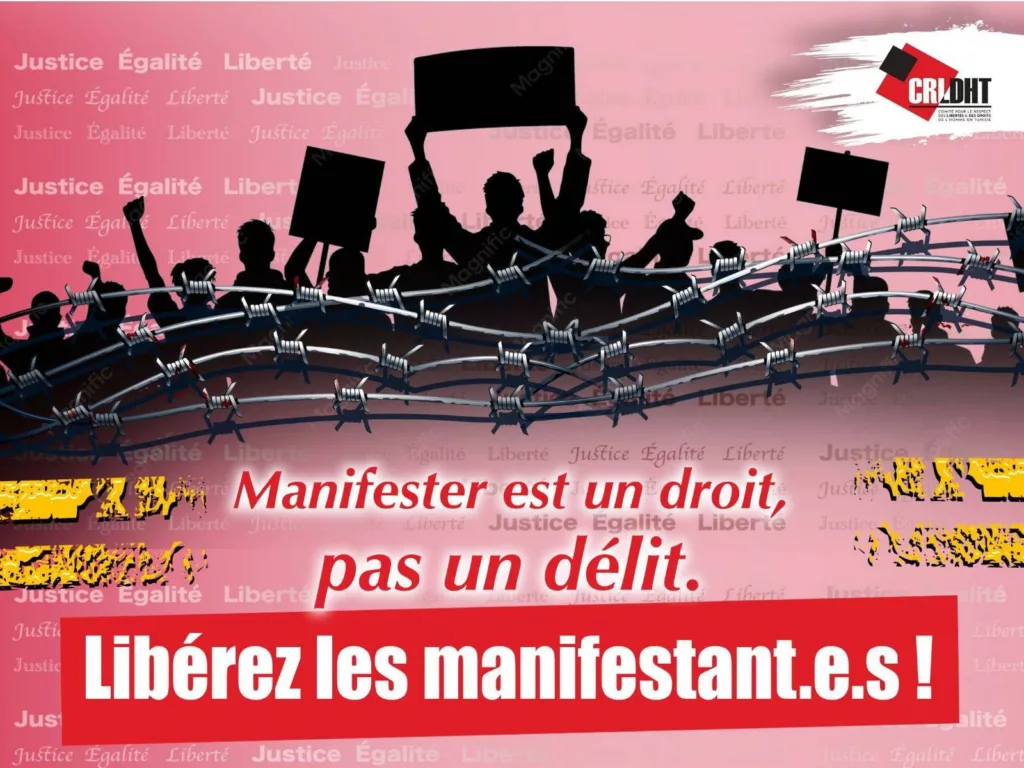
The response of those in power has been essentially security-focused: increased pressure on UGTT leaders, attempts to organize counter-demonstrations in support of the president, and criminalization of protests. During the large demonstration in Tunis on November 22, 2025, the slogans were explicit: "The people want the regime to fall," echoing those of 2010.
Political repression as a substitute for economic planning
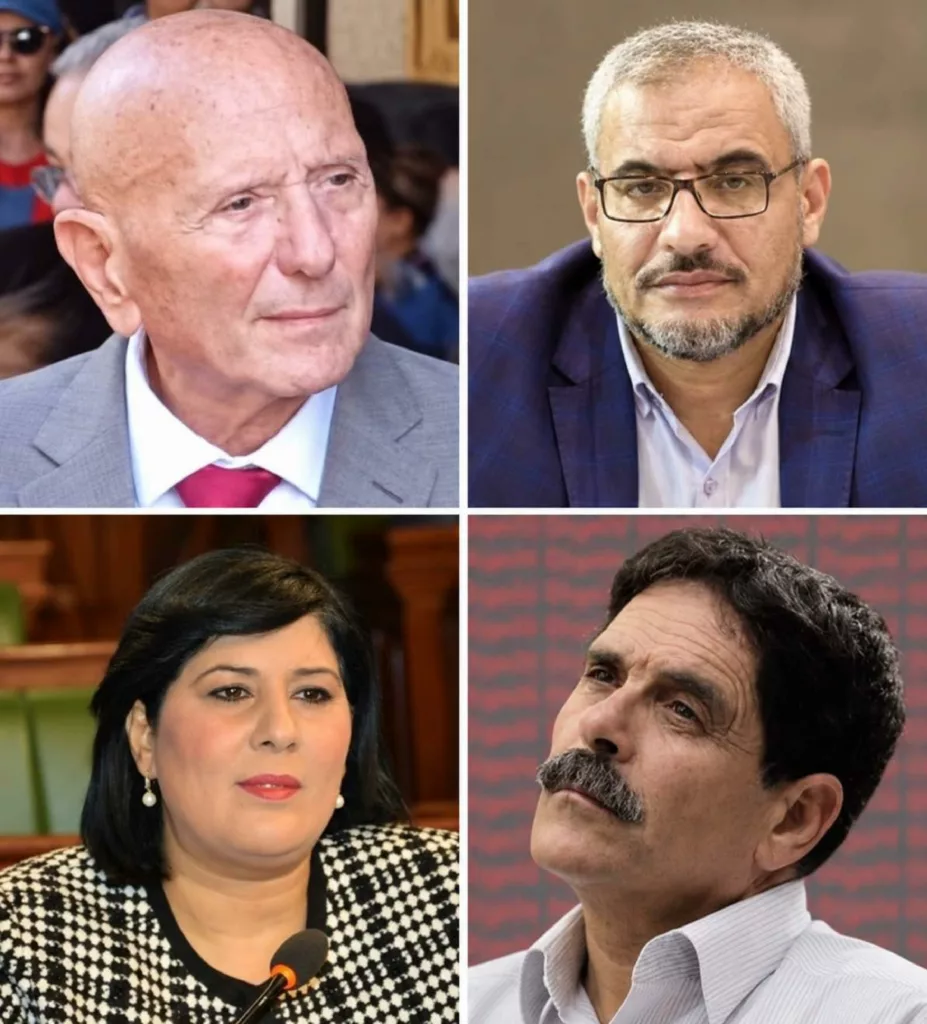
Aware of his inability to propose economic and social solutions, Kaïs Saïed shifts the debate. He insists on the need to eliminate the "corrupt" and the "conspirators" who would hinder his project. On November 27, 2025, sentences totaling several hundred years in prison were handed down following a completely unfair trial: remote hearings, absence of the defendants, violations of the right to defense and the adversarial principle.
More than forty people from a wide range of ideological backgrounds—politicians, journalists, bloggers, lawyers, and activists—have been accused of conspiring against state security. Further trials are planned, targeting associations receiving foreign funding, independent media, and union leaders. The goal is clear: to stifle civic space.
Decree-Law 54, enacted in 2022 to combat disinformation, has been diverted from its original purpose. It is now being used as a tool for the systematic repression of freedom of expression, in violation of the International Covenant on Civil and Political Rights, which Tunisia has ratified.
A justice system that is being exploited
This crackdown would not have been possible without the complete subjugation of the justice system. Since the coup on July 25, 2021, Kaïs Saïed has worked to subordinate the judiciary to the executive branch. Magistrates and lawyers are subject to pressure, threats, and arbitrary prosecution. The courts are being used as a tool to enforce political decisions.
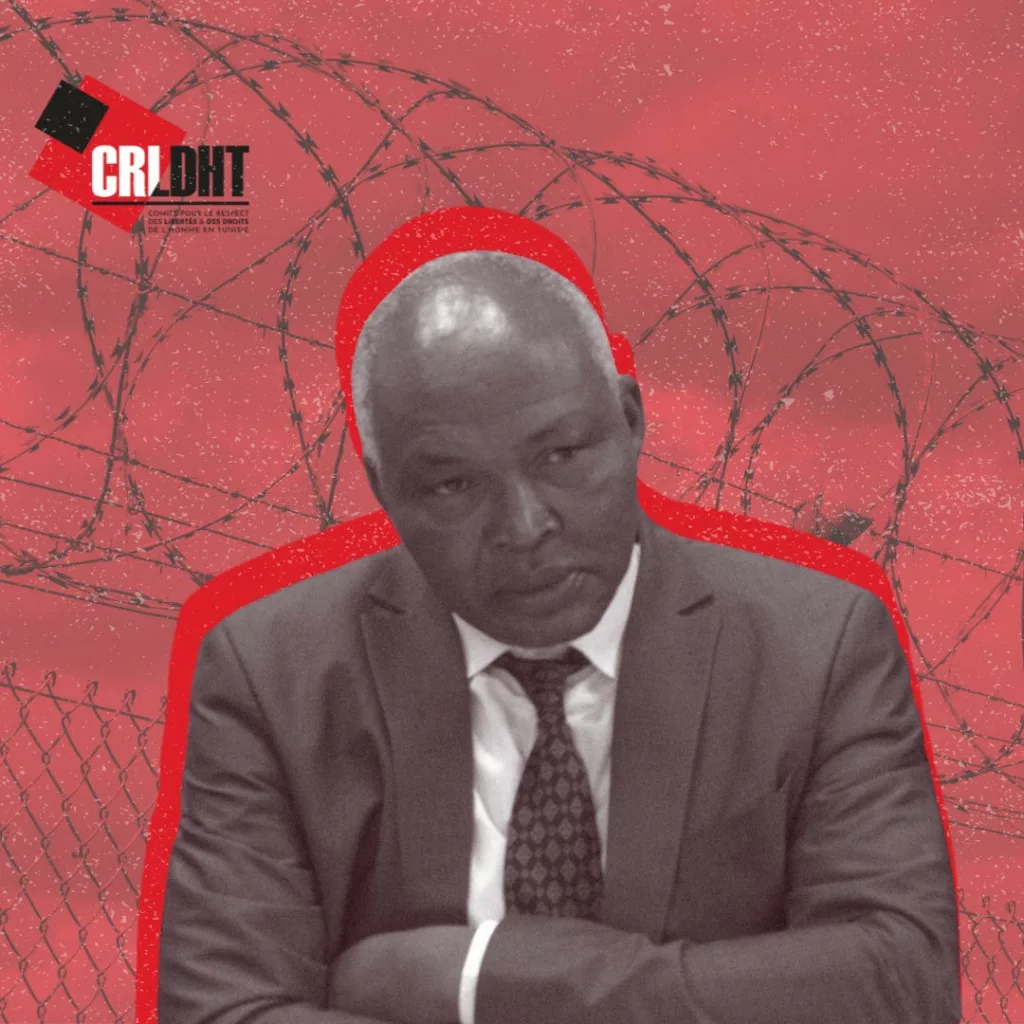
The case of Ahmed Souab, sentenced to five years in prison, illustrates how justice has been turned into an instrument of repression. These practices systematically violate the right to a fair trial,the independence of the judiciary, and the principle of legality of penalties.
Superficial sovereignty and real dependencies
To justify this authoritarian drift, the president puts forward a sovereignist discourse, rejecting all international criticism in the name of national independence, particularly in relation to financial institutions and European partners.
This rhetoric resonates with a population weary of IMF injunctions and reminders about human rights. But it is largely contradicted by the facts. Tunisia is heavily dependent on external financing: aid from the European Union (€620 million between 2021 and 2024), financing from the European Investment Bank, Team Europe Initiative projects, bilateral aid from Italy, financial and energy assistance from Algeria, not to mention remittances from the diaspora.
This aid comes at a political cost, whether in terms of migrant detention on behalf of the EU or regional geopolitical alignment. We are far from true sovereignty. The decline in voter turnout—89% abstention in 2022, 88% in 2023—reflects the rapid erosion of the legitimacy of power.
A suffocated people, a suspended democracy
While support for Kaïs Saïed is waning, the opposition, fragmented and weakened by repression, is struggling to present a credible alternative. Tunisia thus finds itself caught between an authoritarian government with no vision and a society deprived of freedom, rights, and prospects.
What is at stake today goes beyond a mere political crisis. It is a global attack on human rights: the right to freedom, dignity, health, a healthy environment, expression, collective organization, and political participation. As long as these rights continue to be violated, no lasting stability can be achieved.