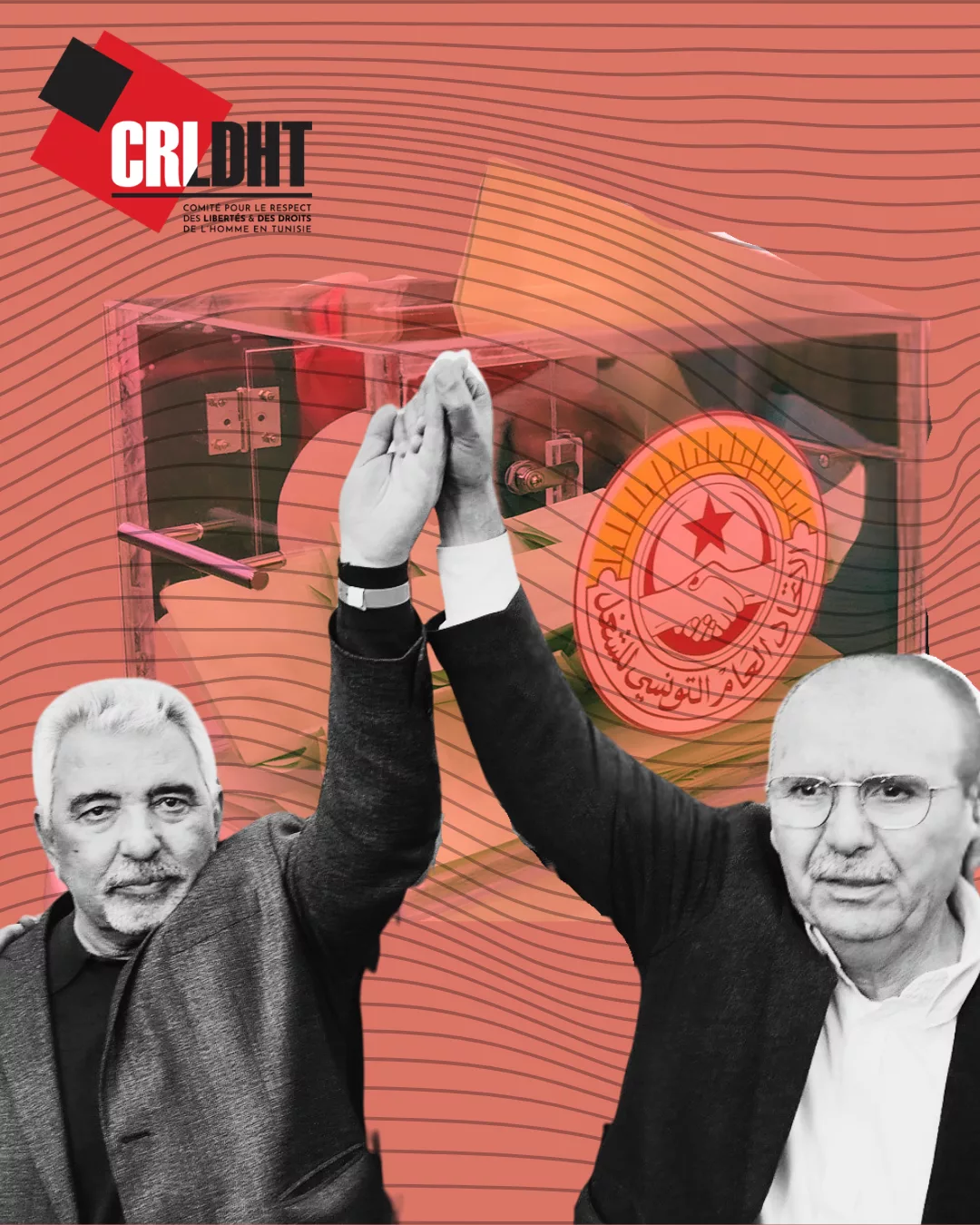
The congress of the Tunisian General Labor Union (UGTT), held in Monastir from March 25 to 27, 2026, under the slogan “Faithful to our principles, victorious for freedom,” concluded with the election of a new executive board. The executive board includes several members of the outgoing team and is now led by Secretary General Salah Eddine Selmi.
This congress marks an important milestone in the organization’s history. It is taking place against a complex backdrop, but it also demonstrates the UGTT’s ability to come together, engage in debate, and renew its leadership while upholding its union traditions.
A path toward recovery is underway, with adjustments that open up new possibilities
The conference took place amid internal tensions, reflecting genuine and at times heated debates within the organization. These discussions underscore the vitality of an organization where issues of governance and internal democracy continue to inspire strong commitment.
The election of a new executive board, in the spirit of continuity, has helped preserve the organization’s unity and usher in a new phase. This step serves as a foundation for overcoming differences and strengthening dialogue among the various union components.
Among the decisions adopted is the repeal of the provision that allowed members of the executive board to serve more than two terms. This measure, which many union members had been expecting, is intended to strengthen the principles of rotation and accountability.
While there are still expectations for further reforms, this development sends an important signal. It shows that the UGTT has the internal resources needed to reform and adapt, while remaining true to its values.
An organization facing external pressures
The UGTT currently operates in an environment marked by significant political, economic, and institutional constraints. Relations with the authorities are becoming increasingly strained, in a context where the role of intermediary bodies is increasingly being called into question. This development is not limited to a one-off disagreement: it is part of a deeper transformation of governance models in the country, characterized by the centralization of decision-making and a reduction in opportunities for consultation.
In this context, social dialogue—which has long been a cornerstone of labor relations—is losing ground. Traditional bargaining mechanisms, based on the recognition of unions as partners, are gradually being circumvented or sidelined. This situation presents the UGTT with a twofold challenge: defending its historic role while adapting to an environment less conducive to social mediation.
The suspension of the system for the automatic deduction of union dues poses a major challenge in this regard. This mechanism, which has been in place for decades, provided the organization with a steady and predictable source of funding—essential for the operation of its structures, the training of activists, the support of workers and employees, and the conduct of its social and advocacy activities.
This challenge profoundly alters the practical conditions under which unions operate. By undermining the organization’s resources, it can affect its ability to sustain its efforts over the long term, support mobilizations, and maintain an active presence on the ground.
At the same time, this situation highlights a fundamental issue: the independence of the labor movement. It serves as a reminder that an organization’s autonomy depends not only on its positions, but also on its ability to control its resources and means of action.
In light of these challenges, the UGTT has taken steps to diversify its funding sources, notably through the direct and voluntary collection of dues. While these mechanisms are still being refined, they demonstrate a commitment to adapting and preserving what matters most: the ability to act independently in the service of workers.
Beyond the financial aspect, this period presents both a challenge and an opportunity. It calls on the UGTT to rethink its organizational structures, strengthen its ties with its rank-and-file members, and reaffirm the principles upon which its legitimacy is founded: independence, solidarity, and a commitment to social justice.
In this context, the mobilization of union members, the commitment of the membership, and the capacity for organizational innovation emerge as critical assets. They reflect a shared conviction: despite the constraints, the UGTT remains an indispensable force in social life, whose role cannot be permanently replaced or marginalized.
A relationship with those in power that needs to be rebuilt
The issue of dialogue with the authorities remains central today to the future of the UGTT and, beyond that, to the stability of social and political life in Tunisia. In a context marked by a narrowing of opportunities for consultation and by strained relations between the government and national organizations, the ability to reestablish a structured dialogue is a critical challenge.
The new general secretary expressed his desire to open avenues for discussion, particularly on key issues such as the organization’s funding, respect for trade union rights, and the role of trade unions in regulating social issues. This approach reflects a commitment to overcoming current impasses and reaffirming the role of dialogue as a tool for conflict resolution and the pursuit of sustainable solutions.
Such an approach deserves our support. It does not amount to a renunciation of or compromise on principles, but rather reflects a responsible approach that remains true to the UGTT’s history. At several decisive moments, the union has successfully combined a firm stance in defending workers’ rights with a commitment to the public interest, prioritizing negotiated solutions when circumstances demanded it.
This ability to balance demands with responsibility is one of the UGTT’s greatest strengths. It has enabled the union, during times of crisis, to avoid major upheavals and contribute to the country’s stability, without ever compromising its core values.
The UGTT indeed occupies a unique place in Tunisia’s history. As an organization deeply rooted in society, it has been far more than just a labor union. It has played a decisive role in the major periods of transformation in the country: from the social struggles that have marked contemporary history, to the 2008 uprising in the mining region, up to the 2011 revolution, where it helped organize and support an unprecedented national mobilization.
It also played a decisive role in the period that followed, particularly through its participation in the national dialogue, which helped resolve a major political crisis and paved the way for a peaceful resolution of the tensions. This experience established the UGTT as a credible mediator, capable of helping to find compromises in the country’s best interest.
This trajectory confers on the UGTT a unique legitimacy and responsibility. It serves as a reminder that the defense of workers’ rights cannot be separated from the defense of civil liberties, the rule of law, and social justice. It also underscores that trade unionism, in its most demanding form, is not limited to wage negotiations but plays a full role in building a democratic public sphere.
Even today, in a more challenging environment, this dual commitment remains at the heart of the UGTT’s work. The commitment to fostering dialogue while upholding our principles is part of this ongoing tradition. It represents both a strategic choice and a commitment to a history in which the union has always served as both a champion of workers’ rights and a stabilizing force in the nation.
A challenging time, a shared responsibility, and a need for solidarity
The new executive board will face significant challenges: strengthening internal cohesion, ensuring the organization’s financial sustainability, and redefining its role in a changing political landscape.
These challenges do not concern only the UGTT. They call upon all stakeholders committed to social rights, freedoms, and the existence of strong, independent civil society organizations.
In this context, the UGTT cannot be left to face its current difficulties alone. Its weakening would not only undermine a single labor union, but the entire social and democratic sphere.
That is why it is essential to express clear solidarity with the UGTT, while respecting its autonomy and its decisions, and in the belief that its role remains indispensable.
Drawing on its history, its deep roots in society, and the dedication of its activists, the UGTT has the resources needed to overcome this challenge and continue to play a central role in serving workers and society.