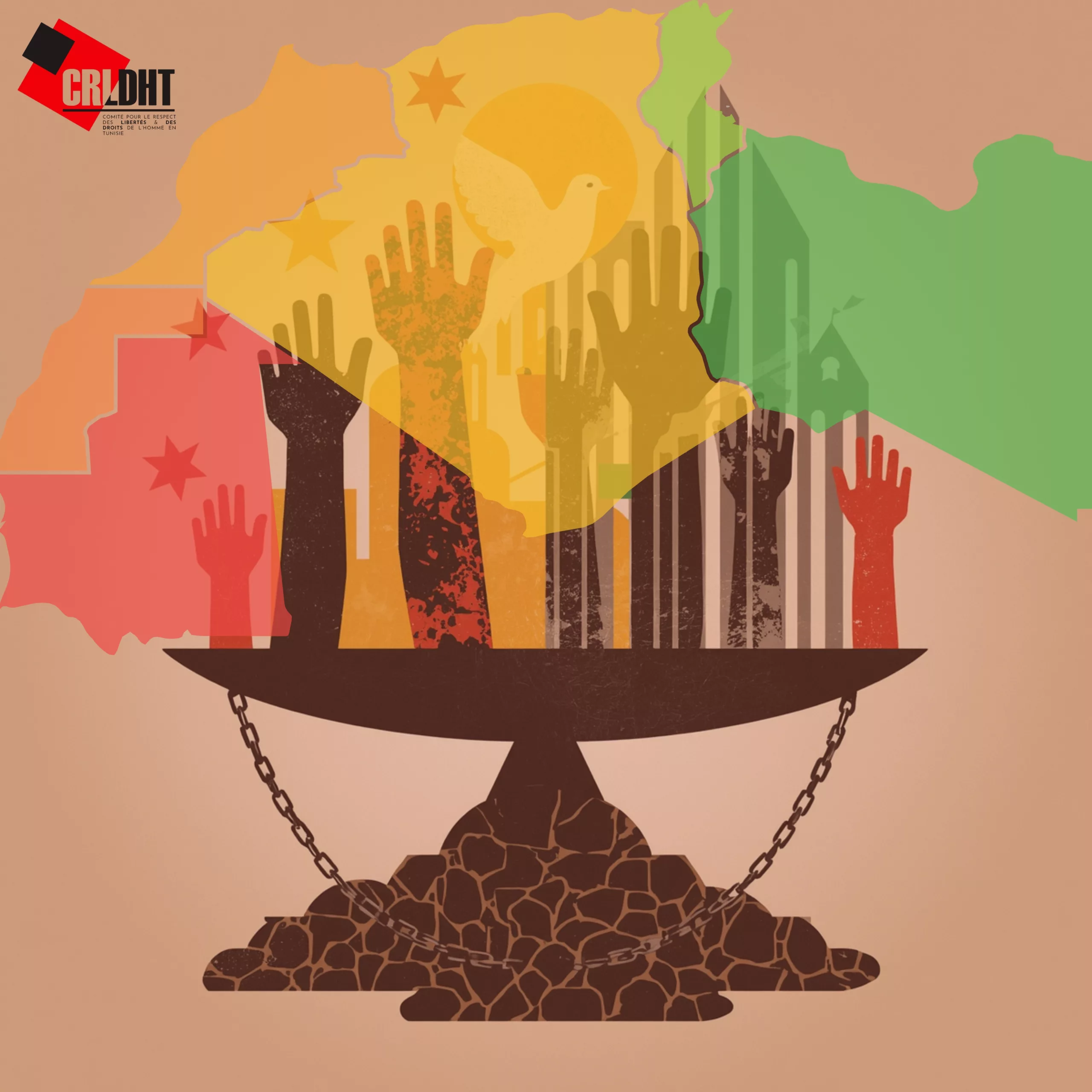
Recent political developments in the Maghreb demonstrate just how central the issue of human rights remains to the divisions currently dividing the region. Despite their different national trajectories, several Maghreb countries are experiencing the same tension between popular democratic aspirations and the authoritarian reconfiguration of power. This reality lends particular significance to the initiatives led by human rights organizations that are attempting, despite borders and political divisions, to build a shared space of solidarity and resistance.
It was in this spirit that the third “5 Hours for Freedoms and Human Rights in the Maghreb” event was held on May 2, 2026, at the Bourse du Travail in Paris, in tribute to Mohamed Harbi. This gathering, bringing together associations, collectives, and organizations from the Maghreb and the diaspora, sought to affirm the existence of a “Maghreb of the peoples” founded on the principles of dignity, freedom, justice, and equality. Above all, it highlighted a reality shared by several countries in the region: restrictions on civil liberties, the manipulation of the justice system, the repression of political opposition, the undermining of independent media, and the gradual weakening of civil society.
Algeria: From the Popular Hirak Movement to the Return of Political Stagnation
Algeria is today one of the most striking examples of this trend. Yet the 2019 Hirak movement had opened up a historic opportunity. For several months, millions of Algerians peacefully occupied public spaces to demand an end to a political system based on the seizure of power and the enduring dominance of the military. The movement had sparked immense hope throughout the Maghreb by projecting the image of a citizen mobilization capable of bringing about profound democratic change.
But this hope gradually came up against the system’s ability to absorb and then neutralize the protests. The movement’s lack of political organization, its rejection of any stable representation, and its distrust of traditional political parties prevented the popular mobilization from evolving into a genuine plan for institutional transition. Little by little, the government regained the initiative by combining security controls, administrative oversight, and judicial repression.
The tightening of the legal framework governing civil society organizations, the media, and activists illustrates this gradual shrinking of the public sphere. The authorities now view any independent initiative with suspicion, particularly when it maintains ties to international human rights networks. The security narrative regularly cites regional crises—Libya, Mali, Syria—to portray any political openness as a risk of destabilization.
This logic of control is also part of a deep social crisis marked by declining purchasing power, unemployment, inequality, and a sense of hopelessness. A significant portion of the youth now finds itself torn between political disengagement, exile, and disillusionment. The prevailing mood is no longer one of Hirak-era enthusiasm but rather one of widespread social fatigue.
Tunisia: The Exhaustion of the Post-Revolutionary Democratic Experiment
Tunisia is following a different path, but one that is also leading to a gradual erosion of democratic gains. The 2011 revolution brought about a major institutional break and gave rise to the most advanced democratic experiment in the Arab world. Freedom of expression, political pluralism, and a vibrant civil society had become historic achievements.
However, this transition has gradually been undermined by economic crises, partisan divisions, and a loss of trust in political elites. A growing segment of the population has come to associate democracy with institutional gridlock and the inability of successive governments to meet social expectations. In this context, the concentration of executive powers and the weakening of checks and balances have gained a certain legitimacy in the name of restoring order and political effectiveness.
Libya: State Fragmentation and an Ongoing Human Rights Crisis
The situation in Libya, for its part, illustrates the extreme consequences of state collapse and the absence of a stable democratic transition. Since 2011, Libya has remained marked by political divisions, armed conflict, and territorial fragmentation. Human rights violations there take particularly grave forms: arbitrary detentions, violence against civilians, summary executions, and the development of human trafficking networks targeting, in particular, sub-Saharan migrants. Libya has thus become, in the official discourse of several neighboring countries, a symbol of the chaos that could result from any sudden upheaval of the political order. Yet, beyond this security-focused interpretation, the Libyan experience reveals above all the devastating effects of the absence of solid democratic institutions, the weakening of the state, and regional and international geopolitical interference.
Morocco: Between Institutional Stability, Social Unrest, and Generation Z
Morocco presents a different reality, yet one marked by comparable tensions between political stability and demands for democracy. The social protests that have emerged in recent years, particularly in the Rif region, have given voice to deep-seated expectations regarding social justice, regional development, and civil liberties. The authorities’ response—marked by trials, harsh sentences, and increased control over public spaces—has highlighted the limits of Morocco’s political openness. Despite the existence of pluralistic institutions and a relatively diverse media landscape by regional standards, human rights organizations regularly denounce restrictions targeting journalists, activists, and independent social movements.
For several years now, Morocco has also seen the emergence of a new generation of social activism driven by a segment of the urban, tech-savvy youth, often referred to as “Generation Z.” Highly active on social media, this generation is expressing new forms of mobilization around individual freedoms, social inequalities, territorial justice, police violence, and the cost of living. Unlike traditional forms of partisan or union activism, these movements rely more on digital campaigns, cultural expressions, spontaneous demonstrations, and less structured forms of engagement.
Authorities often view this connected generation as a potential source of social and political instability. Several arrests of young content creators, digital activists, and critical internet users have underscored the desire to control these new spaces for expression. Social media has thus become a key battleground between growing aspirations for freedom of expression and policies aimed at surveillance and the restriction of the digital public sphere.
The Gen Z phenomenon also reveals a more profound transformation of Maghreb societies. A significant portion of this youth no longer identifies with traditional political frameworks or with official rhetoric on stability and development. Instead, they are increasingly voicing demands related to individual dignity, personal freedoms, social equality, and economic prospects. This shift is helping to reshape the nature of social protest in the Maghreb while heightening tensions between emerging civil societies and established political powers.
The issue of normalization with Israel is also a major source of political and social tension in the Maghreb. The agreements concluded in recent years by certain states in the region have deeply divided public opinion, where solidarity with the Palestinian cause remains historically strong. For a significant portion of democratic actors and human rights organizations, this normalization is not merely a diplomatic or geostrategic choice; it is also accompanied by a tightening of security measures and a reduction in spaces for dissent.
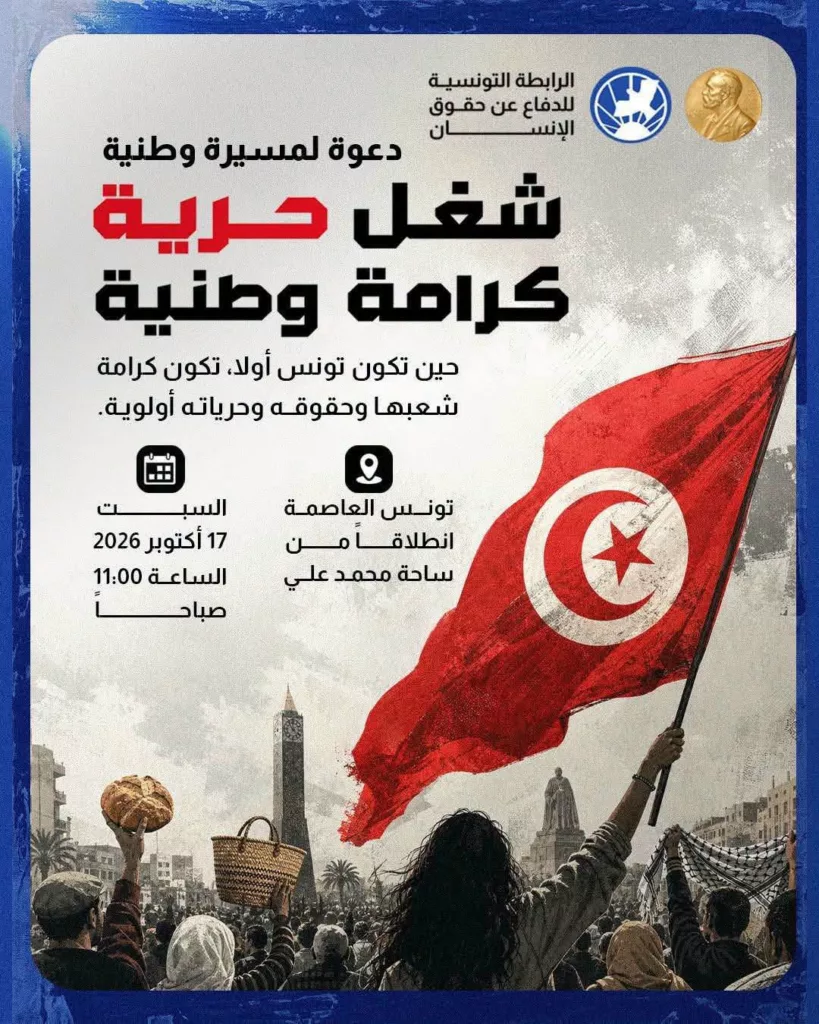
In Morocco, the official resumption of relations with Israel has reignited tensions between the government and numerous political, labor union, and civil society actors who continue to affirm their support for the Palestinian people. Solidarity demonstrations for Gaza and Palestine have become forums where demands related to civil liberties, political sovereignty, and opposition to restrictions on public expression are also voiced. In Algeria and Tunisia, where the authorities officially maintain a hostile stance toward normalization, the Palestinian issue remains a powerful mobilizing force within civil society and often serves as a point of convergence among various democratic and popular movements.
However, this issue is also being exploited by several regimes in the region to fuel political polarization or divert attention from internal crises. Between popular support for Palestine, regional geopolitical rivalries, and strategies to legitimize those in power, the issue of normalization highlights the deep contradictions currently dividing the Maghreb. It also demonstrates how closely democratic issues, civil liberties, and international affairs remain intertwined in Maghreb citizen mobilizations.
Mauritania: Slavery, Discrimination, and the Struggle for Equal Rights
Mauritania also plays a significant role in human rights debates in the Maghreb. Despite certain institutional changes, the country continues to face deep social inequalities and persistent violations of fundamental rights. The issue of slavery and its legacy continues to have a particularly strong impact on Mauritanian society. Although officially abolished and criminalized by law, slavery in various forms remains a reality that has been denounced for years by human rights organizations and anti-slavery movements. The Haratine communities remain particularly affected by the social, economic, and political discrimination inherited from this historical system.
Activists working to combat slavery, racial discrimination, and social inequality regularly face legal pressure, administrative restrictions, and attempts to marginalize them politically. Mauritanian organizations also denounce violations of civil liberties and the difficulties faced by independent civic movements in carrying out their activities in a free and safe environment.
The migration issue is also exacerbating tensions within the country. Mauritania has become a strategic transit point in European security policies aimed at controlling African migration to Europe. This situation is intensifying security pressures and further undermining the vulnerability of migrant populations as well as the civil society organizations that assist them.
In this context, calls for greater social justice, equality among citizens, and democratic freedoms remain at the heart of the protests by Mauritanian civil society, which seeks to anchor its struggles within a broader framework of Maghreb and African solidarity.
Toward a Maghreb of Human Rights: Democratic Solidarity and Citizen Resistance
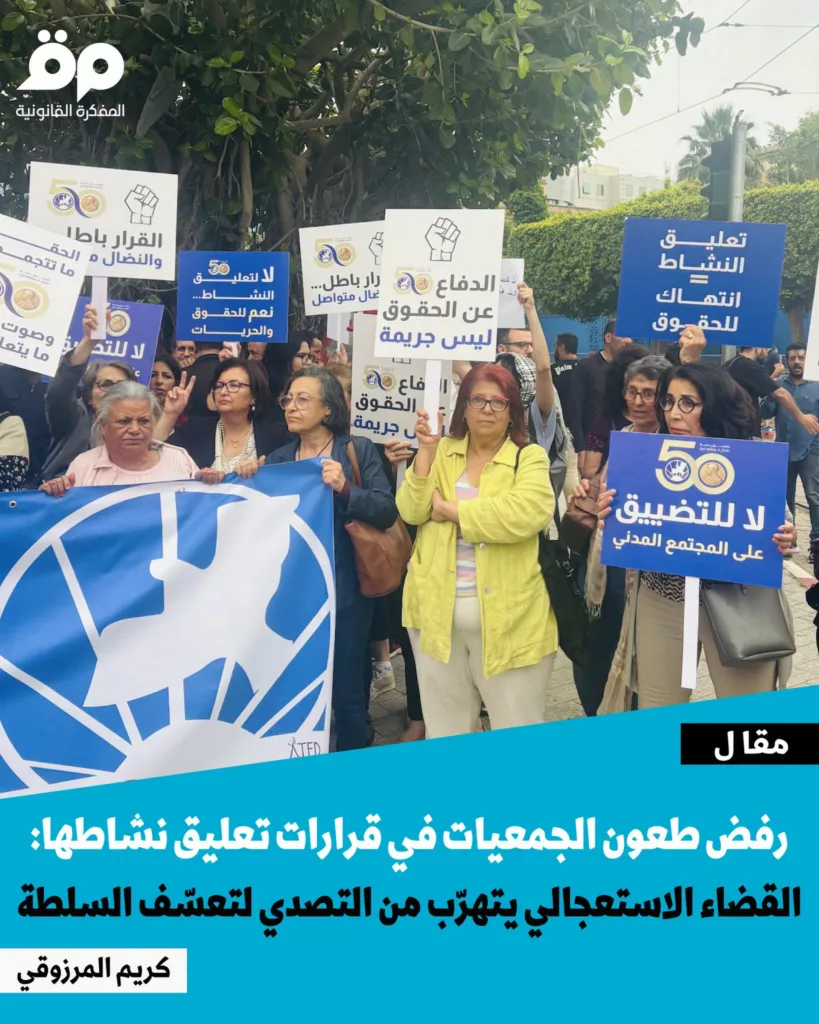
In Algeria, Tunisia, Morocco, Libya, and Mauritania, civil society is now paying the price for this regional political stagnation. Associations, journalists, lawyers, trade unionists, and human rights defenders are operating in an environment marked by uncertainty, legal pressure, and increasingly restricted spaces for expression. Many organizations now operate with survival as their primary goal rather than social or political transformation.
It is precisely in the face of this fragmentation of democratic spaces that trans-Maghreb initiatives take on their full significance. The discussions held during the “5 Hours for Freedoms and Human Rights in the Maghreb” event emphasized the need to build concrete solidarity among the region’s democratic struggles. The idea of a “Maghreb of Human Rights” is based on a simple conviction: the struggles for freedom of expression, an independent judiciary, women’s rights, the dignity of migrants, and the release of prisoners of conscience cannot be confined to strictly national frameworks.
This vision breaks with the isolationist tendencies that currently dominate relations among Maghreb states. While political borders are becoming more rigid and regional rivalries are preventing any lasting integration, human rights advocates, on the contrary, champion the idea of a Maghreb region based on freedom of movement, solidarity, and shared struggles.
Recent experience in the Maghreb ultimately shows that democratic transitions remain fragile when they fail to transform popular movements into lasting institutions, credible political mechanisms, and concrete social safeguards. But despite disillusionment and authoritarian backsliding, aspirations for freedom, dignity, and justice continue to run deep within Maghreb societies.
It is in this persistence of resistance, but also in the gradual building of a true Maghreb of human rights, that one of the region’s main prospects for democracy may lie today