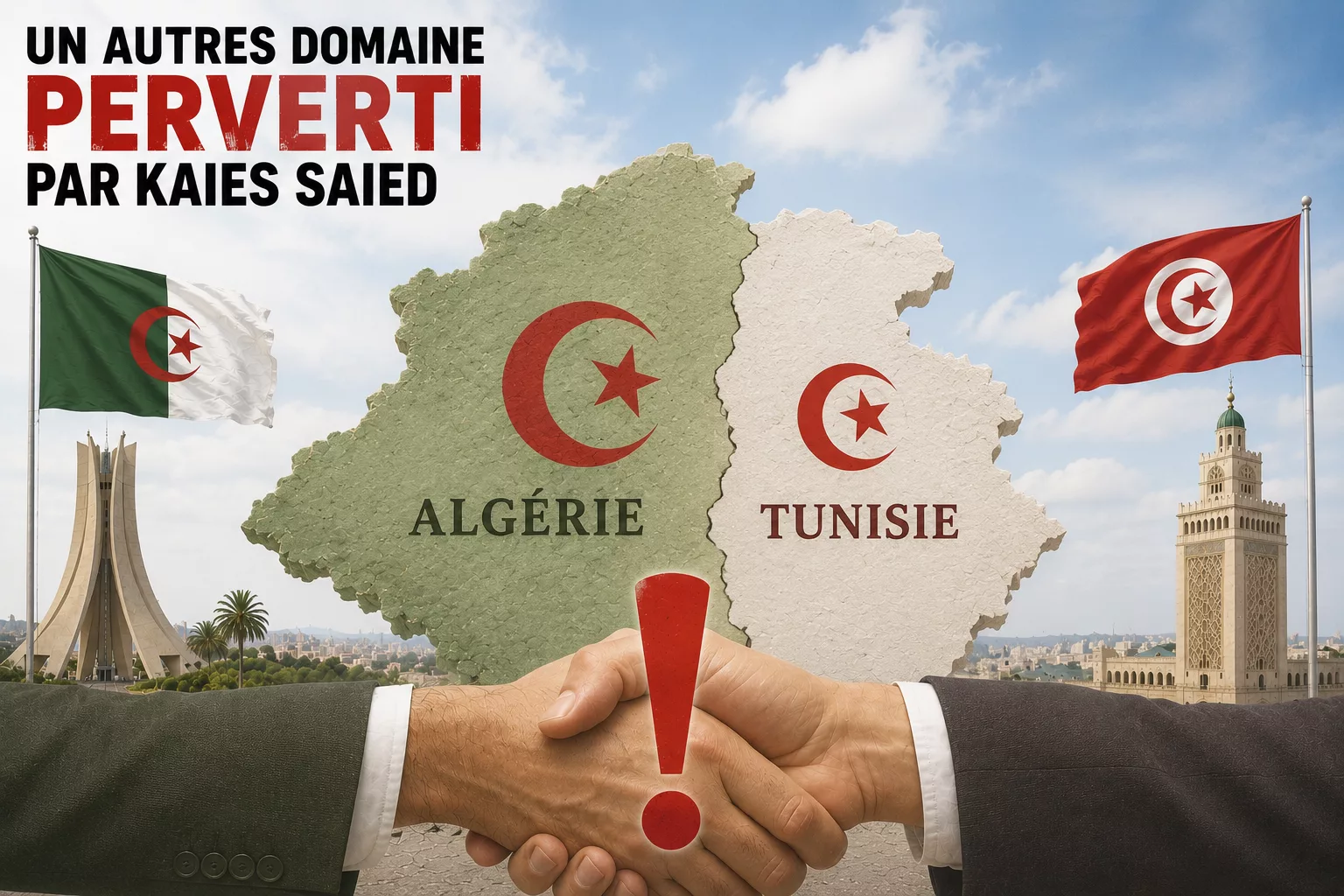
The Official Journal of the Republic of Tunisia dated June 5, 2026 (No. 57) published no fewer than twelve presidential decrees ratifying agreements, memorandums of understanding, and executive programs concluded with several countries: nine of them concern Algeria and three concern Egypt.
For Algeria, these focus in particular on cultural cooperation (2026–2028), the recognition of certificates of conformity, sports (2026–2028), youth (2026–2027), women’s empowerment, family, children, and the elderly (2026–2028), the pharmaceutical industry, health (2026–2028), employment, energy, and new energy sources.
These are diverse and important areas, judging by the titles of the presidential decrees. However, the ratified texts themselves have not been published. Beyond the positive yet shaky nature of Tunisia’s relations with its neighbors (1), this omission raises a problem regarding citizens’ right to participate in the management of their country’s public affairs (2), their right to information (3), and, above all, the clear imbalance between the regime of Kaïs Saïed and that of the authorities in power in Algeria (4).
1- Shaky Relations at the Expense of the Non-Maghreb
The development of Tunisian-Algerian relations in all areas is unquestionably essential for both peoples and both states. These relations remain strategic and, in principle, beneficial to the two neighboring countries, whose shared history, cultural ties, complementary demographics, and economic interests should encourage them to move beyond mere cooperation and to methodically envision and build a true union.
In a world where nations, like businesses, gain strength when they pool their resources, the more they integrate on a lasting basis, the more prosperous they become. The paradox is that, for nations, the stronger the union, the more their independence and sovereignty are strengthened. Both history and current international events are full of examples that illustrate this point.
It is precisely from this perspective that current relations appear to be unstable. Both Algeria and Tunisia belong to the Maghreb, a geographical, human, and economic region whose unity awaits only a concerted political effort to bring it together. Yet the Maghreb states seem to be heading in the opposite direction by erecting artificial barriers that are ultimately nothing more than the product of their leaders’ political self-interest and short-sightedness, to the detriment of their peoples’ interests.
Bilateral cooperation should always serve as a step toward Maghreb integration, in accordance with Article 7 of the 2022 Tunisian Constitution, which states: “The Tunisian Republic is part of the Greater Arab Maghreb. It works toward achieving its unity within the framework of the common interest.”
It is within this framework that any intra-Maghreb relationship should be assessed.
The cost of not being part of the Maghreb is extremely high for all these states and their peoples. And, unfortunately, given the situation in Tunisia, it would even be legitimate to ask whether we are not also paying the price for Tunisia’s lack of statehood.
2- Relationships that undermine every citizen’s right to participate in the management of their country’s public affairs
The situation in both Algeria and Tunisia does not respect citizens’ right to participate in the management of their countries’ public affairs. The decision-making process in both countries does not provide for any meaningful citizen participation.
The leaders of both countries have monopolized the concept of sovereignty. It no longer truly belongs to the state or the people; it has become theirs alone.
Public debate on societal issues, as well as consultation—in whatever form—prior to any internal or international decision, does not exist, not even in a formal sense. The same is true of institutional or citizen oversight.
Citizens are reduced to the status of subjects whose only freedom is to applaud and endorse everything that comes from the ruling authorities—or to remain silent. Otherwise, a whole arsenal of criminal provisions, backed by security and pseudo-judicial apparatuses, is mobilized to silence these “traitors”—the dissidents who refuse to be led, in chains, toward a so-called paradise.
3- Relationships that are impervious to the right to information
If we consider that the people are the true holders of sovereignty and that the President of the Republic is merely their representative, the minimum requirement for the exercise of that sovereignty is that the people be informed, in advance, of the issues at stake and the content of the agreements and memoranda concluded with other states.
This is all the more true when it comes to a neighboring country with which bilateral relations are of a highly strategic nature, such as Algeria or any other country in the Maghreb.
Such agreements, as well as the legal instruments governing them—whether of general or sector-specific scope—should be the subject of public debate and genuine consultation with national stakeholders before they are signed or ratified.
Beyond respect for popular sovereignty and the right to participate in public affairs—which presupposes prior information—the right to information is in itself a fundamental right enshrined in international instruments and domestic law.
At the very least, it requires the publication of ratified texts. However, the conventions covered by this series of decrees published in the JORT have not been made public. This lack of transparency inevitably fuels controversy and rumors, as was already the case with the defense cooperation agreement signed with the same Algerian regime.
4- Deeply Unequal Relationships
Bilateral relations between states are presumed to be balanced solely because they result from the expression of the will of the representatives of both parties.
In reality, this assumption is largely fictitious. International relations remain, de facto, largely determined by the balance of power.
The example of relations between Tunisia and Algeria is no exception.
Tunisia's vulnerability, its state of institutional decay, its financial instability, and the many failures that have accumulated under Kaïs Saïed's regime have reached historic levels.
In this context, the lack of transparency is all the more troubling, as it may legitimately lead one to believe that the agreements reached conceal a vast imbalance between two regimes for which respect for the rule of law is clearly not the primary concern.
In fact, it is no exaggeration to speak of a form of vassalage on the part of Kaïs Saïed’s regime toward the Algerian regime. The Tunisian president’s dramatic diplomatic about-face on the issue of Western Sahara is a case in point. He ultimately found himself in a difficult position when the Algerian authorities themselves shifted their own stance.
Conclusion
One cannot help but note that bilateral relations between Tunisia and Algeria—which should naturally serve the interests of both peoples and contribute to the development of the Maghreb—have gradually transformed, due to violations of the principles of the rule of law and constitutional rights in both countries, into a relationship that is opaque, deeply unbalanced, and even toxic.
A relationship that, far from serving the interests of the Tunisian and Algerian peoples, now appears to serve primarily the interests of the ruling authorities, in their narrowest conception of power.