Hunger strikes have become the last resort for those who have been stripped of all other means of making their voices heard. In Tunisian prisons, men and women are resorting to putting their health and lives at risk—not to demand a privilege, but to obtain what every prisoner is entitled to: to see their families, receive medical care, have access to diverse news sources, speak with their lawyer, and be treated with dignity.
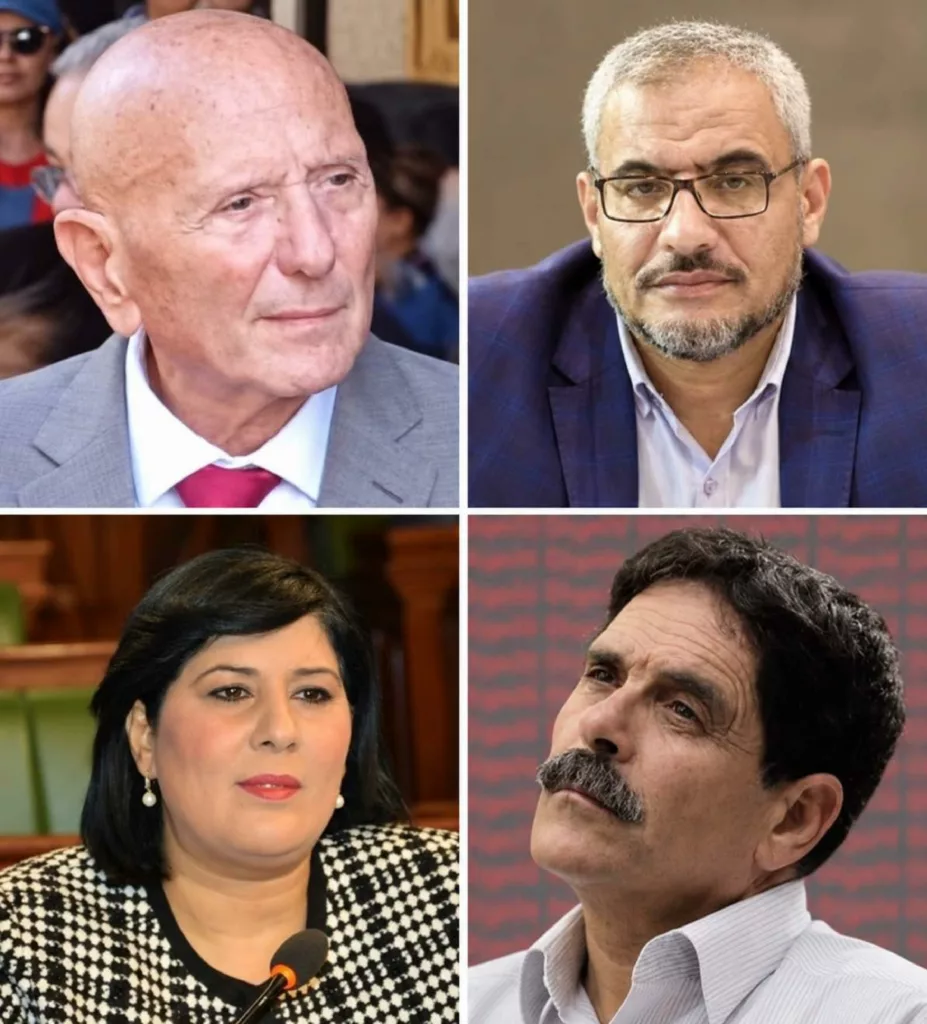
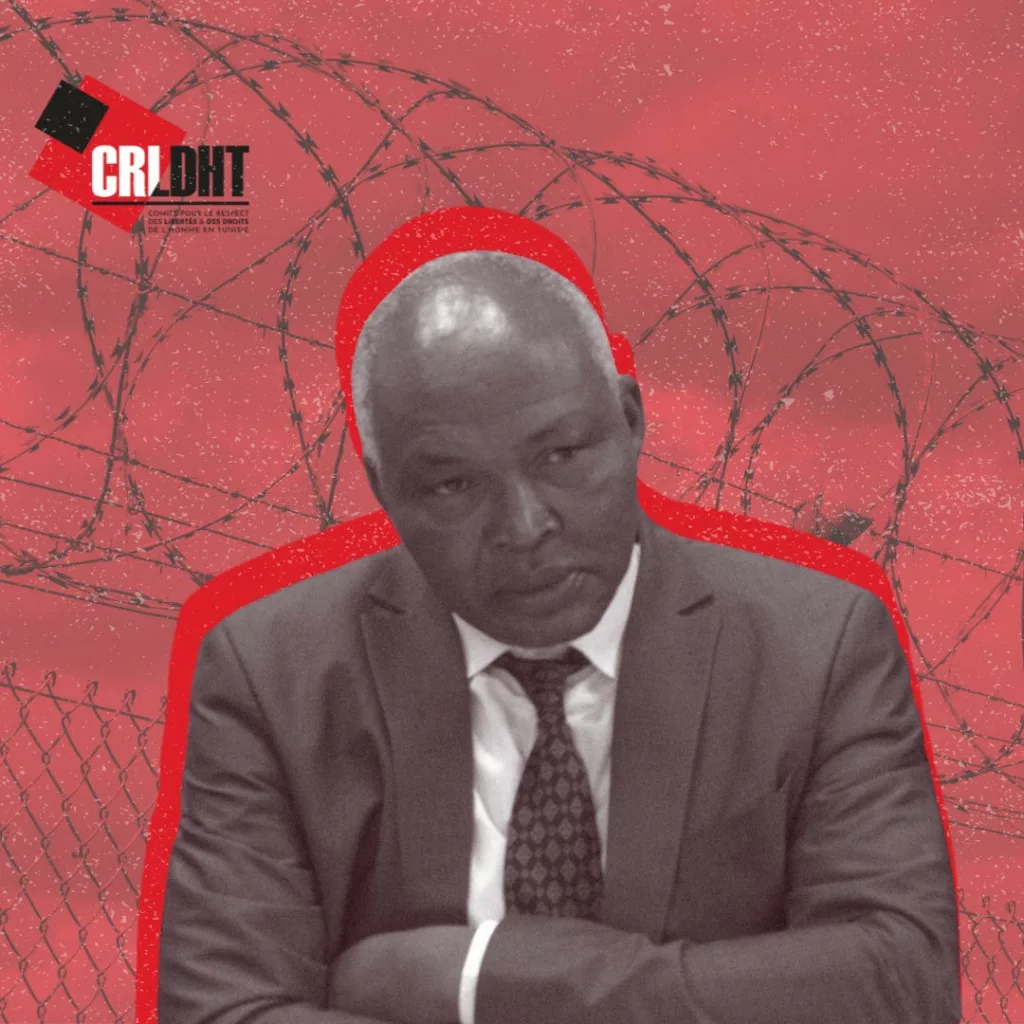
Ahmed Néjib Chebbi, president of the National Salvation Front, began a hunger strike on the night of September 30 to October 1, 2026. He is protesting the denial of the right to information and the censorship imposed on prisoners: his access to diverse media outlets, notably France 24, is being denied or restricted. At 83 years old, imprisoned after being sentenced to 12 years in the so-called “conspiracy” case, he is forced to risk his health to demand the right to know what is happening in his country and around the world.
His health condition makes this situation even more alarming. His family has already reported episodes of dizziness and a worrying level of frailty: diabetes, intensive medical treatment, a history of cardiovascular disease, and a quadruple bypass. He had to be transferred to the hospital after a sudden drop in his blood sugar level, which fell to 0.5 g/l within twenty-four hours. Keeping him in conditions where he receives only one twenty-minute visit per week behind a visiting room window places direct responsibility on prison authorities and political leaders.
Sahbi Atig, a leader of the Ennahda movement, has been on a hunger strike since September 29, 2026. His wife announced, following a visit, that he was protesting the decision to deny him in-person visits with his family. At 67 years old, having been sentenced to very harsh prison terms and already scarred by long years in prison under Ben Ali, he refuses to accept the idea of no longer being able to see his children and grandchildren. Taking this connection away from him is not merely an administrative measure: it amounts to inflicting an additional punishment, yet another act of violence against him as well as his entire family.
These two new strikes are not isolated incidents. They are the latest in a long series that, since the spring, has revealed the true nature of the Tunisian prison system: a system in which inmates must put themselves in danger to be heard.
Jawher Ben Mbarek, leader of the “Citizens Against the Coup” collective, went on a hunger strike from late March through April 27 to protest his prolonged detention and a political trial lacking fundamental safeguards of fairness. Zied El Heni went on hunger strike after his arrest to protest the charges brought against him in connection with his work as a journalist. Mourad Zeghidi followed suit to denounce the injustice of his conviction and the judicial harassment he has been subjected to.
In August, Rached Ghannouchi, the 84-year-old president of the Ennahda movement, protested his isolation, the restrictions on his contact with his family and lawyers, and the lack of reliable information about his situation. Chawki Tabib, a former president of the bar association, puthis health at risk to denounce his detention, his prison conditions, and the obstacles to his defense.
Wael Naouar, a leader of the Soumoud flotilla, began a hunger strike on August 16, demanding his release and that of his fellow activists who are being prosecuted in the case related to the Soumoud flotilla. His condition has become critical after more than a month on hunger strike. Ghassen Henchiri, Ghassen Boughdiri, and Nabil Chennoufi joined him to protest the extension of their pretrial detention and the criminalization of solidarity with Palestine. Ayachi Hammami, a lawyer, in turn went on a hunger strike in solidarity.
Abir Moussi, president of the Free Destourian Party, also announced a new strike to protest her detention and the restrictions imposed on her defense team.
Not all of them were charged with the same offenses. But none of them should be forced to risk their lives to defend basic rights.
They find themselves involved in three types of cases:
- "conspiracy" and national security cases, used against peaceful political opponents;
- prosecutions for public expression—often based on Decree-Law 54 or the Telecommunications Code—targeting journalists, lawyers, and critics;
- financial, tax, or corruption cases, which the individuals involved and their defenders denounce as serving as a criminal pretext for political and civic repression.
What the government seeks to portray as separate legal cases actually reveals a single policy: to imprison opponents, wear them down, isolate them, and cut them off from their loved ones, their lawyers, information, and the public sphere; and then subject them to campaigns of hatred and demonization carried out by its proxies.
The scandal does not lie in the hunger strikes themselves; it lies in the system that makes them inevitable. When political prisoners, journalists, lawyers, and activists have no other way to make their voices heard than to put their health at risk, it means that prison has become a place where human dignity is systematically denied.
The government cannot hide behind press releases, grandstanding, or denials. It bears full responsibility for the lives, health, and physical and moral integrity of all detainees. It must put an end to arbitrary measures and guarantee medical care, family visits, access to information, the right to a defense, and conditions of detention consistent with human dignity.
For detention that prevents a father from seeing his children, that deprives a sick prisoner of the right to medical care and access to information, and that hinders communication with his attorney is no longer a place governed by the rule of law: it becomes an instrument of cruelty, the overt symbol of a regime’s inhumanity.
The CRLDHT demands:
- the immediate resumption of in-person visits between inmates and their families, and an end to all arbitrary restrictions on this fundamental right;
- effective access for all prisoners to diverse information, the press, radio stations, news channels, and independent media;
- regular, thorough, and independent medical monitoring for all hunger strikers, as well as full disclosure of their health status to their families and attorneys;
- full respect for the right of detainees to communicate freely and confidentially with their attorneys and to have access to the necessary means for their defense;
- an end to abusive solitary confinement, punitive measures, administrative deprivations, and all practices intended to exhaust, humiliate, or break detainees;
- unimpeded access for independent monitoring mechanisms—including the National Mechanism for the Prevention of Torture—to correctional facilities and to detainees whose health condition is a cause for concern;
- an end to the campaigns of hatred, defamation, and demonization targeting political prisoners, their families, their lawyers, and those who support them;
- the immediate and unconditional release of all persons imprisoned for their opinions, their right to freedom of expression, their peaceful political activities, their journalistic work, their defense of human rights, or their civic solidarity.
The CRLDHT calls on the Tunisian authorities to stop treating prison as a tool for political revenge. Protecting the lives and dignity of prisoners is neither a favor nor a concession: it is a legal and constitutional obligation that is consistent with human rights.
Paris, October 3, 2026