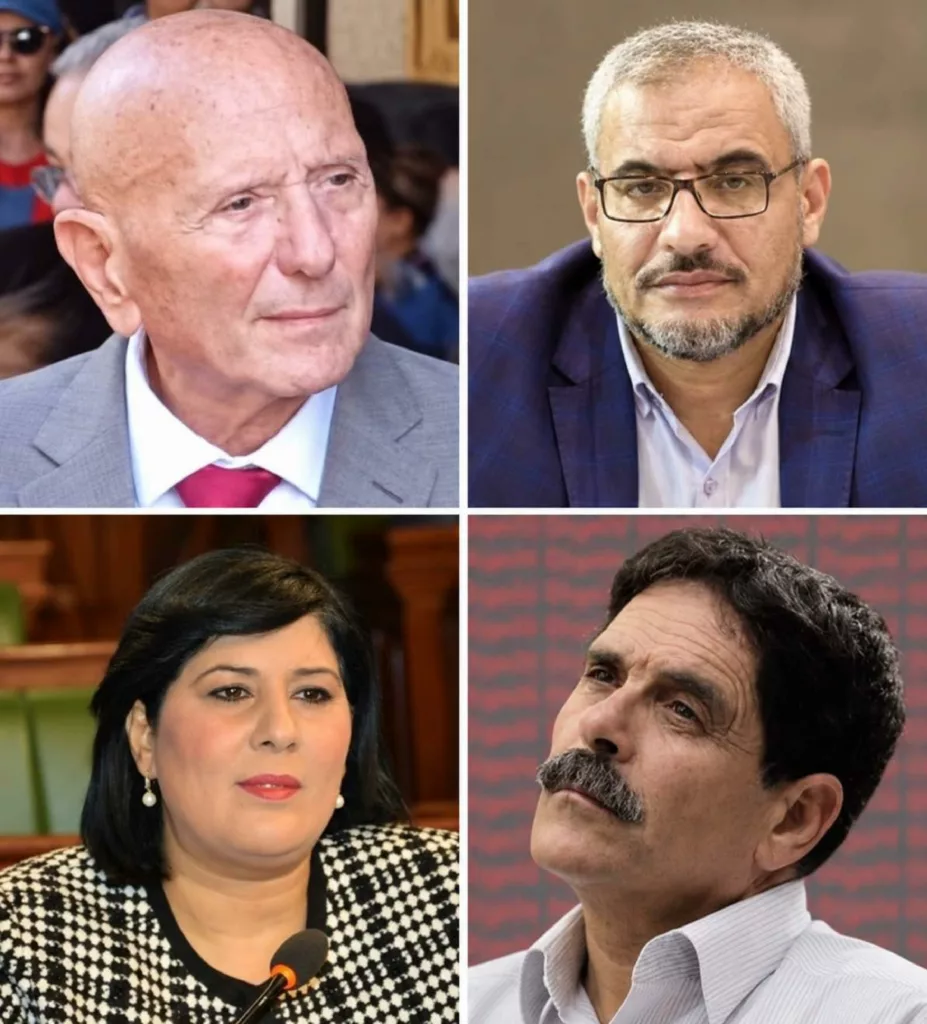
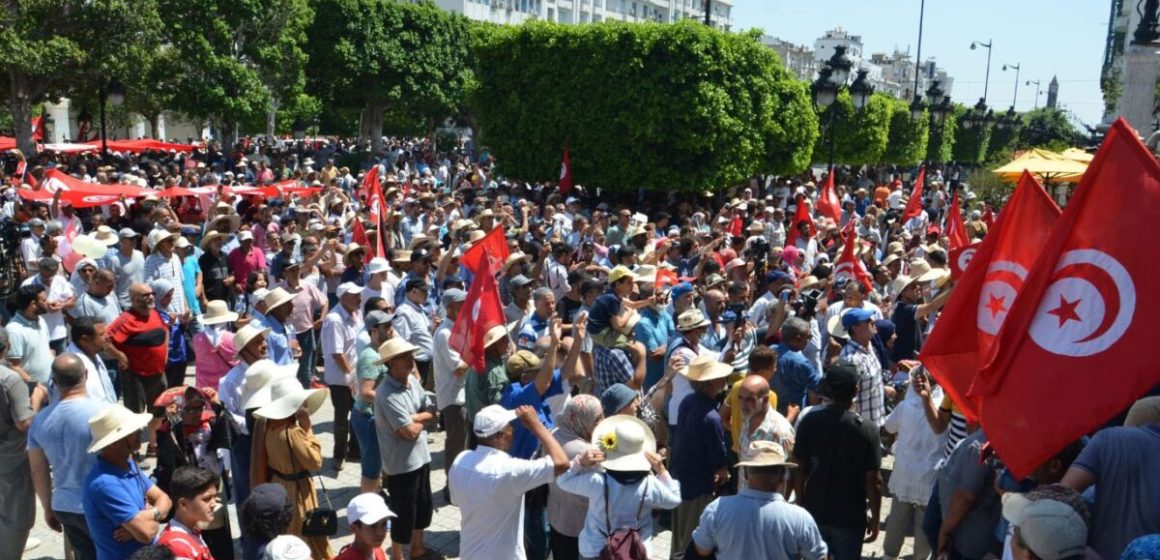
On June 22, at the invitation of the Socialist Group of the National Assembly, the CRLDHT took part, alongside numerous prominent figures and organizations committed to freedom and democracy in Tunisia, in a meeting dedicated to the situation in the country. There, it highlighted the mobilization and resistance of Tunisian civil society—both in Tunisia and in exile—in the face of the ongoing erosion of fundamental freedoms, the rule of law, and democratic safeguards.
————————–
Tunisian civil society is fighting back!
Thank you for giving me the opportunity today to speak on behalf of Tunisian civil society, which is going through one of the most difficult periods in its modern history.
Tunisian civil society is not a recent development. It is deeply rooted in our society and has been a key player in the defense of rights, freedoms, and social cohesion for decades. Tunisia was home to the first human rights league in Africa and the Arab world, the Tunisian Human Rights League, which will celebrate its fiftieth anniversary next year. This history reflects a long tradition of civic and democratic engagement.
Both before and after the 2011 revolution, civil society groups, labor unions, human rights organizations, and other intermediary bodies played a fundamental role in the country’s stability, social mediation, and democratic consolidation.
However, President Kaïs Saïed has never hidden his distrust of these intermediary bodies. His political vision is based on a direct relationship between the leader and “the people,” summed up by his recurring slogan: “The people want.” In this populist conception of power, political parties, unions, associations, and independent organizations are often viewed as obstacles rather than as essential components of a vibrant democracy.
After the power grab on July 25, 2021—marked by the dissolution of the government and the suspension and subsequent closure of Parliament—a significant portion of civil society had nevertheless chosen to give him the benefit of the doubt. The day after he seized power, the president held lengthy meetings with several representatives of civil society and assured them that rights and freedoms would be respected. These promises were never kept.
Starting in 2023, the crackdown gradually expanded to include civil society organizations, particularly those engaged in defending migrants and humanitarian work. Several NGO leaders were arrested and convicted. Among them are Cherifa Riahi, former director of Tunisie Terre d’Asile, who was sentenced to two years in prison, as well as Mustapha Jemmali, Yadh Bousselmi, Abderrazek Krimi (leaders of the Tunisian Refugee Center), and Abdallah Said, president of the association “Les Enfants de la Lune,” who remains in prison, as well as Saadia Mosbah, president of the anti-racist association Mnemty, who was also sentenced to a lengthy prison term. And many others. These prosecutions have sent a clear message: solidarity has become suspect.
At the same time, several organizations have been subject to temporary administrative suspensions or various forms of harassment. The Tunisian Association of Democratic Women, the Tunisian Forum for Economic and Social Rights, the Tunisian League for Human Rights, and other organizations have been targeted by restrictive measures that severely hinder their work.
For several years now, the Tunisian government has been striving to criminalize solidarity with migrants, as well as, more broadly, social, humanitarian, and human rights advocacy. What should be considered civic engagement is now portrayed as a threat to the state.
Yet, in the face of the current drift toward authoritarianism, civil society remains one of the main arenas for peaceful resistance. It is associations, citizen groups, human rights defenders, and independent organizations that continue to organize campaigns, issue statements, document violations of fundamental rights, and demonstrate for the release of political prisoners, prisoners of conscience, and jailed journalists.
But the crackdown does not stop at arrests. The government is also targeting the funding of organizations. In official discourse, civil society organizations are regularly accused of serving foreign interests and receiving suspicious funding. This smear campaign aims to undermine their legitimacy in the eyes of the public.
However, international funding for civil society organizations is perfectly legal in Tunisia. Since the revolution, it has enabled the development of thousands of initiatives that have provided essential services to the most vulnerable populations, often in areas where the government was absent.
Today, there is much discussion about proposals to reform Law No. 88 of November 24, 2011, on associations. This law, adopted after the revolution, is recognized as one of the most progressive in the Arab world. The proposed reforms are primarily aimed at restricting foreign funding, which is, however, the main source of funding for Tunisian associations in the absence of effective public support mechanisms. If these proposals are enacted, they risk stifling a large part of Tunisia’s civil society.
The question at hand today is not merely one of the survival of Tunisian civil society organizations. It is one of the future of fundamental freedoms in Tunisia. A free, independent, and pluralistic civil society is an indispensable pillar of any democracy. When those in power seek to silence it, society as a whole loses its ability to express itself, to organize, and to defend its rights.
We urge you to remain vigilant, to publicly support human rights defenders and Tunisian civil society organizations, to call for the release of those detained for their civic engagement, and to oppose any legislative reform that would undermine freedom of association.
Tunisian civil society has been a major player in the democratic transition. Today, it needs your support to continue defending the universal values of freedom, dignity, and justice.
Finally, it is important to note that the campaign for civil liberties in Tunisia is not limited to the country’s borders. Many Tunisian civil society organizations based abroad, including the CRLDHT, serve as essential liaisons. They convey the concerns and demands of Tunisian civil society to political leaders, European institutions, and international organizations. Through their awareness-raising efforts, advocacy initiatives, and demonstrations calling for the release of political prisoners and prisoners of conscience, they help keep the international community’s attention focused on the alarming situation regarding human rights and fundamental freedoms in Tunisia.
Thank you for your attention.
Committee for the Respect of Freedoms and Human Rights in Tunisia (CRLDHT)