July 2026 was marked by a dramatic escalation of judicial repression in Tunisia. Judges, lawyers, journalists, political leaders, civil society activists, and former government officials were successively convicted, prosecuted, or kept in detention. The rulings handed down during the month reflect an intensified use of the judicial system against opponents, while reports from prisons indicate an alarming deterioration in detention conditions, exacerbated by an exceptional heat wave, water and electricity outages, and deteriorating sanitary conditions.
On July 6, the court upheld several convictions on appeal in the Marouane Mabrouk case. Former Prime Minister Youssef Chahed was sentenced to six years in prison in connection with the case involving the release of Marouane Mabrouk’s frozen assets. Mabrouk was sentenced to fourteen years in prison for money laundering. The convictions were also upheld for former ministers Mabrouk Korchid, Ridha Chalghoum, Mohamed Anouar Maarouf, and Khemaies Jhinaoui, as well as for Adel Grar, former CEO of Al Karama Holding, and Lotfi Ben Sassi, former economic advisor. Mehdi Ben Gharbia, however, had the charges against him dismissed.
On July 8, the Sfax Court of Appeals sentenced journalist and columnist Haythem El Mekki to one year in prison. This decision overturned a lower court ruling that had dismissed the case. Initially charged under Decree-Law No. 54 concerning “false information,” he was ultimately convicted under Article 86 of the Telecommunications Code. The case stemmed from reports about the morgue at the Sfax University Hospital being overwhelmed with the bodies of deceased migrants—information that was later confirmed by the authorities themselves. Fearing immediate arrest, Haythem El Mekki left Tunisia that same day. His legal ordeal illustrates a series of prosecutions brought since 2023 against several journalists.
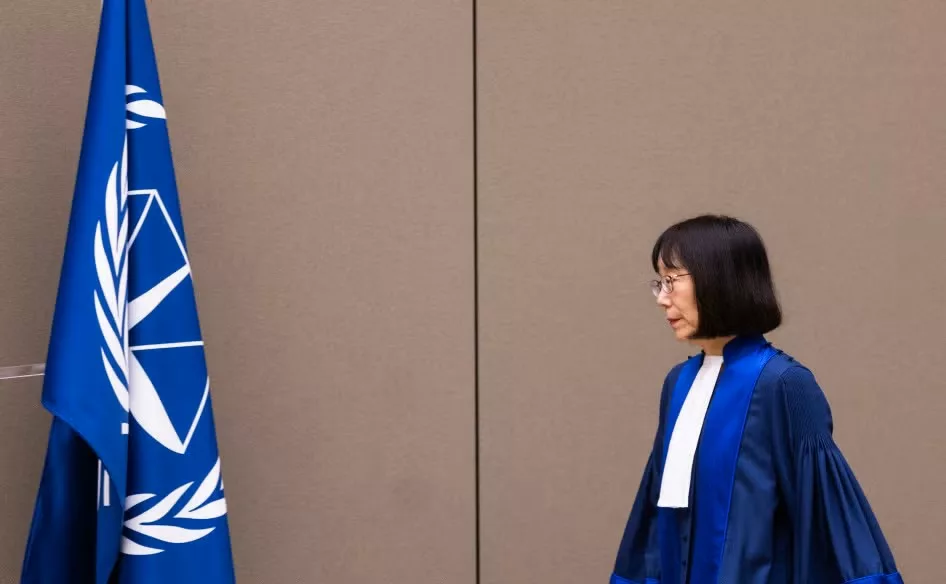
On July 10, the Criminal Division of the Tunis Court of First Instance sentenced Anas Hmaidi, president of the Association of Tunisian Judges (AMT), to one year in prison. This sentence comes after several years of pressure exerted against judges who have defended the independence of the judiciary. Dismissed in 2022 as part of the mass dismissal of fifty-seven judges, Anas Hmaidi has become one of the leading figures in the opposition to the executive branch’s interference in the judiciary. Professional organizations representing judges and human rights groups have condemned this decision as a new step in the criminalization of union activity and the defense of judicial independence. It comes on top of proceedings targeting other judges, notably Hamadi Rahmani, and confirms the continuation of the policy of bringing the judiciary to heel that began in 2022.
On July 11, the Court of Appeals upheld the four-year prison sentence handed down to Mondher Ounissi, vice president of the Ennahda movement, as well as that of Noureddine Bhiri, former Minister of Justice, who was also sentenced to four years in prison, in the case surrounding the death of former lawmaker Jilani Dabboussi. According to their relatives, the announcement of the verdict caused a sudden deterioration in Mondher Ounissi’s health, and he completely lost the ability to speak. The prison doctor recommended his transfer to a specialized hospital. However, the prisoner refused to be transported in prison vehicles, which he considered incompatible with his health condition and tantamount to inhumane treatment. Prison authorities also denied him paper and a pen to communicate with his lawyer, while the court rejected the same request during a hearing in another case known as the “leaked video” case.
On July 13, the specialized criminal chamber of the anti-terrorism judicial unit at the Tunis Court of Appeals increased the sentence of Judge Béchir Akremi, raising it from twenty-three to twenty-nine years in prison. Detained since February 12, 2023, the former public prosecutor is facing several charges related to his handling of sensitive cases, notably those involving the assassinations of Chokri Belaïd and Mohamed Brahmi. This sentence, the harshest handed down to a judge since the revolution, stands as the most striking example of a broader crackdown on the independent judiciary. Following the dismissal of fifty-seven judges in 2022, the prosecutions targeting Anas Hmaidi, Hamadi Rahmani, and other critical judges reflect the authorities’ determination to curtail the judiciary’s autonomy.
On July 16, the appeals chamber of the Tunis Court of First Instance sentenced lawyer and activist Abdennaceur Aouini to one year in prison in a case related to a past dispute with a fellow lawyer. According to published reports, however, the complainant had withdrawn his complaint, and the court of first instance had previously dismissed the case.
On July 17, journalist Hichem Snoussi, a former member of the Independent High Authority for Audiovisual Communication (HAICA), was sentenced to six months in prison in a previous case brought by Nabil Karoui for publishing information regarding the ownership structure of Nessma TV—information that was nevertheless considered to fall within the scope of the right to information.
During the second half of the month, Hamza Belloumi, Insaf Boughdiri, and Sofiane Ben Hamida discovered that they had been sentenced in absentia to one year in prison in a case stemming from a broadcast in 2015, following a complaint filed by former President Moncef Marzouki. The three journalists claim they were never properly summoned to appear in court and have announced their intention to appeal the rulings.
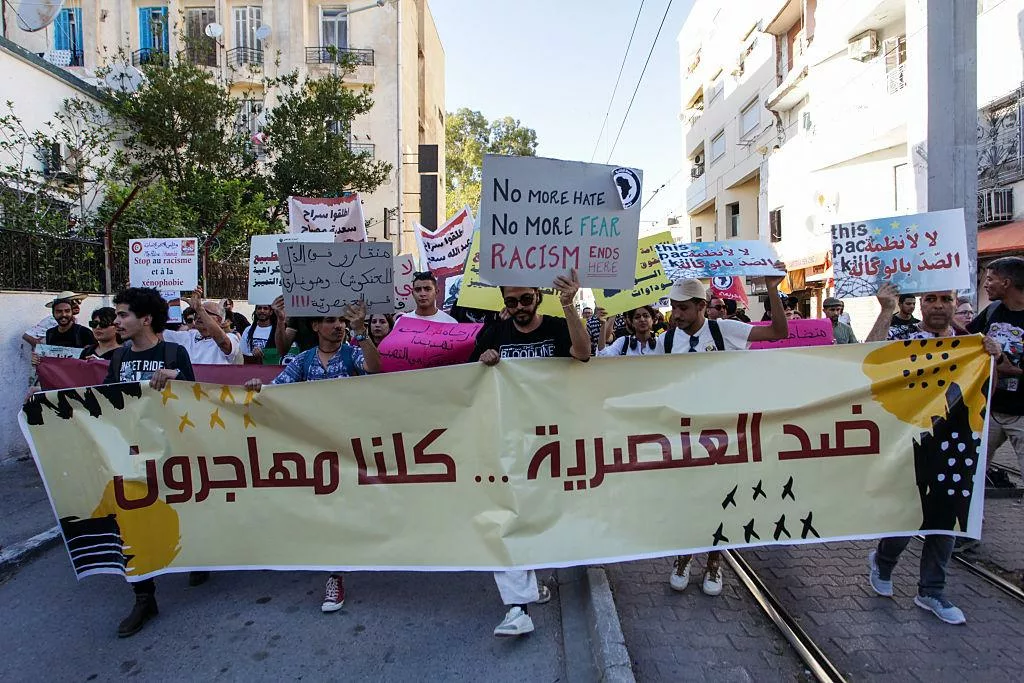
The month of July was also marked by the continued detention of several human rights defenders. The organizations that signed the memorandum issued on the third anniversary of the memorandum of understanding between Tunisia and the European Union are calling for the immediate release of Saadia Mosbah, Abdallah Saïd, Chérifa Riahi, Mustapha Jemmali, Abderrazek Krimi, and other activists who are being prosecuted for their solidarity activities with migrants.
Prison conditions remain a serious cause for concern. At Mornaguia Prison, families report temperatures exceeding 50 °C in visiting rooms, cells that have become veritable saunas, water and power outages, chronic overcrowding, and insufficient access to medical care. Relatives of several political prisoners are warning of the consequences of this situation for inmates who are elderly or suffer from chronic illnesses. The case of Mondher Ounissi, whose health has deteriorated significantly since his conviction, illustrates the gravity of this situation.
Finally, the month of July confirmed the ongoing crackdown on media professionals. In addition to the new sentences handed down to Haythem El Mekki, Hichem Snoussi, Hamza Belloumi, and Insaf Boughdiri, there are sentences already served or currently being served by Mourad Zeghidi and Borhen Bsaïs—each sentenced to four years in prison—as well as Sonia Dahmani, whose combined sentences total five years and eight months in prison.
At the end of July 2026 alone, the toll is particularly heavy: a judge sentenced to twenty-nine years in prison, the president of the Tunisian Judges’ Association sentenced to one year, a former head of government sentenced to six years, a businessman sentenced to fourteen years in prison, several former ministers and senior government officials sentenced in the same case, political figures held in custody and sentenced to four years in prison, a lawyer sentenced to one year, and several journalists sentenced to terms ranging from six months to one year in prison, while others remain incarcerated following previous convictions.
At the end of July 2026 alone, the toll is particularly heavy: a judge sentenced to twenty-nine years in prison, the president of the Tunisian Judges’ Association sentenced to one year, a former head of government sentenced to six years, a businessman sentenced to fourteen years in prison, several former ministers and senior government officials sentenced in the same case, political figures held in custody and sentenced to four years in prison, a lawyer sentenced to one year, and several journalists sentenced to terms ranging from six months to one year in prison, while others remain incarcerated following previous convictions.
Added to this picture is the ongoing prosecution of human rights defenders, judges, and civic activists.
The crackdown has now extended to the management of the social crisis: as water shortages and repeated power outages spark a surge in protests amid a heat wave, the authorities are prioritizing a security- and judicial-based response. Kaïs Saïed asserts that these disruptions are not merely technical failures but deliberate acts intended to stoke public discontent, while the authorities announce the opening of criminal investigations to identify and prosecute those suspected of being responsible.
This approach marks a departure from the previous major blackouts in 2002 and 2014, which led to the creation of technical commissions of inquiry tasked with analyzing the structural causes of the power grid’s malfunctions. As Abdelaziz Halleb, a former rapporteur for those commissions, points out, the approach adopted in 2026 now prioritizes the pursuit of criminal liability over the identification of technical causes and governance failures.
At the same time, the government selectively exercises its right to grant pardons: the presidential pardons granted to Ayachi Zammal and Wadii Jary serve as a reminder that the freedom of certain individuals depends less on the ordinary mechanisms of justice than on a discretionary decision by the head of state. This contrast between an ever-widening judicial crackdown and the sporadic use of presidential pardons reinforces the impression that the justice system is subject to the arbitrary will of the executive branch. Compounding this growing judicialization of the social crisis is a continuous deterioration in prison conditions, exacerbated by the heat wave, water shortages, and power outages. Taken as a whole, these events point to a relentless instrumentalization of the justice system—which now extends beyond the repression of political opponents to encompass the management of social crises—and to a continuous erosion of fundamental guarantees of a fair trial, judicial independence, and civil liberties.