On July 13, 2026, the U.S. administration crossed a new threshold in its confrontation with the International Criminal Court (ICC). In a press release with an unambiguous title— “State Department Launches Campaign to Dismantle International Criminal Court’s Threat to American Sovereignty” —Secretary of State Marco Rubio announced a government campaign aimed not only at challenging certain decisions of the Court, but also at systematically undermining its ability to function.
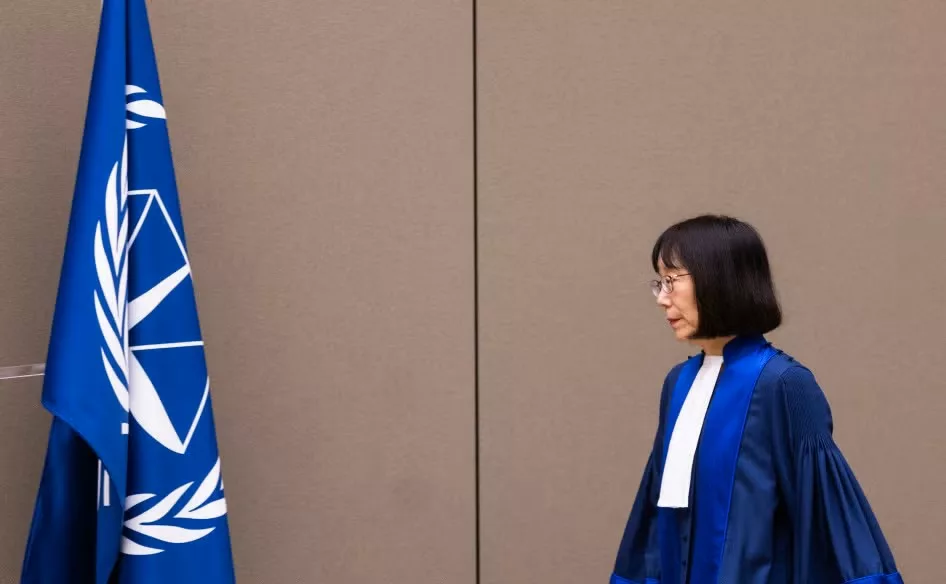
This offensive represents one of the most serious attacks ever directed against a treaty-based international court. And the decisions taken since then show that this is not merely a political statement: on August 18, 2026, the United States imposed sanctions on Tomoko Akane, President of the ICC, as well asAbdoulaye Seye, a senior official in the Office of the Prosecutor.
From Protest to the Desire to Neutralize
Relations between Washington and the ICC have always been contentious. The United States has never ratified the Rome Statute and refuses to allow its nationals to be subject to the Court’s jurisdiction without their consent. As early as 2002,the American Servicemembers’ Protection Act had significantly limited U.S. cooperation with the ICC.
Donald Trump had already imposed sanctions in 2020 on Prosecutor Fatou Bensouda and other officials at the Court. Those sanctions were lifted by the Biden administration in 2021.
But since Trump's return to the White House, U.S. politics have taken on a whole new dimension.
On February 6, 2025,Executive Order 14203 reestablished a regime allowing for the freezing of assets, a ban on transactions, and restrictions on entry into the United States against individuals deemed to be participating in the activities of the ICC.
Prosecutor Karim Khan was sanctioned, and several waves of measures subsequently targeted judges and deputy prosecutors. By the spring of 2026, eleven ICC judges and prosecutors had already been targeted. The sanctions were then extended to civil society organizations cooperating with the Court, as well as to Francesca Albanese, the United Nations Special Rapporteur on the Occupied Palestinian Territories.
With the sanctions imposed on August 18 against President Tomoko Akane, it is now the very top of the institution that is being directly targeted.
Clear the area around the Court
The offensive announced on July 13 goes even further. Washington intends to mobilize its entire diplomatic, financial, and security apparatus to encourage states to distance themselves from the ICC.
These measures include encouraging States Parties to withdraw from the Rome Statute, dissuading non-States Parties from joining the Court, strengthening sanctions against those who cooperate with it, imposing visa restrictions, and, where possible, leveraging U.S. military and security aid.
The logic is thus clear: it is no longer enough to punish judges; we must gradually isolate the institution and deter those who enable it to function.
This strategy could have far-reaching consequences. The ICC relies not only on the cooperation of states, but also on banks, airlines, technology companies, insurance companies, experts, NGOs, victims’ groups, and human rights advocates.
However, U.S. sanctions are not merely symbolic. A person listed by OFAC may have their assets subject to U.S. jurisdiction frozen and may be denied access to the services of U.S. companies or banks.
Due to the influence of the dollar and U.S. multinational corporations, these measures have repercussions far beyond the United States. Officials sanctioned by the ICC have already encountered difficulties accessing their bank accounts, credit cards, or certain digital services. NGOs and service providers have reduced or suspended certain collaborations with the Court out of fear of sanctions.
That is probably where the most effective weapon lies: The fear of sanctions drives people to go beyond what the sanctions actually require. A bank or a company may prefer to sever all ties with an individual or organization linked to the ICC rather than take the slightest risk with Washington.
The goal of neutralization can thus be achieved without closing the Court: all that is needed is to gradually make its day-to-day operations more difficult.
Sovereignty vs. International Justice
Washington justifies its offensive on the grounds of defending national sovereignty. Marco Rubio asserts that a court established by a treaty to which the United States is not a party cannot exercise jurisdiction over U.S. citizens.
On July 2, 2026, the Department of Justice once again reaffirmed that no U.S. authority would cooperate with ICC investigations and that Washington would oppose any attempt to transfer a U.S. citizen to The Hague.
Supporters of the Rome Statute counter this argument with a well-established principle: the ICC may, in particular, exercise its jurisdiction when a crime falling within its mandate is committed on the territory of a State Party, regardless of the perpetrator’s nationality.
But behind this legal controversy lies a political conflict as well.
The United States cites, in particular, past investigations involving U.S. forces in Afghanistan and, above all, proceedings related to Israel, including the arrest warrants issued against Benjamin Netanyahu and Yoav Gallant.
For Washington, these cases illustrate the excesses of a court that claims to have global jurisdiction. For the Court’s defenders, however, the sanctions are intended to prevent an independent judicial institution from investigating officials from powerful states or their allies.
Europe Faces Up to Its Responsibilities
The European Union and several European governments have condemned the U.S. sanctions. Following the sanctions imposed on August 18, the EU reaffirmed its support for the independence of the ICC and denounced any pressure, intimidation, or interference.
France condemned the measures directed against the Court, its staff, and the civil society organizations that support it, noting that the attack indirectly affects the 125 States Parties to the Rome Statute.
But statements of support are no longer enough.
The European Union has an instrument designed to combat the extraterritorial application of foreign sanctions: the EuropeanBlocking Statute. As early as 2025, Tomoko Akane had called for its extension to include sanctions against the ICC. The European Parliament called for its activation, and in May 2026, Spain officially asked the European Commission to take action.
The question is now a simple one: Is Europe prepared to take concrete steps to protect European judges, NGOs, banks, and companies that continue to work with the ICC?
Without this protection, the paradox would be striking: European countries could proclaim their political support for the Court while allowing their banks and companies to apply, out of an abundance of caution, the U.S. sanctions that are helping to paralyze it.
An imperfect but indispensable institution
However, the ICC is not above criticism. Its proceedings are lengthy, its resources are limited, and it depends on the cooperation of states to arrest wanted individuals. It is regularly accused of selectivity and is itself facing an internal crisis linked, in particular, to allegations against its prosecutor.
Defending the ICC does not, therefore, mean rejecting its reform or ignoring its shortcomings.
But there is a fundamental difference between criticizing and reforming a court and seeking to prevent its judges from carrying out their duties.
Despite its shortcomings, the ICC remains the only permanent international criminal court responsible for prosecuting those responsible for genocide, crimes against humanity, war crimes, and, under certain conditions, the crime of aggression, when national courts are unable or unwilling to take action.
Can the law still limit power?
The U.S. offensive therefore goes far beyond the conflict between Washington and The Hague.
If a major power can personally sanction international judges because of the decisions they help render, target prosecutors who are conducting investigations, go after NGOs that document crimes, and intimidate companies that provide services to an international court, then the very independence of international justice is threatened.
The risk is that a two-tier justice system will gradually take hold: one that applies to weaker states, while major powers and their allies could evade it by virtue of their economic, diplomatic, or military clout.
From Nuremberg to the Rome Statute, however, one of the founding principles of international criminal justice is that certain crimes are so grave that their perpetrators should not be able to hide behind the power of their state indefinitely.
The events of the summer of 2026 put this principle to the test. On July 2, the Department of Justice refused to cooperate with the ICC. On July 13, the State Department announced a campaign explicitly aimed at undermining the Court’s ability to function. On August 18, Washington imposed sanctions even on the Court’s president herself.
What once appeared to be a series of retaliatory measures is now a deliberate strategy to weaken institutions.
The response of the States Parties—and particularly that of the European Union—will therefore be crucial. It is no longer enough to simply express support for the ICC: we must effectively protect its judges, its staff, the organizations that cooperate with it, and the infrastructure essential to its operations.
For behind the fate of the International Criminal Court lies a much more fundamental question: in the emerging international order, will the law still be able to limit power, or will power be able to decide which judges and which legal rules it accepts?