When water, electricity, medicine, and essential goods reveal the state’s exhaustion
July 2026 will undoubtedly be remembered as the month when the crisis of everyday life took center stage in Tunisian political life. While public debate had been dominated for several years by political trials, arrests, talk of “conspiracies,” and the fight against corruption, another reality suddenly came to the fore: that of shortages.
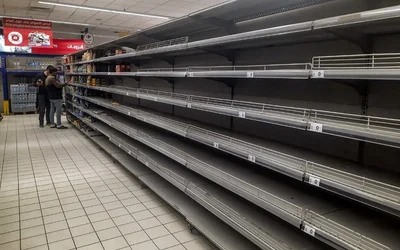
Water is no longer flowing in many regions. Power outages are becoming more frequent in the midst of a heat wave. Pharmacies are struggling to obtain supplies of medication. Certain basic necessities are becoming hard to find. In several cities, residents are taking to the streets not to demand institutional reform, but simply to call for access to drinking water, electricity, or essential public services.
This crisis is not merely an episode linked to an exceptional heat wave. The testimonies gathered, official data, economic analyses, and social movements observed throughout the month show that this is a much deeper crisis: that of a state that is now struggling to fulfill some of its fundamental functions.
A Water Crisis That Has Spread Nationwide
The water crisis is undoubtedly the most dramatic event of the summer of 2026.
While Tunisia has been experiencing water stress for several years, the events of July mark a shift in scale. Water supply disruptions are no longer limited to a few remote rural areas. They now affect entire neighborhoods in the capital, its outskirts, the Sahel, and the central and southern parts of the country.
The National Water Supply and Distribution Company (SONEDE) officially acknowledges numerous disruptions, which it attributes to a sharp increase in consumption due to exceptionally high temperatures and an imbalance between available resources and demand.
In several governorates, the water supply is cut off for hours, sometimes for several days. The outages, often announced as temporary, have become a recurring problem. In some neighborhoods, residents say they no longer know when the water will come back on.
The accounts gathered describe families forced to store water in makeshift containers, businesses brought to a standstill, farmers unable to irrigate their fields, and residents forced to travel several kilometers to get water.
The regions of Métlaoui, Ladhyab (Touiref delegation), Bir Mcherga, West Jebel, Ariana, and Ben Arous, as well as several localities in the central and southern parts of the country, are among the hardest-hit areas.
The street is calling for water
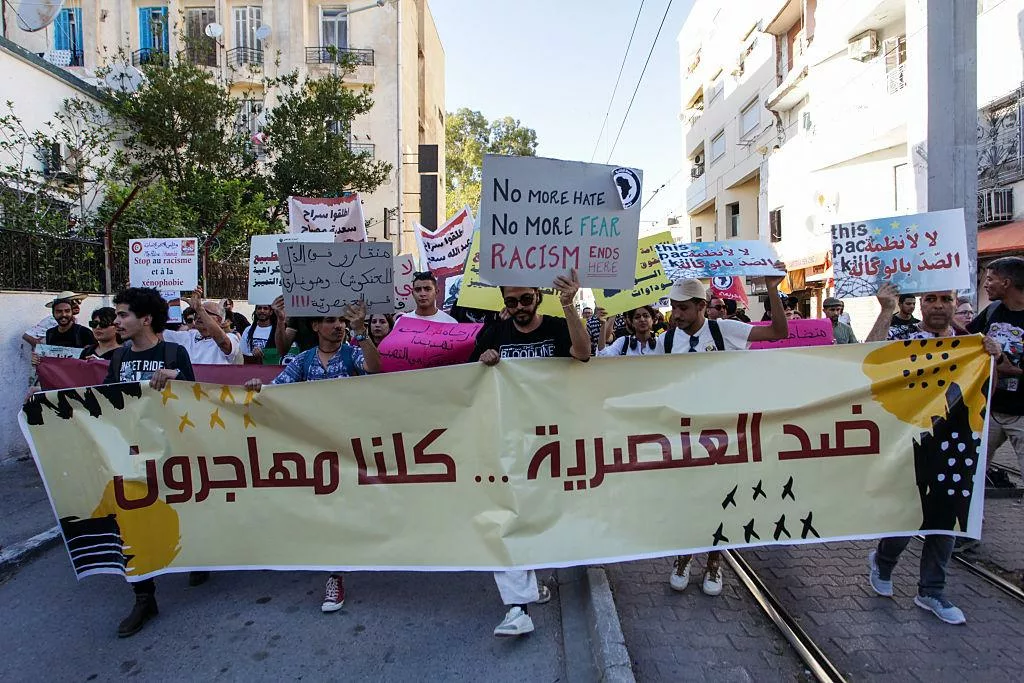
These shortages quickly sparked a wave of protests.
Rallies, protests, and roadblocks are being organized in several regions. The demands are simple: restore the water supply.
What makes these protests unique is their purpose. Residents are not merely protesting economic hardships; they are demanding access to a fundamental right.
The Tunisian Human Rights League also points out that access to water is a right guaranteed by the Constitution and calls for investigations to be launched to determine who is responsible for this crisis.
An Unprecedented Electricity Crisis
At the same time, another crisis is hitting the country.
With temperatures sometimes exceeding 49°C, electricity consumption is reaching record levels. The national grid is no longer able to meet demand.
Power outages are becoming a daily occurrence.
In many regions, residents experience several power outages a day, often without warning or at times that do not match the official schedule.
These outages directly affect daily life: air conditioners shut down, elevators stuck, stores closed, cold chains disrupted, and businesses forced to suspend production.
Criticism of STEG and the authorities is mounting.
Analyses published this month show that this crisis is not solely the result of the heat wave.
Several experts point out that no major power plant has come online since 2019.
The older units are gradually reaching the end of their service life.
Tunisia is now heavily dependent on Algerian gas imports, which account for about 60% of the gas used to generate electricity, while some power plants are operating at reduced capacity due to insufficient fuel supplies.
However, previous studies had projected the need to add approximately 200 MW of generation capacity each year to keep pace with the natural growth in consumption.
According to several analyses, this investment shortfall largely accounts for the network's current difficulties.
A Controversial Official Statement
The political handling of the crisis has also drawn widespread criticism.
Several observers have criticized the authorities for failing to anticipate the difficulties despite repeated warnings.
Questions are being raised publicly:
- Why hasn't a national emergency plan been presented?
- Why has the Ministry of Energy been without a permanent head for several months?
- Why don't citizens have a reliable schedule for power outages?
- Why aren't hospitals, health centers, or patients who rely on medical devices at home automatically granted exemptions?
These questions keep coming up in numerous posts shared on social media throughout the month.
Drug Shortages: A Quieter Crisis
Although it has received less media attention, the drug shortage also appears to be one of the symptoms of the crisis.
Economic analyses highlight that supply shortages now affect certain essential treatments.
Louaï Chebbi sums up this trend: “We are currently witnessing a chronic shortage of essential goods, ranging from consumer goods to medications.”
This situation is generally attributed to the financial difficulties faced by the Central Pharmacy, late payments to foreign suppliers, rising import costs, and the government’s budgetary constraints.
Professional organizations representing pharmacists, as well as several doctors, are also expressing concerns about supply shortages affecting certain specialized treatments.
The fact that these various shortages are occurring simultaneously is creating particularly concerning situations.
Power outages disrupt hospital operations and the storage of certain medications.
Patients who use respiratory devices or other medical equipment at home become particularly vulnerable.
Several proposals call for these patients and healthcare facilities to be exempt from load shedding.
Shortages: The Face of a Failing State
Water is running out of the taps. Power outages are occurring in the middle of a heat wave. There are shortages of medication. Public services are faltering. What is unfolding today goes far beyond a series of technical glitches. It is the very authority of the state that is being put to the test.
A state is judged first and foremost by its ability to meet the basic needs of its population. When it can no longer ensure continuous access to water, energy, healthcare, or essential goods, this is not merely a crisis of management—it is a crisis of governance, planning, and accountability.
The concentration of power in the hands of a single man goes hand in hand with a concentration of responsibility. Yet, instead of acknowledging structural failures, the official narrative continues to attribute shortages to acts of sabotage, conspiracies, or internal enemies. This rhetoric does nothing to address the dry taps, the neighborhoods plunged into darkness, or the patients who can no longer obtain their treatments. It merely highlights the growing disconnect between a government that is omnipresent in rhetoric and a state that is increasingly failing to perform its most basic functions.
Ultimately, the shortages of summer 2026 are not just another crisis. They are a sign of a crisis within the state itself: a state that concentrates power but struggles to fulfill the essential missions that underpin its legitimacy in the eyes of its citizens.