On April 18 and 19, 2026, the CRLDHT held its General Assembly at a pivotal moment.
The situation is now crystal clear: Tunisia has entered a phase of entrenched authoritarianism in which repression is no longer sporadic but systemic, in which imprisonment has become a central tool of governance, and in which civil liberties are gradually being stripped of their substance.
In this context, this General Assembly was by no means a mere formality. It posed a simple yet crucial question: How can we be politically effective today?
Since 2023, the CRLDHT has rebuilt itself. It has regained a foothold in the public sphere, revived its activism, strengthened its networks, produced analyses, documented repression, and upheld free speech. It has persevered in a difficult, sometimes hostile environment. But that phase is now behind it.
Today, the challenge is no longer simply to keep things running. It is to ensure that our actions are coherent, effective, and impactful. The General Assembly helped clarify our priorities.
First, one thing is clear:the issue of political prisoners has become a central concern.
Because prisons today embody all the principles of the regime: repression, intimidation, and the suppression of dissent. Defending prisoners means defending all civil liberties.
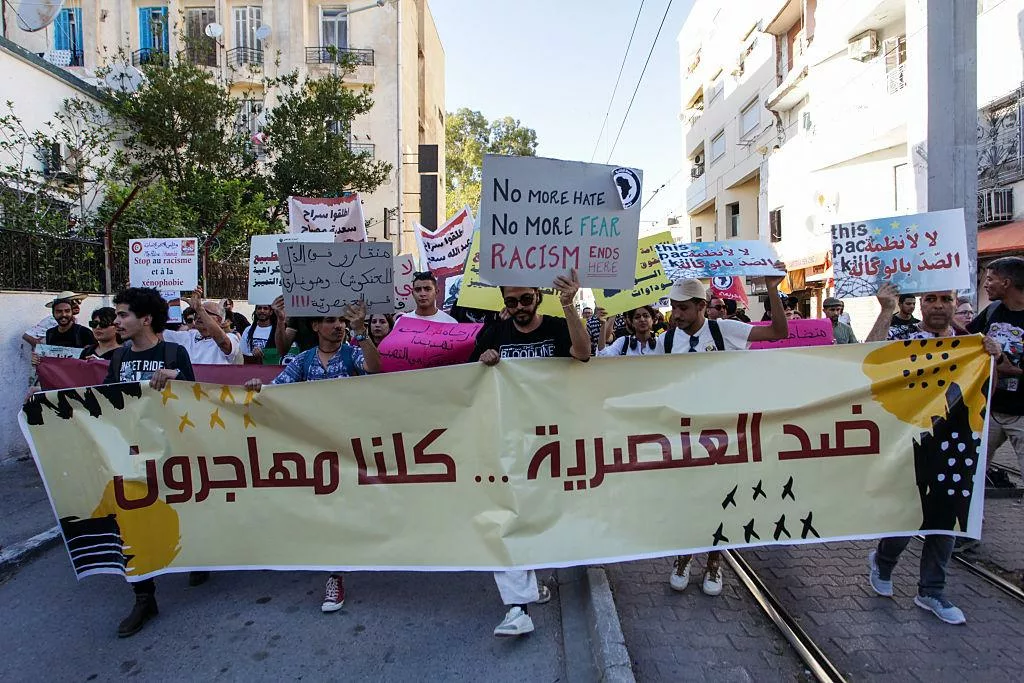
Next, the issue of migration has emerged as a major political battleground. Against a backdrop of state-sanctioned racism, deportation policies, and the externalization of borders, it reveals the deep connections between authoritarianism, inequality, and international structures of domination.
Finally, the issue of sovereignty was at the center of the discussions and requires further clarification.
The sovereignty we defend is not that of a power seeking to protect itself. It is that of a people exercising their rights. We reject an authoritarian conception of sovereignty that confuses the country with those who govern it, that exploits independence to justify repression, and that equates criticism with treason.
The sovereignty we uphold is of a different nature:
— a sovereignty based on citizenship, in which every individual is recognized as a subject of law;
— a sovereignty based on freedom, which guarantees pluralism, the right to express oneself, to organize, and to challenge;
— a sovereignty based on human rights, which are not a concession but an inviolable foundation.
True sovereignty does not conflict with rights; it depends on them. It does not mean closing the country off or silencing critical voices. It means building a state that serves society, not the other way around.
In this sense, defending sovereignty is not about defending power. It is about defending the dignity, freedoms, and ability of the people to determine their own future.
The General Assembly also marked an important milestone in the Committee’s history. Several members of the executive board chose to step down, with a view to passing the torch and strengthening the collective. A new executive board was elected. This transition does not signify a break with the past, but rather a structured continuity: consolidating what we have, expanding our capabilities, and preparing for the future.
The discussions were marked by a shared sense of clarity. The constraints are real: limited resources, pressure on teams, and financial instability. But this reality calls for neither withdrawal nor fragmentation. On the contrary, it demands a clear choice: to prioritize, focus, and commit to what matters most. In other words: do less, but do it better—and above all, do it right.
The CRLDHT should be a tool.
A resource to support those resisting in Tunisia.
A resource to defend political prisoners.
A resource to document, raise awareness, connect, and mobilize.
In a climate where everything conspires to isolate and silence people, maintaining the capacity for collective action is in itself a political act.
This General Assembly does not mark the end of a chapter. It marks the beginning of a new one—a phase that is more demanding, more focused, but also more transparent.
The path forward is now clear: act consistently, set priorities, and maximize impact
Because the situation demands it. Because the struggles continue. Because nothing is settled once and for all. The CRLDHT is continuing its work. And it intends to make its voice heard.