No defaults so far. No spectacular collapse.
But in Tunisian homes, the crisis is already here. Silent, pervasive, and ever-present.
It isn’t measured as a percentage of GDP. It shows up in skyrocketing prices, shortages of goods, and a life that grows harder every day.
A deceptive stability
Officially, Tunisia is holding its own. Public debt stands at around 85% of GDP. The country continues to make repayments, with debt service totaling approximately 23 billion dinars per year (€6.8 billion). But this stability rests on a fragile balance:
- nearly 19 billion dinars in domestic borrowing in 2026
- including 11 billion directly from the Central Bank
In other words: the government pays off its debts… by taking on more domestic debt.
External dependence has declined. But it has been replaced by internal dependence: local banks, the central bank, public enterprises, and future budgets
Debt doesn't disappear. It simply takes on a different form—becoming less visible, but also more dangerous.
When the government drains the economy
To finance itself, the government draws heavily on national resources. Banks lend to the Treasury rather than to businesses. The direct result: less credit for the private sector, less investment, and less growth.
The vicious cycle has begun: debt → banks under pressure → stifled private sector → weak growth → more debt
With growth expected to be between 1% and 2%, the economy is not generating enough wealth.
Unemployment remains high, at around 15% to 16%. And investment is plummeting.
Debt no longer finances the future. It is used to sustain the present.
The daily newspaper is catching up in the ratings
This imbalance has a direct impact on the lives of Tunisians.
Prices have skyrocketed:
- meat that has become unaffordable for many
- food prices continue to rise
- increasingly expensive energy and transportation
Even when inflation slows down on paper, it remains very high where it really matters: at the dinner table. As a result, purchasing power is eroding, month after month.
Shortages: When the Economy Fails to Deliver
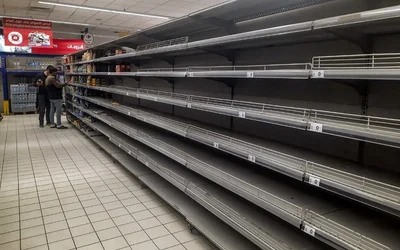
On top of the high cost of living comes an even more severe problem: shortages.
Flour, semolina, sugar, medicine, water in some regions… essential goods are no longer always available. This isn’t just a logistical problem. It’s a sign that the system is under strain:
- lack of foreign currency for imports
- insufficient local production
- disrupted distribution networks
- tight public finances
In short: people are paying more… for something they can’t always find.
Bread, a symbol of change
Nothing illustrates this crisis better than bread. Once a staple food par excellence—long accessible and stable—it has now become a barometer of economic tensions. Due to a shortage of subsidized flour, bakers have in many cases been forced to alter the composition of their bread, either by mixing different types of flour or by using lower-quality flour.
This subtle yet profound shift means that even the most essential products are no longer immune to financial constraints.
Bread is no longer just a food item.
It has become an indicator of supply chain issues, pressure on subsidies, and the system’s inability to ensure consistent quality.
When bread changes, it means the system is changing.
Grants: A Shield That Is Cracking
The government continues to spend nearly 10 billion dinars on subsidies for fuel, electricity, and basic goods. The goal is to protect households. But the reality is more complex:
- subsidized products that are sometimes hard to find
- diversion to the black market
- misdirected aid
It’s a cruel paradox: we provide subsidies… yet products are in short supply or remain unaffordable.
Inflation and shortages: a double whammy
The population is facing two simultaneous shocks:
- prices are rising
- the products are disappearing
This is the most socially challenging combination.
It requires:
- lines
- reliance on the informal market
- a waste of time and dignity
- constant trade-offs between essential needs
Why is this the case? Because the government is caught between a rock and a hard place:
- a budget deficit of around 11 billion dinars
- high debt
- heavy debt service
To hold up, it must:
- borrow heavily
- postpone certain expenditures
- restrict imports
- contact the Central Bank
And these changes are directly reflected in everyday life: fewer products are available, and those that are available are more expensive and harder to find.
Turning to the Central Bank is presented as a sovereign solution. But it is only free on the surface. The cost is simply shifted elsewhere: inflation, erosion of savings, pressure on the dinar, and weakened banks.
It’s a simple fact: what the government doesn’t pay for today, citizens will pay for tomorrow
A debt that goes beyond the numbers
Official debt doesn't tell the whole story. We must also factor in: loss-making public enterprises, government guarantees, payment arrears, and fragile social security funds. The actual burden is therefore much heavier. And it continues to grow.
Tunisia isn't bankrupt. It isn't falling apart. But it is running out of steam.
Gradually: less investment, less production, more domestic debt, more pressure on prices, and more shortages. It is a slow and deep crisis.
The real question is no longer, “Can we continue to pay off the debt?” but rather,“Can we still live with dignity on a daily basis?”
Tunisia's debt isn't just reflected in the government's financial statements.
It's evident in the empty store shelves, in bread that's losing its quality…and in a population that is gradually being deprived of its basic necessities.