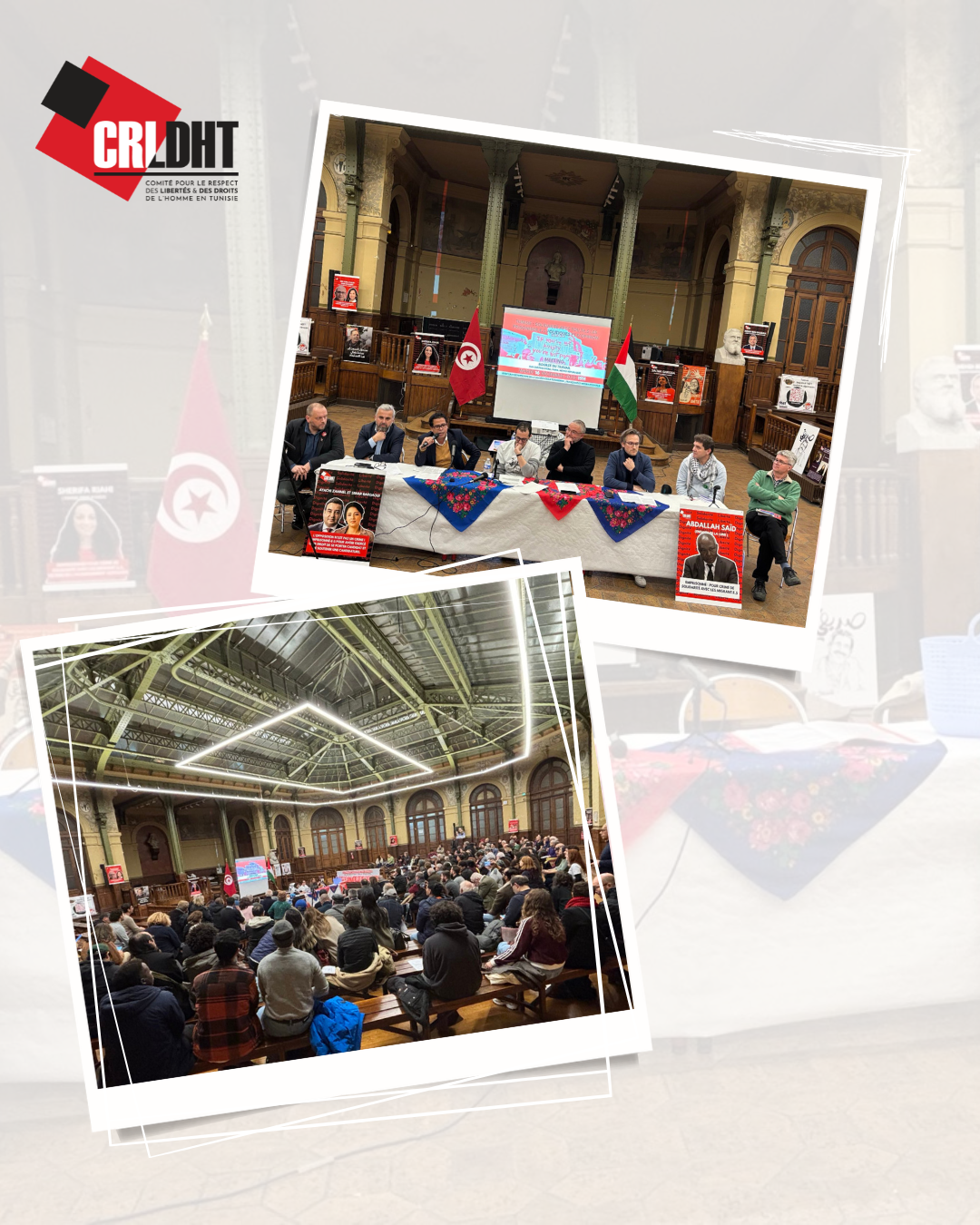
On December 16, 2025, at the Bourse du Travail in Paris, the hall was the scene of a strong mobilization. Far beyond a simple activist gathering, the citizen and solidarity meeting was a powerful political moment, marked by a large, attentive, and above all, unusually diverse audience, reflecting the gravity of the situation in Tunisia.
Families of political prisoners and prisoners of conscience, community activists, trade unionists, French and European politicians, North African and Asian human rights defenders, and international solidarity networks: all the components of a broad democratic front came together on December 16. This diversity is no coincidence. It gave the meeting its strength and legitimacy: that of a cross-party mobilization capable of overcoming ideological divisions in the face of arbitrariness.
From the outset, the tone was set. The symbolic introduction, delivered by singer Abir Nassraoui, created an atmosphere of dignity and solemnity, reminding everyone that this gathering on December 16 was neither an ordinary event nor a simple exercise in denunciation, but an act of solidarity.
The CRLDHT's opening speech set the political tone for the evening: a reminder of the authoritarian shift in Tunisia since 2023, the systematic destruction of countervailing powers, the manipulation of the justice system, and widespread repression. Without digression or unnecessary emphasis, this speech gave the meeting overall coherence, linking individual cases to a systemic dynamic.
The highlight of the December 16 meeting was undoubtedly the roundtable discussion with the families and loved ones of the prisoners. Their testimonies gave flesh and voice to what figures, reports, and press releases can never fully convey: the absence, the daily anguish, the injustice experienced in the privacy of their homes, but also their dignity, lucidity, and resistance.
The speeches and video messages had a profound impact on the audience. They served as a reminder of a simple and undeniable truth: repression never affects just one individual; it affects families, relationships, and an entire society.
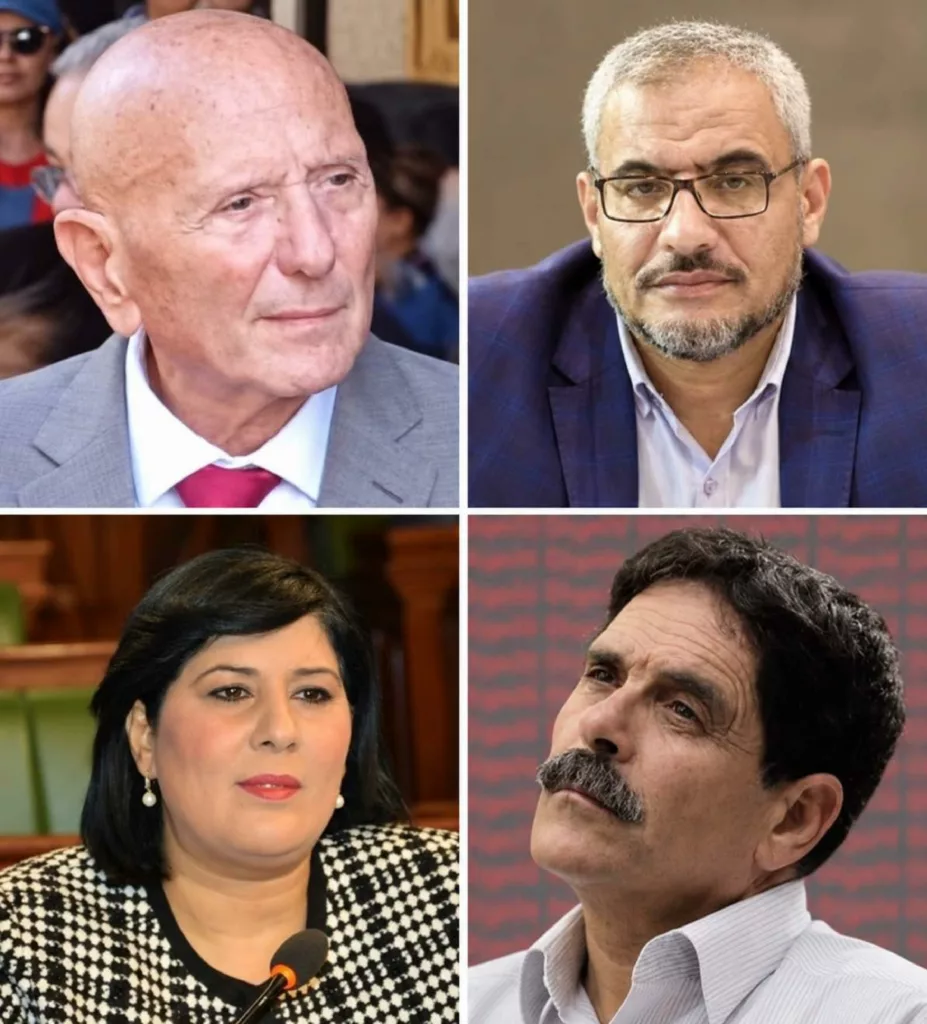
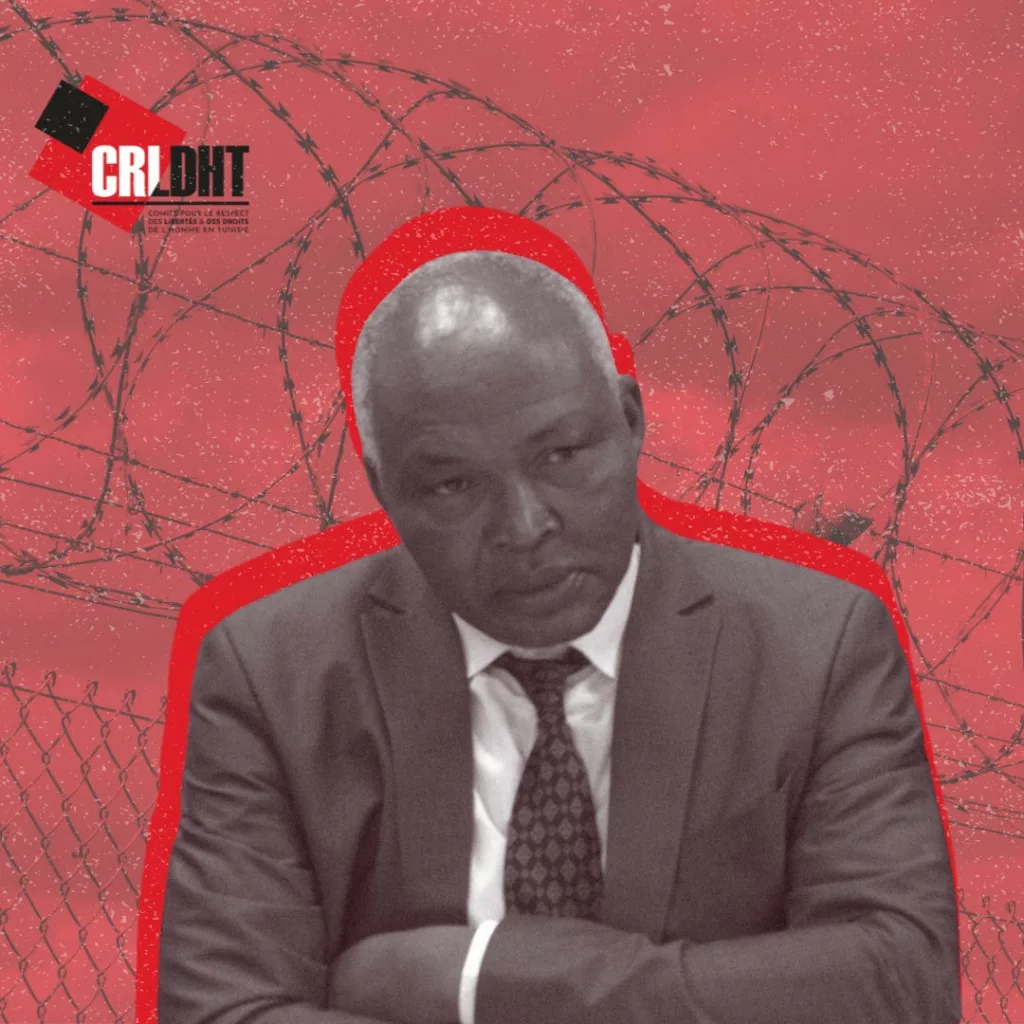
Video messages from Ayachi Hammami, Chaima Aissa, and Nejib Chebbi reminded us that even behind prison walls, free speech and the refusal to accept injustice remain alive.
The segments devoted to international solidarity and human rights showed that the situation in Tunisia, as described on December 16, is not a peripheral issue. Speakers asserted that repression entails international responsibility and that silence or indifference cannot be a substitute for policy.
This solidarity has been expressed in many different areas of struggle—from Palestine to the Maghreb, from Africa to Asia—giving the meeting a transnational dimension and reminding us that the struggles for human rights reinforce each other.
The union moment, particularly powerful in the historic setting of the Bourse du Travail, placed the December 16 meeting in a historical context. Speeches highlighted the central role of the Tunisian union movement and its longstanding ties of solidarity with French and international unions.
The memory of the January 2011 rallies, held in this same place, resonated like a powerful echo: international trade union solidarity is not a thing of the past, it is still very much alive today.
The segment devoted to political parties, figures, and organizations confirmed that the defense of freedoms in Tunisia transcends party affiliations. The speakers emphasized that, beyond their differences, there is a common foundation of democratic principles that requires cross-party mobilization in the face of authoritarian abuses.
The closing of the meeting on December 16 was not intended to be an end point, but rather a starting point. The final speeches called for solidarity to be sustained over time and for shared emotion to be transformed into concrete political action.
The closing remarks by the CRLDHT gave full meaning to what had transpired that evening. By clearly naming the authoritarian reality of the Tunisian regime and reminding everyone that dictatorship is never a solution, the CRLDHT reaffirmed its determination to continue the fight alongside families, prisoners, unions, human rights defenders, and all democratic forces until freedoms and popular sovereignty are restored.
December 16 demonstrated one essential thing: silence is no longer an option. And in the face of repression, diversity united is the indispensable foundation of all collective resistance.