
116 violations in ten months. The figure alone serves as a stark warning.
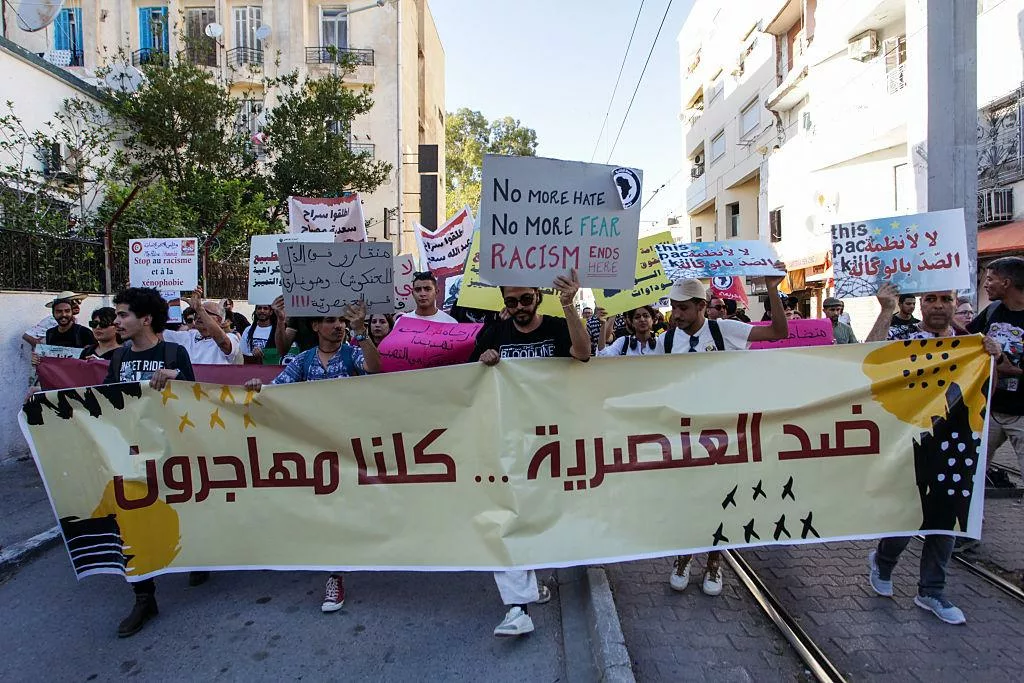
In a report entitled "Between Freedom and Repression: Peaceful Assembly in the Face of Human Rights Violations, " the Intersection association documents a worrying increase in violations of the right to peaceful assembly between March and December 2025.
What this fieldwork—based on interviews, firsthand accounts, and data collected across several regions—reveals goes beyond the realm of "isolated incidents." It points to a trend: that of a constitutional right being gradually conditioned, restricted, and even criminalized.
A right applied with variable geometry
According to the report, the right to protest is no longer guaranteed uniformly. Mobilizations perceived as favorable to the government seem to be tolerated, while those deemed critical are met with increased security measures.
Excessive use of force, widespread use of tear gas, arrests described as arbitrary, heavy-handed legal proceedings: the practices identified reflect a paradigm shift. Social protest is no longer seen as the expression of a fundamental right, but as a threat.
Tunis, Kairouan, Gabès: emblematic cases
On October 19, 2025, in Tunis, nearly thirty supporters belonging to "ultra" groups were arrested during a rally. They were reportedly charged with serious offenses, including "criminal conspiracy" and "assaulting an officer in the line of duty."
In Kairouan, several neighborhoods were the scene of a violent dispersal of protests, with heavy use of tear gas and more than twenty arrests.
In Gabès, the epicenter of environmental protests, fifty-four arrests were recorded. Residents were demanding a basic right: the right to live in a healthy environment.
For the association, these episodes are not exceptions. They are part of a broader pattern of restricting collective expression.
The law as an instrument of restriction
The report highlights the combined use of old legal texts—notably the 1969 law on public meetings and gatherings—and mechanisms such as the continuous extension of the state of emergency.
Officially, the legal framework remains in place.
In practical terms, this would allow constitutional guarantees and international principles of necessity and proportionality to be circumvented.
The consequence is tangible: students, doctors, unemployed people, environmental activists, and soccer fans find themselves exposed to criminal prosecution for exercising a right that is nevertheless recognized.
Civic space under pressure
Beyond the figures, it is the general atmosphere that is worrying. Researchers at Intersection point to a continuing shrinking of civic space. Social, professional, and environmental gatherings are increasingly being analyzed through a security lens.
The line between maintaining order and political deterrence seems to be blurring.
The right to peaceful assembly, the authors of the report remind us, is not a favor granted by the authorities. It is a pillar of democratic societies.
The association calls for an end to the prosecution of participants in peaceful gatherings, a review of the legal framework to bring it into line with international standards, and a stronger role for the judiciary in protecting freedoms.
Because beyond isolated demonstrations, a broader question arises: can a state claim to guarantee civil liberties if collective expression becomes a risk factor for its citizens?
In Tunisia, the answer to this question is no longer a matter of theory. It is now being played out in the streets—and in the courts.