At the preparatory meeting on February 28, 2025, organized on the eve of the CRLDHT General Meeting in Paris, activists, researchers and partners met to analyze social dynamics in Tunisia. Discussions focused on the role of social movements in a context of democratic regression, their relationship with power and progressive forces, and prospects for alliances in the face of Kaïs Saïed's authoritarianism.
Social anger recuperated by populism
The first observation is that of a worrying paradox: Kaïs Saïed, despite holding authoritarian power, continues to capture popular frustrations by positioning himself as an opponent of the "system". This ability to harness social anger feeds a diffuse legitimacy, particularly among the most marginalized bangs of society.
An effervescence devoid of relays
In January 2025, the Forum for Economic and Social Rights (FTDES) counted 328 social movements. Yet these mobilizations remain orphans. They are not being taken up by weakened political parties, the UGTT or even intellectual circles. A general mistrust is taking hold, including with regard to human rights defenders. This fragmentation hinders any political structuring of struggles.
The UGTT: an institution in crisis
A central point was raised: the role of the UGTT, Tunisia's main trade union, historically at the heart of social and democratic struggles. Many speakers stressed the urgent need for the trade union organization to emerge from its current lethargy and leadership crisis. The UGTT must rediscover its primary vocation: to put forward social demands, defend trade union rights and collective and individual freedoms, and once again become a central player in mediating between the popular masses and the institutions. Its silence or progressive withdrawal in the face of worsening living conditions undermines its image and weakens the potential for converging struggles.
New terrain, new voices
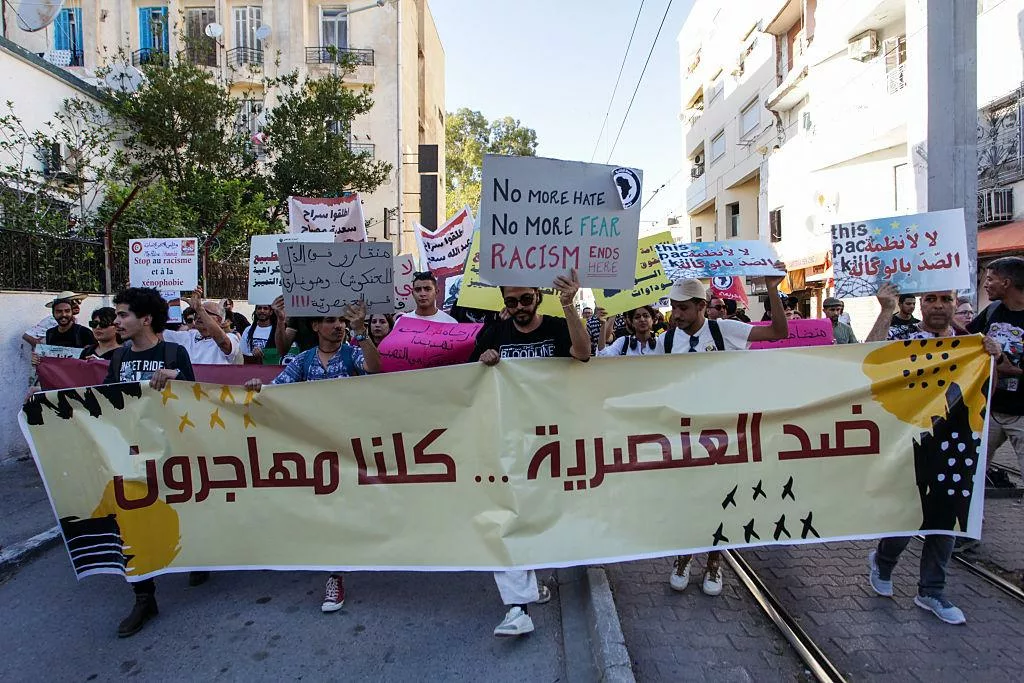
Social mobilizations are now taking place in a wide range of areas: working-class neighborhoods, university hostels, border zones... They are structured around migration issues, tragic events (immolations), ecological disasters or tensions linked to informal trade. These struggles reflect deep-seated suffering, but are struggling to emerge as constituted political forces.
The Achilles heel of authoritarianism
For several speakers, the increase in social unrest is the regime's weakest point. Lack of reform, worsening poverty and excessive centralization of power are all factors likely to breach the current system.
Towards a strategy of support and accompaniment
The CRLDHT, true to its humanist charter and democratic roots, cannot be content with merely observing. Several avenues for strategic reflection emerged from this meeting, with the aim of articulating solidarity and autonomy of struggles:
- Supporting without coaching: identifying credible intermediaries, creating forums for listening and offering targeted training to field leaders.
- Read struggles in all their complexity: don't reduce them to legal demands or demands concerning freedoms, but fully integrate their social dimension.
- Promote a junction between social and democratic struggles: without forcing unity, lay the foundations for a dialogue based on a common critique of the economic system and populist discourse.
- Monitor weak signals: radicalization, emergence of new protest languages, reconfiguration of organizational forms.
- Giving new meaning to commitment: through grassroots education, concrete, supportive actions and a sustainable local footing.
- Stimulate union re-foundation: support initiatives within the UGTT aimed at rehabilitating its historic role, renewing its practices, and reconnecting the organization to the realities of struggles on the ground.
A priority in the action plan
The lessons learned from this session have been incorporated into the CRLDHT's 2025-2026 strategy. Social movements, in connection with the situation of the UGTT, will be closely monitored from now on, particularly as they intersect with other major issues: political prisoners, the fight against racism, migration and the ecological crisis.
In a Tunisian context marked by uncertainty, it is more urgent than ever to rethink social and trade union alliances. The CRLDHT is committed to providing a forum for monitoring, relaying and collective reflection, with a view to building a plural and deep-rooted democratic force.