The trial of March 4, 2025, presented as a judicial proceeding to examine charges of "plotting against state security", in reality turns out to be a carefully orchestrated staging to legitimize political repression.
Behind the appearance of a judicial debate, everything indicates that the verdict is sealed in advance, making this procedure closer to a travesty of justice than a genuine fair trial.
I. Judicial staging
1. Lack of a solid legal basis
The prosecution's case is hollow and riddled with irregularities, as several observers and defense lawyers have pointed out. Far from being based on concrete elements such as a violent project or material evidence of conspiracy, the case is limited to meetings between political opponents, exchanges of ideas and consultations on the country's future. These are acts of democratic debate, not crimes of state.
The case is essentially based on the testimony of an anonymous individual, nicknamed "XX", who provided no tangible proof. Even the diplomats mentioned in the file have never been heard from, demonstrating the weakness of the investigation.
2. A remote trial to neutralize the defense
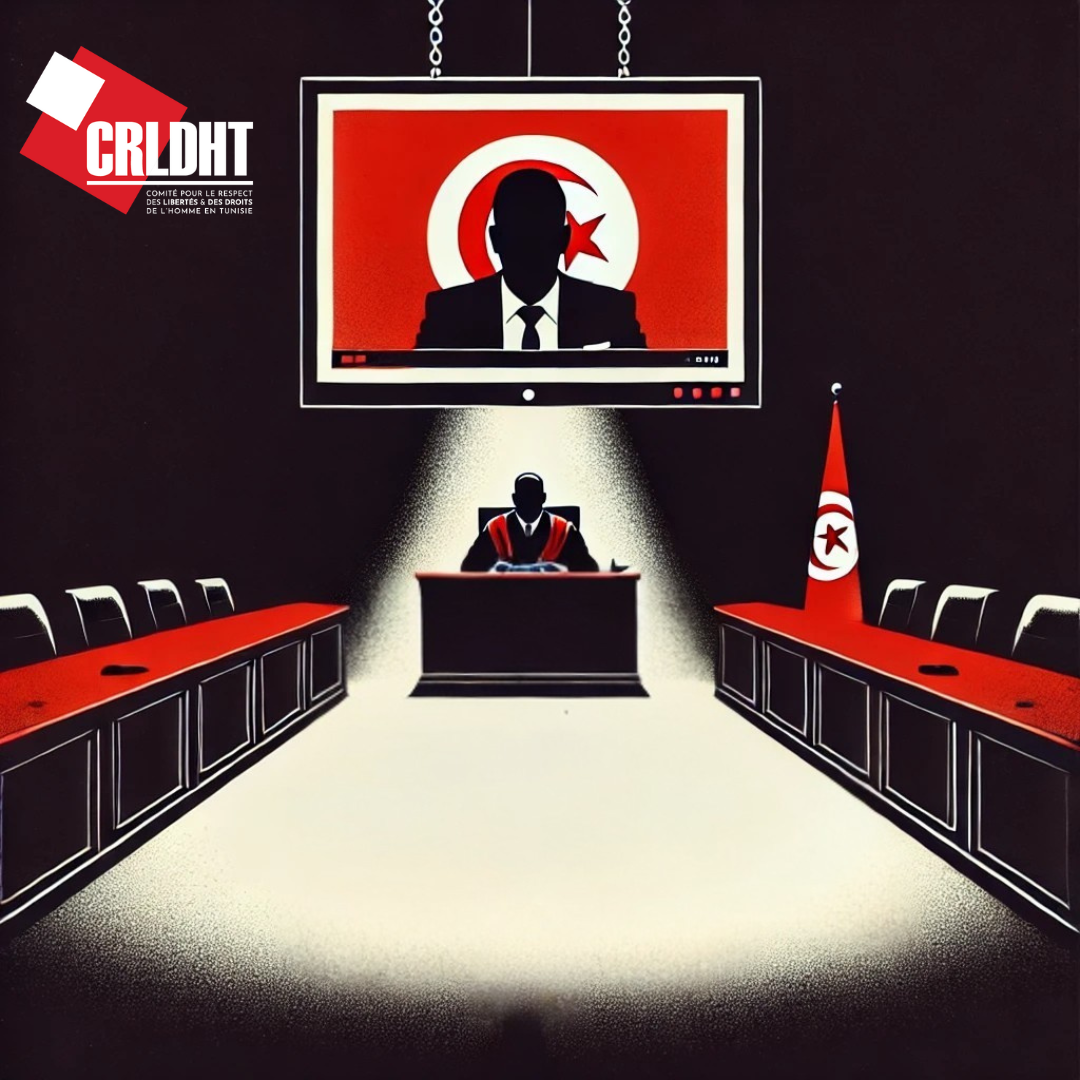
The decision to impose videoconferencing for defendants is not simply a logistical constraint, but a clear attempt to prevent any effective defense. This method prevents defendants from expressing themselves freely, deprives them of direct contact with their lawyers, and deprives them of the opportunity to confront their accusers. This maneuver, put in place under the pretext of an imminent danger that has never been demonstrated, constitutes a serious infringement of the rights of the defense.
This decision was taken administratively and not judicially, which constitutes direct interference by the executive in the proceedings.
3. Magistrates under threat
The independence of the judiciary has been totally compromised. Several magistrates have been sanctioned, relocated or intimidated to ensure perfect alignment with the line of power. This grip on the judiciary deprives the accused of any hope of an impartial judgment. The President of the Republic, Kaïs Saïed, himself described the opponents as "terrorists" even before the opening of the trial, undermining any illusion of a neutral judgment.
II- Judicial instrumentalization at the service of a political agenda
- A tool of repression against the opposition
This trial is not just a simple judicial event; it is part of a dynamic of systematic dismantling of the opposition. All the defendants are political figures critical of the regime, having campaigned for pluralism and democracy;
By sidelining them, the government is able to lock down political space, sow fear and eliminate any credible alternative.
This trial is an "attempt to assassinate political debate", aimed at criminalizing all forms of opposition.
2. A shady, controlled trial
The ban on publication on the case for over a year served to muzzle the press and prevent any independent insight into the proceedings.
Journalists and independent media were prevented from investigating freely, while media close to the government orchestrated a campaign to demonize the accused.
The paradox is blatant: while information on the case was censored, the regime's propagandists had carte blanche to instill a prosecution story. Television programs broadcast a biased version of the trial, without ever giving the defense a chance to speak.
III- A precedent for the rule of law
- An unprecedented step backwards for democracy
Since independence, Tunisia has seen several political trials, but never such a degree of judicial manipulation and repressive staging. Under Bourguiba and Ben Ali, the courts remained places where the accused could at least be physically present and make their voices heard.
Here, the situation is worse: the accused are tried in their absence, without confrontation with their accusers, and under the direct control of the executive. This method undermines the fundamental principles of fair trial enshrined in international conventions and the Tunisian Constitution.
- The instrumentalization of justice with disastrous consequences
By using the justice system as an instrument of persecution, the government is weakening the credibility of its institutions. This trial could well pave the way for the further judicialization of political repression, where any opponent could be prosecuted on unfounded charges.
This climate of legal terror discourages political participation and undermines the foundations of democratic debate. It sends a clear message: any challenge to power can lead directly to prison.
Conclusion
The trial of March 4, 2025 is not a trial, but a cynical staged event designed to give a legal facade to a political purge. Behind the appearance of a legal proceeding, it is in reality a premeditated verdict, written by the powers-that-be well before the opening of the hearings.Top of form