As the start of the judicial year approaches, the events of September and the weeks that followed have confirmed a troubling reality: repression is gaining ground, becoming commonplace, and now extends to all spaces where free speech, independent organization, or a spirit of collective resistance still exist.
The dismissal of the appeals in the so-called “conspiracy” case, the arrest of journalist Mohamed Youssefi, the conviction of Seifeddine Arfaoui, and the subsequent confirmation of crushing sentences against Abir Moussi are all part of the same effort: to turn the justice system, the police, the government, and the smear campaign into tools for bringing society to heel.
Recently documented cases illustrate this with particular brutality. Mohamed Youssefi is imprisoned for practicing his profession as a journalist. Seifeddine Arfaoui is being prosecuted for his civic activism. Abir Moussi has been sentenced to twelve and a half years in prison, even though her arrest stemmed from an administrative appeal and her political stances. One may have profound disagreements with her, but no disagreement can justify turning an opinion, criticism, or the filing of an appeal into a crime.
The same logic applies to human rights defenders and organizations. Abdallah Saïd, who works with vulnerable people, migrants, and children with xeroderma pigmentosum (known as “moon children’s disease”), has been detained since November 2024; his sentence was increased to two years on appeal on September 28. Saadia Mosbah remains in prison. Humanitarian work, legally declared funding, and solidarity with migrants are now treated as grounds for presumption of guilt. When two Black activists, who are particularly committed to supporting sub-Saharan migrants, are kept in prison, the issue of racial discrimination cannot be ignored.
Others are paying the price for pretrial detention that has turned into a sentence without trial. Boutheina Ben Yaghlane spent an entire year in prison without any announcement of a public trial or any concrete reasons for her continued detention being established with the required transparency. Riadh Ben Fadhel is approaching three years of detention without trial. Béchir Akremi remains the target of relentless judicial persecution. Afif Khfacha, Ghazi Mrabet, and so many others are subjected to proceedings in which public accusations, suspicion, and social condemnation all too often precede evidence, adversarial debate, and judgment.
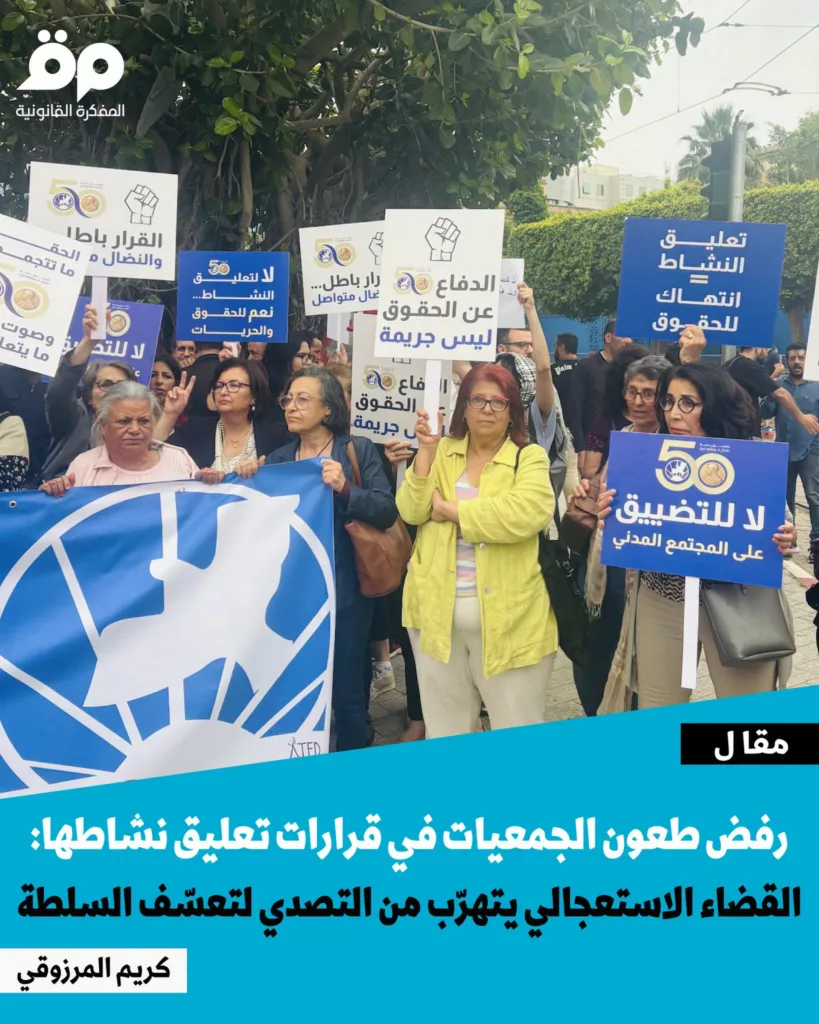
The crackdown does not stop at the courts. It targets organizations through bank account freezes, summonses, travel bans, and proceedings to suspend or dissolve them. It targets social protests, as demonstrated by the violence directed against the “March for Dignity” organized by unemployed graduates. It targets solidarity with Gaza and the activists of the Soumoud flotilla. Finally, it targets ordinary citizens who face humiliation, threats, and police violence, while public revelations are met with denial—or even threats of legal action against those who publicize them.
The government seeks to isolate each victim within their own sector: journalists with journalists, lawyers with lawyers, union members with union members, organizations with organizations, opposition members solely with their own parties, and migrants with those who defend them. In this way, it seeks to create the impression that freedom of the press is a professional matter, the independence of the judiciary a matter for judges, freedom of association a matter for donors, and the right to work a demand separate from civil liberties.
It is precisely this compartmentalization that we must reject. Attacking the press weakens everyone’s right to information. Stifling civic organizations means depriving the most vulnerable of aid and protection. Subjugating the justice system means undermining every citizen. Cracking down on labor unions and movements of the unemployed means exacerbating the social crisis. Tolerating police violence means instilling fear in everyday life.
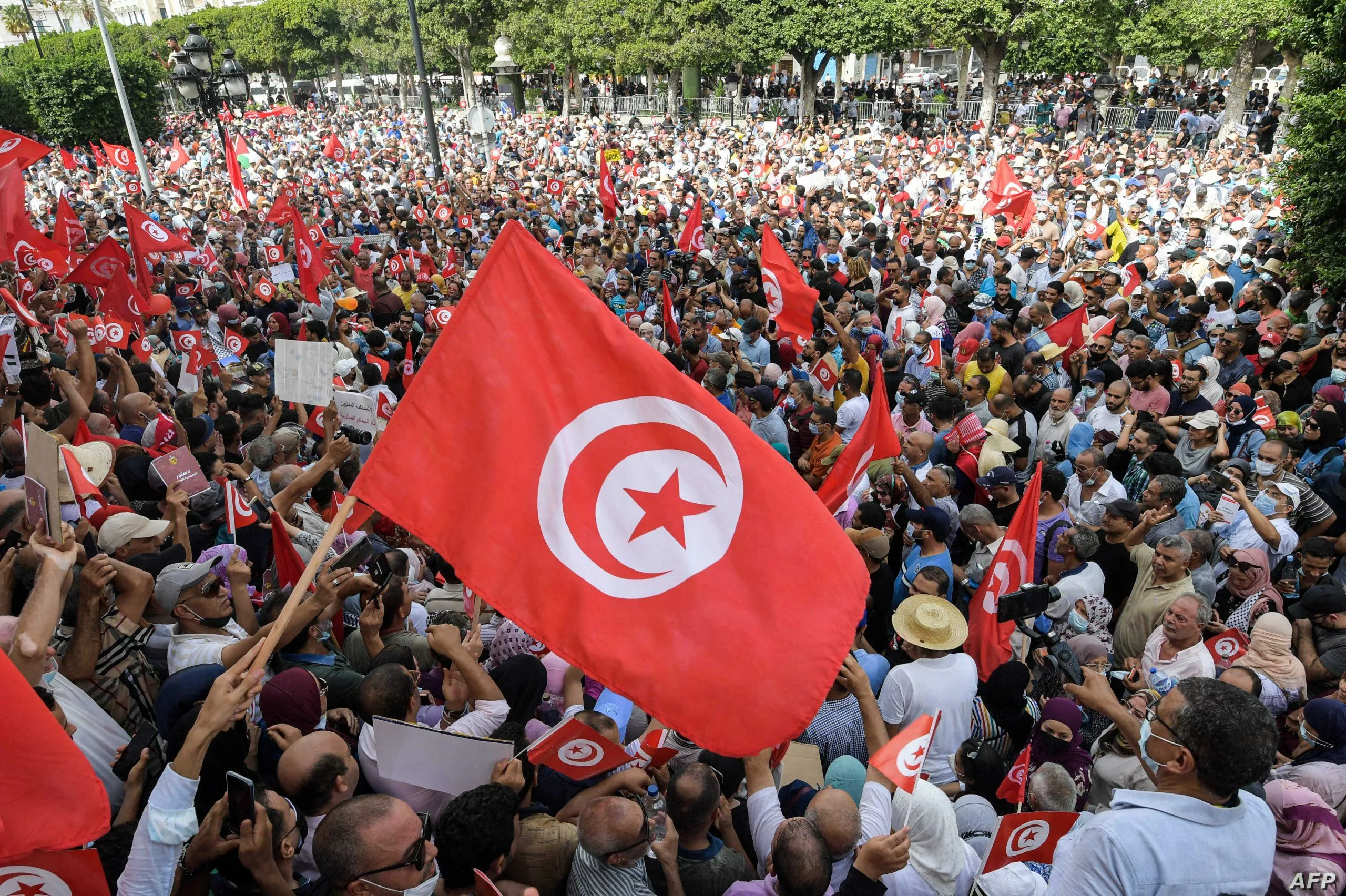
This is why the common framework established by the UGTT, the National Bar Association, the LTDH, and several civil society organizations is essential. The September 29 meeting and the call for the October 17 national march have opened up a space that must be defended, consolidated, and expanded. This framework does not resolve all differences; nor should it ignore them. But the current situation demands that we set them aside for the time being when they prevent us from defending what matters most: freedoms, justice, labor, public services, dignity, and the people’s right to make their voices heard.
We must also remain vigilant against the exclusionary, sectarian, or hegemonic tendencies that certain forces may promote. But this vigilance must not become a pretext for inaction, withdrawal, or the systematic denigration of any imperfect initiative. Unity is not uniformity. It is the ability, in times of crisis, to prioritize what unites us over what divides us.
In the face of an authority that resorts to intimidation to mask the failure of its policies, silence offers no protection. Fear and self-censorship are precisely the desired outcomes. The necessary response, therefore, is to continue exercising the freedoms that are still available: speaking out, writing, organizing, demonstrating peacefully, defending prisoners, supporting families, documenting abuses, and fostering solidarity.
The CRLDHT calls for the release of all individuals detained for their opinions or for their political, labor union, journalistic, civic, or humanitarian activities; for an end to the manipulation of the justice system; for effective protection against police violence; and for unconditional respect for the freedoms of expression, association, assembly, and demonstration.
No society can save itself through fear. Tunisia will not regain its dignity, social justice, or democratic future without a vibrant civil society, free voices, and solidarity that translates into collective action.