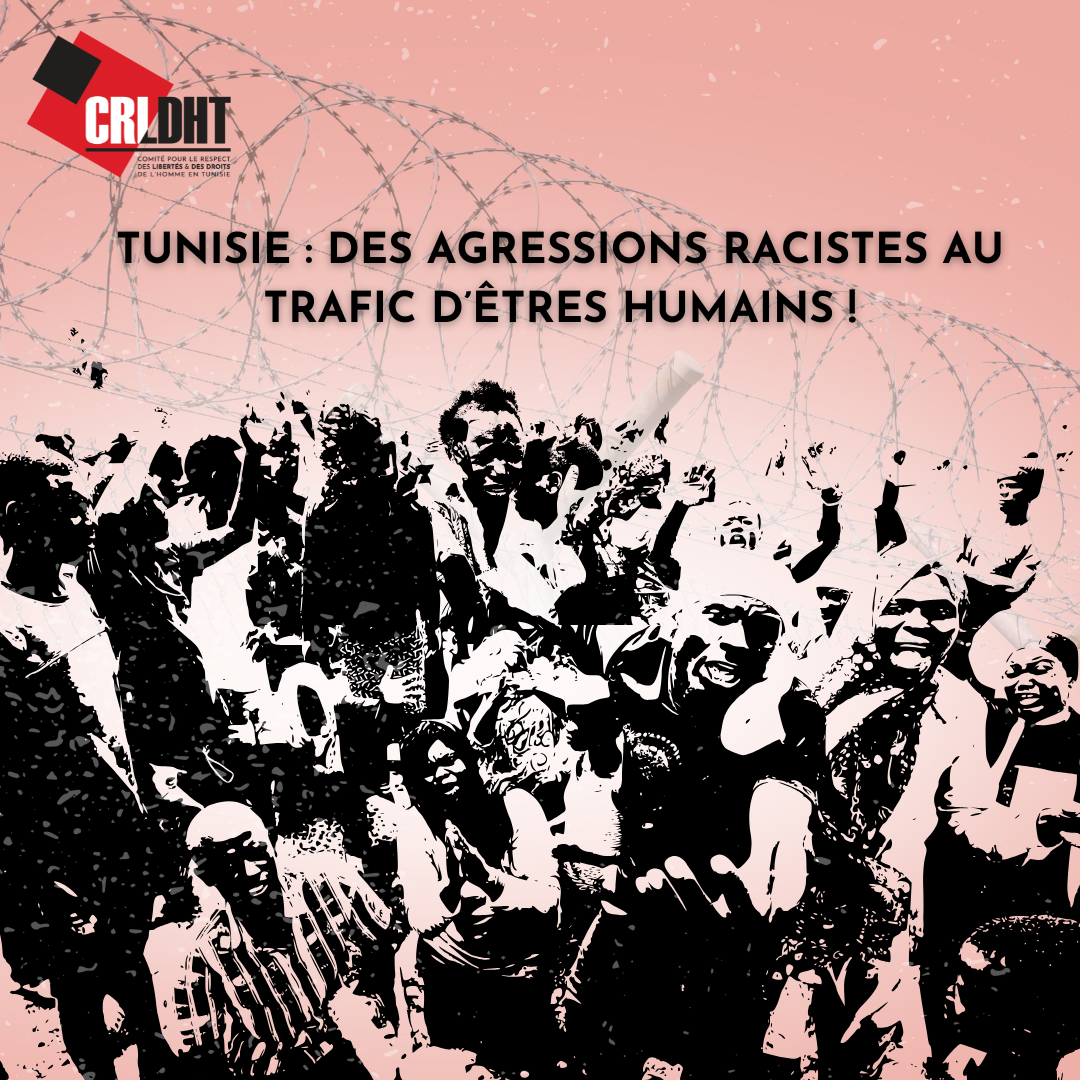
Over the past three years, the systematic and brutal abuse of sub-Saharan migrants by the Tunisian state apparatus has become an international scandal. Damning reports and testimonies are multiplying, pointing the finger at the excessive use of violence, forced expulsions, physical and sexual assaults, all exacerbated by the openly racist discourse of President Kaïs Saïed. The latest report, presented at the end of January 2025 to left-wing parties at the European Parliament on February 4, 2025 (link to the meeting: https: //www.facebook.com/share/v/12C1Sd22rBU/?mibextid=wwXIfr ), entitled "Expulsions and sales of migrants from Tunisia to Libya", definitively lifts the veil on what many now describe as state-sponsored human trafficking. (report link: https: //statetrafficking.net/)
This report documents thirty harrowing testimonies from migrants deported from Tunisia to Libya between June 2023 and November 2024. The accounts reveal cold, dehumanizing state logistics involving the Tunisian police, national guard and army, who capture, brutalize and sell migrants to Libyan militias at the border. These victims, men, women - including pregnant women - and children, are transformed into human commodities traded for a few dozen euros or against payment in fuel and drugs.
The state human trafficking machine
The testimonies collected in the report describe a nightmare methodically orchestrated in five phases:
- The hunt for black migrants: violent raids take place in fields, workplaces, homes and at sea. Migrants are systematically targeted because of their skin color, often deceived under the pretext of routine checks, before being beaten and stripped of their belongings.
- Border concentration camps: once arrested, migrants are herded into makeshift detention centers where physical, sexual and psychological violence reigns. Deprived of food and medical care, they are herded together like animals.
- Human sales at the Libyan border: Tunisian authorities hand over migrants to Libyan militias in exchange for money, fuel or drugs. Women, considered to have greater "market value", are sold at higher prices to end up in sex-trafficking networks.
- Libyan prisons: once sold, migrants are taken to prisons in Libya where they are tortured, raped, enslaved and forced to work, while exorbitant ransoms are demanded from their families.
- Shared profits: close links between the Tunisian military and gendarmes, Libyan militias and networks of smugglers turn trafficking into a profitable industry, financed indirectly by European agreements on border management.
Crimes against humanity covered up by the state
The report is explicit: the facts reported are crimes of state and crimes against humanity under international law. It documents :
- Mass arbitrary detentions without any legal framework;
- Systematic physical and sexual violence, including against pregnant women and children;
- Modern slavery organized by the state, where migrants are sold and exploited as mere commodities;
- Structural and institutionalized racism: the hunt for black migrants is based on discriminatory practices encouraged by official discourse.
The European Union: a silent accomplice in this odious trade
The scale of the violations would not be possible without the direct complicity of European governments, particularly Italy, which for years have financed the militarization of Tunisia's borders under the pretext of "combating illegal immigration". By signing agreements with an authoritarian and racist regime, the European Union knowingly delegates to Tunisia the dirty work of intercepting, locking up and delivering migrants to Libyan hell.
More than 150 million euros have been paid by the European Union to Tunisia as part of its migration management program. This money has been used to equip Tunisian border guards, maintain their patrol vehicles and reinforce coastal surveillance infrastructures. Every euro of this funding contributes to the perpetuation of crimes against migrants. In particular, the report points out that the drop in migrant arrivals via the central Mediterranean since October 2023 is directly linked to the intensification of violence and refoulements in Tunisia.
KaÏs Saïed's speech: fuel for racial hatred
The anti-migrant turn accelerated in February 2023, when Kaïs Saïed made racist remarks, claiming that sub-Saharan migrants were part of a "plot to alter Tunisia's demographic composition". This speech unleashed racist rhetoric and legitimized mass violence. Black migrants were then targeted by the police, the national guard, local militias and groups of citizens, all under the complacent gaze of the authorities.
Criminalizing solidarity and fundamental rights: a regime of terror
The Tunisian authorities don't just rape, deport and sell migrants. They also persecute associations, activists and supportive citizens who dare to help migrants or denounce state abuses. Reported testimonies indicate:
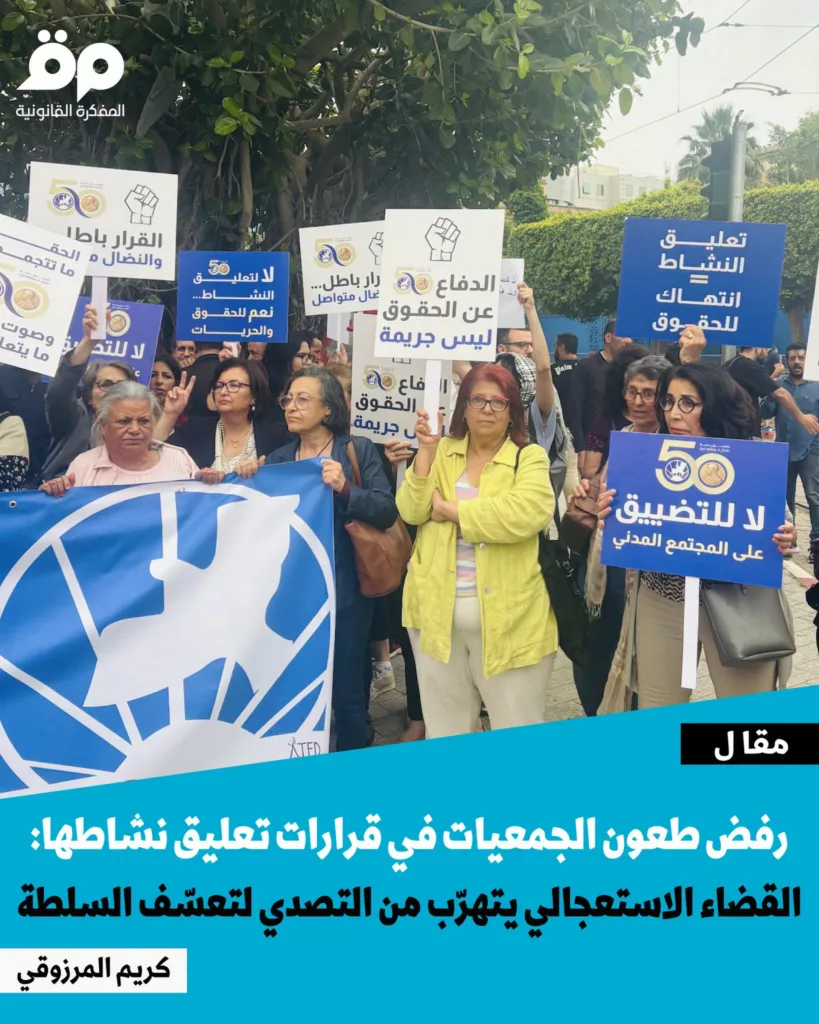
- Arbitrary arrests of community activists: emblematic figures in the defense of human rights, such as Saadia Mosbeh, Cherifa Riahi, Abdallah Saïd and Mustapha Jammali, were arrested and accused of endangering national security simply for providing humanitarian aid to migrants.
- Instrumental legal proceedings against migrant associations and journalists, based on vague and repressive laws such as Decree-Law 54 of 2022. This law criminalizes any dissemination of "false information" or criticism of the state.
- The closure of democratic space: civil society associations, opposition parties and human rights defenders are systematically intimidated, their activities hindered and their members hunted down.
In this atmosphere, solidarity becomes a punishable act of courage. Activists are accused of "complicity with illegal immigration", while journalists are prosecuted for daring to document the violence.
Widespread repression: a tool for consolidating authoritarianism
The criminalization of solidarity is part of a broader framework of repression of all peaceful opposition. Since Kaïs Saïed's coup de force in July 2021, arrests of political opposition figures, rigged trials and the suppression of press freedoms have become the norm.
- Over 1,700 people have been prosecuted under Decree-Law 54 since 2023, including journalists, community activists and lawyers.
- Political trials of opposition leaders were held on trumped-up charges of plotting against state security. Figures such as Khayem Turki, Abdelhamid Jelassi, Ghazi Chaouachi, Ridha Belhaj, Issam Chebbi and Jaouhar Ben Mbarek were arrested for political reasons without tangible proof.
- Peaceful opposition is seen as a threat: any criticism of the state's migration policy or repressive actions is equated with an attack on national security.
Oppression of migrants and activists: two sides of the same state policy
This repression of civil liberties and migrants is not the result of isolated excesses, but is part of a wider process of criminalizing dissent in order to strengthen Kaïs Saïed's grip on the country.
This mechanism works thanks to :
- The militarization of borders and the delegation of repressive tasks to Tunisian security forces, financed by the European Union.
- The ideological legitimization of violence by the state's racist discourse, which presents migrants as an existential threat.
- Explicit and implicit support from European partners, who turn a blind eye to abuses committed by the Tunisian authorities as long as they fulfill their role as Europe's "border guardians".
Impunity can no longer be tolerated
In the face of this organized human tragedy, the Committee for the Respect of Human and Migrant Rights in Tunisia (CRLDHT) launches an urgent appeal to :
- Launch an independent international inquiry to document and try those responsible for these crimes;
- Impose targeted international sanctions against Tunisian state actors involved in human trafficking;
- Firmly condemn the complicity of the European Union, which must immediately put an end to all financing of the repressive apparatus of Kaïs Saïed's regime;
- Mobilize Tunisian, European and African civil society to counter this spiral of violence and prevent the normalization of human trafficking in North Africa.
Tunisia under Kaïs Saïed has become an alarming breeding ground for human rights violations, where abuses linked to migration policies are compounded by systematic authoritarian repression. Under the pretext of managing migratory flows, and with the support of Europe, the regime is conducting a brutal two-pronged offensive: the persecution and exploitation of sub-Saharan migrants, and the targeted repression of human rights defenders, solidarity associations and the peaceful opposition. Immediate and determined action is essential to stop this cycle of serious violations before human trafficking and the suppression of freedoms become the rule.