In the run-up to the presidential elections on October 6, 2024, Tunisia is going through a period of increasing repression of political opponents and dissenting voices. This repression is part of a broader pattern of systematic harassment of journalists, human rights defenders and civil society organizations. In the run-up to the elections, human rights and freedom of expression in Tunisia are under serious threat, with the judiciary instrumentalized by the government to muzzle dissent, sideline serious presidential contenders and silence opponents. Since President Kaïs Saied assumed exceptional powers in 2021, he has undertaken to restructure several institutions, including the Independent High Electoral Authority (ISIE), which he has placed under his control. This move weakened the independence of the electoral commission and led to dubious practices in the selection of presidential candidates.
Ayachi Zammel: a target of repression
One of the figures in this wave of oppression is Ayachi Zammel, a former member of parliament and founder of the Azimoun opposition party in June 2022. Running for president as an independent candidate on August 24, 2024, Zammel was sentenced on September 18, 2024 to one year and eight months in prison on charges of falsifying sponsorships. The sentence, handed down by the Jendouba Court of First Instance, is a politically-motivated verdict clearly aimed at undermining his chances in the presidential race. In addition to these convictions, he has been sentenced to a total of 12 years' imprisonment and banned from voting for life.
Despite these detentions, Zammel's lawyer, Abdessattar Massaoudi, asserted that his client remained determined to continue his election campaign. At a press conference in Tunis on September 16, 2024, Massaoudi stressed that only death could put an end to Zammel's presidential campaign. Zammel thus embodies resistance in a political climate marked by intimidation and abusive legal proceedings.
Systemic repression of opponents
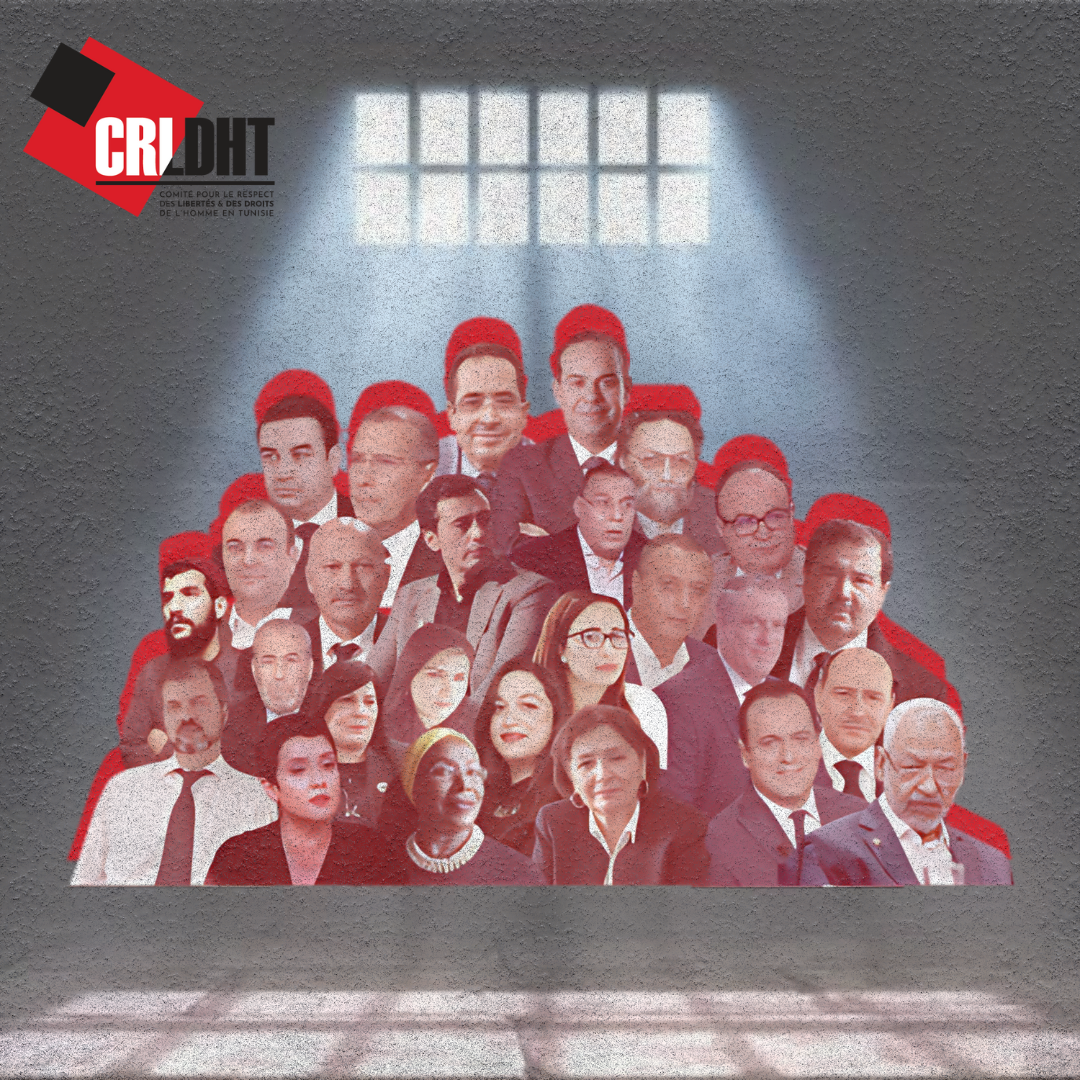
A.Zammel's case is part of a wider offensive targeting opposition politicians. In August 2024, several potential presidential candidates were convicted on similar charges of sponsorship fraud. Among them were Nizar Chaari, activist and media producer, and Karim Gharbi, rapper and businessman, both sentenced to four years in prison, but also former Ennahdha leader Abdellatif Mekki, judge Mourad Massaoudi, and another candidate, Mohamed Adel Dou, sentenced to eight months in prison by a court on August 5, 2024.
Life sentences of ineligibility were also handed down to Nizar Chaari, Abdellatif Mekki and Mourad Massaoudi on the same charges of falsifying sponsorships, illustrating the use of arbitrary prosecutions designed to ensure the re-election of President Kaïs Saied.
A similar dynamic affected Ennahda party figures, with the arrest of at least 97 members of this political formation on September 12 and 13, 2024, including its Secretary General, Ajmi Ourimi, and other key members of the Islamist party.
These arrests and the resulting convictions testify not only to the use of arbitrary charges to ensure the re-election of President Kaïs Saied, but also to the atmosphere of oppressive control prevailing in Tunisia in the run-up to the presidential election. These decisions clearly show that the authorities are relying on arbitrary restrictions and intimidation to ensure Saied's re-election in the ballot scheduled for October 6.
Declining freedoms and erosion of the rule of law
On September 2, 2024, the ISIE published a final list of just three candidates, including Kaies Saied, Ayachi Zammel and Zouhair Maghzaoui, a former pan-Arabist left-wing MP who avsupported the presidential coup of July 25, 2021. This selection excluded a wide range of opposition candidates, marking a drastic reduction in political plurality. In fact, the ISIE rejected a total of 14 candidates, considerably limiting Tunisians' electoral choice. By way of comparison, during the 2019 presidential campaign, the ISIE approved 26 candidates from various political affiliations, illustrating a more open and competitive electoral process. This narrowing of the political field accentuates the manipulation of electoral institutions to guarantee Saied's re-election, to the detriment of a transparent and inclusive democratic process.
Arbitrary and prolonged arrests: a violation of human rights
Arbitrary arrests and prolonged detentions of opposition figures seriously violate human rights and freedom of association. These practices are part of a repressive strategy aimed at stifling all opposition and guaranteeing a presidential election with no real competition. In addition to the long list of arrested personalities, Abir Moussi, president of the Parti destourien libre, and Lotfi Mraihi, president of the Union populaire républicaine, have been imprisoned for political reasons. Their presidential candidacies were rejected on August 29, 2024 on questionable grounds. The Tunisian authorities thus undermined the integrity of the election, reducing this democratic process to a mere formality.
A threat to democracy and the rule of law
Arbitrary arrests, political convictions and interference in the judicial system represent an explicit attack on the pillars of democracy and the rule of law in Tunisia. As the country prepares for a crucial presidential election, these practices compromise the independence of the electoral process. This climate of repression seriously undermines citizens' confidence in the process, compromising its credibility, integrity and security.
Call for the release of political prisoners and respect for fundamental rights
In the run-up to the presidential election, the Tunisian authorities must put an end to this worrying setback to freedoms and human rights. They must immediately and unconditionally release all those detained for peacefully exercising their rights, including civil society activists, journalists, political opponents and human rights defenders. The independence of the judiciary must be restored, and the media and civil society organizations must be allowed to operate freely without fear of reprisal. To build a sustainable democratic future in Tunisia, it is imperative that the fundamental principles of justice, equity and human rights are respected at all times.