Since the election of Kais Saied as President of the Republic in 2019, women's rights in Tunisia have suffered an alarming setback. Several women's rights organizations have expressed concern at the gradual erosion of the gains made since the 2011 revolution.
Increase in violence and harassment
Violence against women, including murder and assault, has increased alarmingly. Statistics show a rise in cases of femicide and domestic violence, with a judicial system often powerless or unwilling to protect victims. Women's rights activists are often targeted by online smear campaigns and harassment, exacerbating their vulnerability. Recent testimonies reveal that law enforcement agencies, instead of protecting, sometimes participate in these acts of violence and harassment, as shown by the case of Samia Ben Hassine, an activist arrested and mistreated for her public commitment.
Political arrests and repression
Since the coup of July 25, 2021 and the promulgation of Decree-Law 54 on September 13, 2022, many women have been prosecuted, arrested and imprisoned for their public and political involvement. These detentions are often arbitrary and based on unfounded accusations, publications on social networks or statements. Civil society organizations have denounced this repression, underlining the absence of justice for women activists and the brutality of detention conditions. The "Freedom for all women without exception" campaign, launched by the independent feminist dynamic, aims to free all women imprisoned for their activism, politics or opinion, and to put an end to arbitrary prosecutions.
Hate speech and social divisions
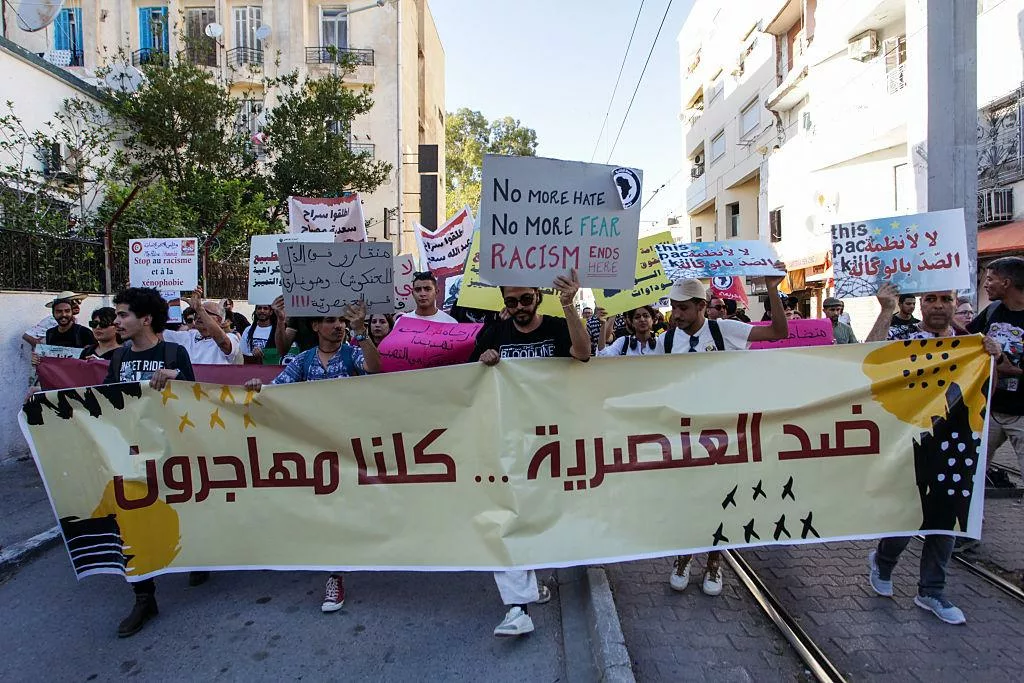
Hate speech and social divisions were exacerbated under Saied's regime, dividing Tunisian society and creating a climate of fear and insecurity for women. Human rights activists and defenders were particularly targeted, making their work even more difficult and dangerous. Political polarization and the stigmatization of dissenting voices have helped to isolate women activists, exposing them to relentless attacks on social networks, in the media and even in the courts.
Legislative and institutional regression
The legislative and institutional reforms undertaken under Kais Saied often ignored or even undermined women's rights. The closure of independent institutions and the centralization of power weakened human rights protection mechanisms. Changes to the Constitution and the dissolution of the Assembly of People's Representatives have left women's rights defenders without effective institutional recourse. The electoral law is a striking example. Introduced by President Kais Saied, it provoked an intense reaction among women's rights defenders. Criticized for reducing female participation in the political process, the law abolished the principle of positive discrimination in favor of women and young people. Feminist associations denounce this regression, stressing the law's incompatibility with constitutional guarantees of gender equality. The abolition of public funding for election campaigns and the complexity of electoral districts are also singled out as obstacles to women's participation in political life.
Mobilization and Resistance
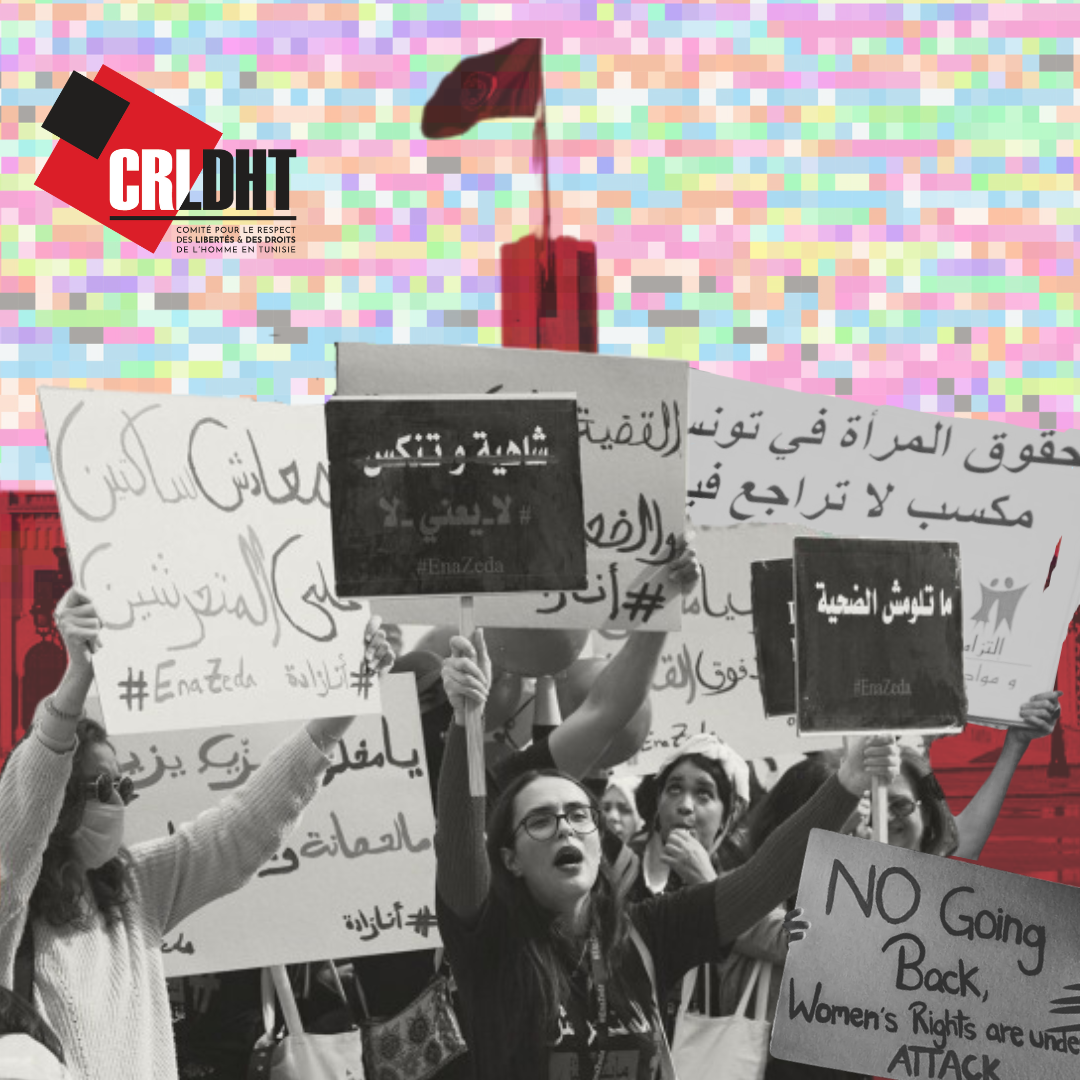
Faced with these challenges, women's rights groups have stepped up their mobilization efforts. The "Freedom for all women without exception" campaign, launched by Dynamique Féministe, aims to free all women imprisoned for their activities in the public space and to put an end to arbitrary prosecutions. The campaign will culminate in a demonstration planned for August 13, 2024, in front of the municipal theater in Tunis, in protest against ongoing violations of women's rights.
The CRLDHT joins in this call for solidarity and mobilization in defense of women's rights in Tunisia and the release of all political prisoners and prisoners of conscience, urging the authorities to respect and protect the fundamental rights of all female citizens. We recall that the struggle for equality and justice is essential to the progress of any society, and that every setback to women's rights is a threat to democracy and social peace.