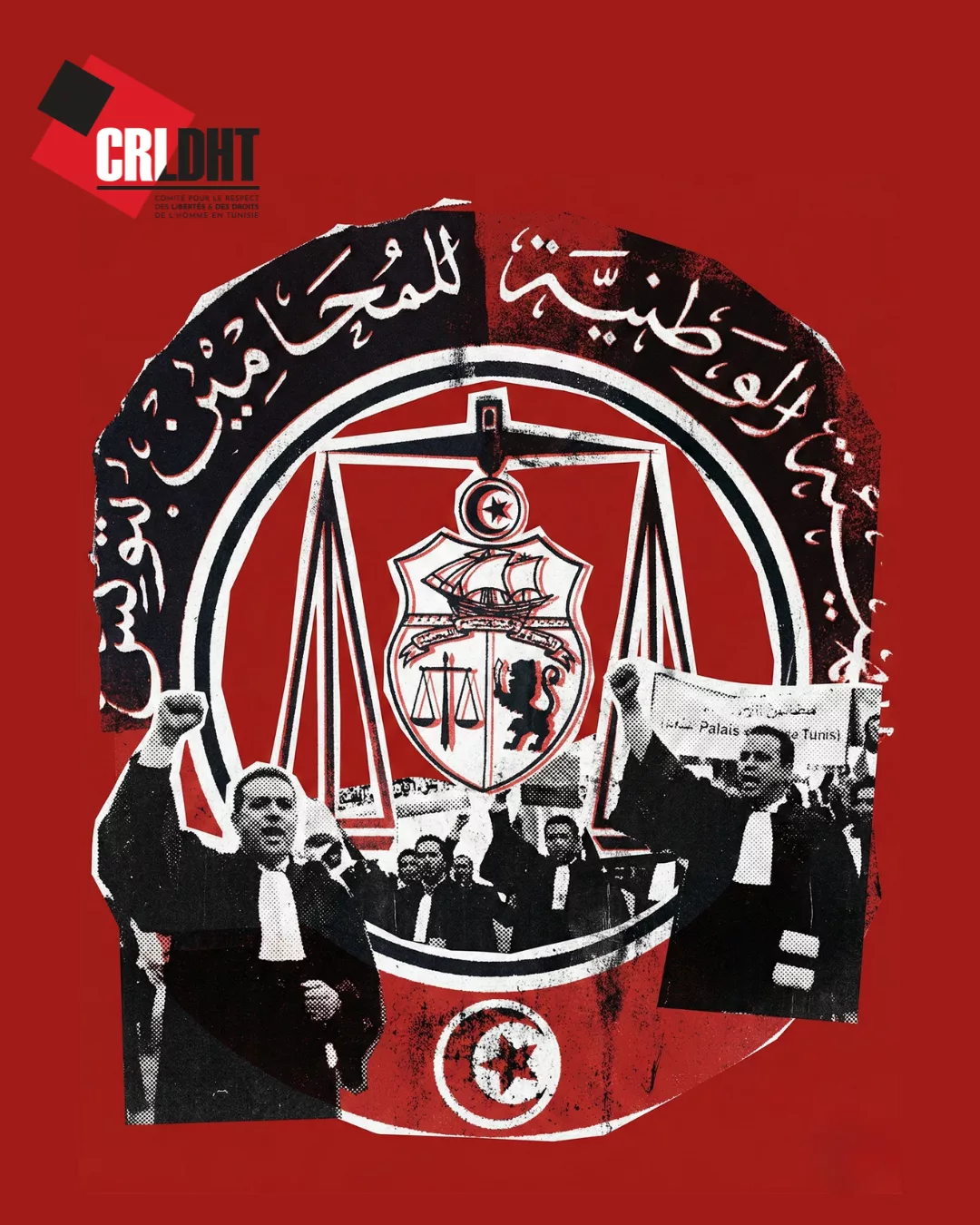
In front of the courthouse, lawyers in black robes took to the streets. Responding to a call from the Tunisian National Bar Association, dozens of lawyers gathered on February 13, 2026, to denounce what they consider to be serious and repeated violations of the right to defense and the guarantees of a fair trial.
At the heart of the mobilization: restrictions imposed on access to detainees, obstacles encountered during prison visits, limitations on pleading time and, more broadly, a climate deemed worrying for the exercise of the profession.
Bar President Boubaker Ben Thabet reiterated that defense is not a privilege granted to lawyers, but a fundamental right of the accused. "Being the voice of the law," he insisted, means ensuring the fairness of the trial and preserving the credibility of the judicial institution.
Several lawyers also condemn the transfer of prisoners to remote prisons, which complicates access to files and clients, as well as pressure in certain sensitive cases. For the profession, these practices undermine the entire judicial system.
The mobilization of lawyers did not remain isolated.
On the same day, the National Union of Tunisian Journalists denounced obstacles to the work of journalists in the courts, arguing that restricting media coverage of hearings constitutes an attack on transparency and the right to information.
This intersection of concerns—defense and freedom of the press—reveals a broader unease surrounding the functioning of the public justice system.
The right to a fair trial is enshrined in the Tunisian Constitution and in Tunisia's international commitments, notably the International Covenant on Civil and Political Rights. It implies effective access to a lawyer, the opportunity to prepare one's defense, and hearings held in accordance with procedural rules.
When lawyers cannot meet with their clients freely, when the time available for defense is reduced to a few minutes, or when lawyers are prosecuted for acts related to the exercise of their duties, the balance of the trial is undermined.
The struggle of lawyers goes beyond defending their corporate interests. It concerns every citizen. For without independent defense, there can be neither fair justice nor effective protection of freedoms.
By calling for unity and vigilance, the National Bar Association reiterates an obvious fact: protecting the right to defense means protecting society as a whole.
The mobilization on February 13 thus appears to be a strong signal. A reminder that the public service of justice cannot function in an atmosphere of mistrust, and that respect for procedural guarantees is non-negotiable.
In a context marked by numerous institutional tensions, the lawyers' fight deserves to be heard. Because when the defense is weakened, it is the rule of law that is eroded.