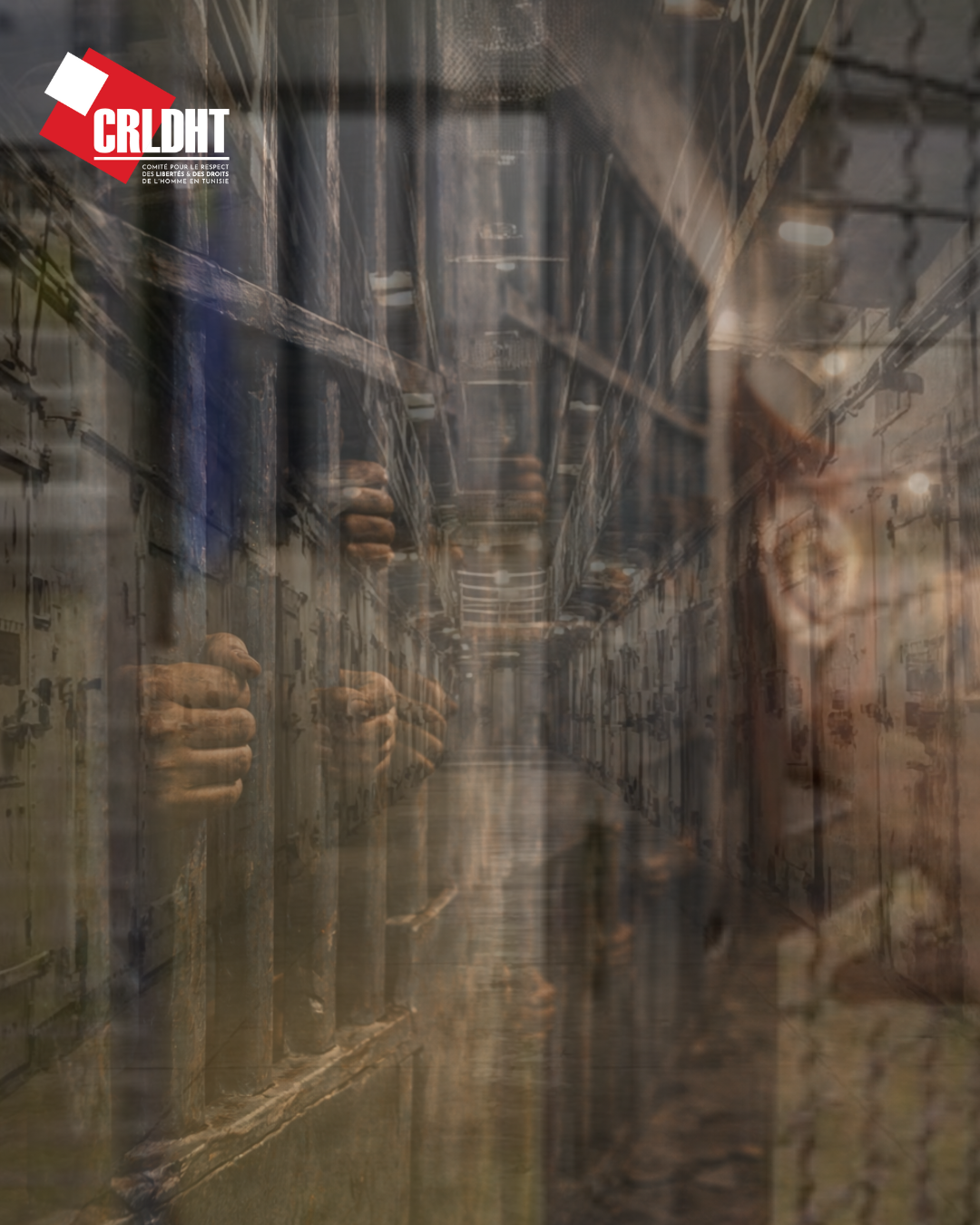
The decision by the Tunisian authorities to prevent the Tunisian League for Human Rights (LTDH) from accessing prisons is neither an administrative incident nor a simple procedural disagreement. It is part of a broader and deeply worrying trend: the gradual restriction of independent oversight mechanisms and the undermining of the legitimate role of civil society in protecting fundamental rights.
The facts are clear. On several occasions, delegations mandated by the LTDH have been prevented from visiting civilian prisons, without explicit legal justification, without prior notification, and in clear violation of the memorandum of understanding signed in July 2015 between the League and the Ministry of Justice. Even more seriously, these repeated bans are now being presented as constituting an "implicit termination" of this agreement, without any formal termination procedure having been initiated.
An arbitrary decision with no legal basis
In law and in practice, such an approach has no legal basis. The 2015 memorandum does not provide for tacit termination or unilateral suspension, let alone the possibility for the prison administration to block access to facilities without clear and justified legal grounds.
By proceeding in this manner, the Department of Justice is setting a dangerous precedent: that of an administration that evades its commitments by simply acting, in defiance of the principles of legal certainty, continuity of public action, and good governance.
The attempt to present the LTDH's visits as a privilege granted by the State is a selective and instrumental interpretation of the agreements reached and, more broadly, a biased presentation of the historical role of civil society.
The LTDH did not wait until 2015 to intervene in places of deprivation of liberty. For decades, it has carried out a recognized mission consisting of:
- document detention conditions,
- prevent torture and ill-treatment,
- defend the dignity and rights of persons deprived of liberty,
- make recommendations for structural reforms to the prison system.
The memorandum of understanding merely formalized a pre-existing role that was legitimate and in line with international standards, particularly those relating to the prevention of torture and independent monitoring of places of detention.
The ban imposed on the LTDH cannot be reduced to an administrative dispute. Restricting access to prisons reflects a deliberate political choice that affects all independent actors: civil society organizations, lawyers, journalists, and monitoring mechanisms.
The message is unambiguous: transparency is tolerated as long as it remains silent and uncritical.
However, prisons are a key indicator of the rule of law. When they are not subject to independent scrutiny, the risk of serious human rights violations becomes systemic: ill-treatment, attacks on dignity, violations of the right to health, arbitrary detention, and the weakening of safeguards against impunity.
Direct political responsibility of the Department of Justice
By denying access to prisons and obstructing independent monitoring mechanisms, the Ministry of Justice is fully responsible politically and morally. It is accountable for the worrying decline in human rights guarantees in places of detention, in contradiction with the international commitments freely undertaken by Tunisia.
The prevention of torture and the protection of the rights of persons deprived of their liberty cannot be limited to declarations of principle. They require the existence of effective, independent, and transparent mechanisms based on cooperation with civil society.
The LTDH is neither a temporary player nor a marginal organization. It is a national institution with historical legitimacy and a structuring role in the defense of rights and freedoms.
Targeting it today means:
- undermine a key player in community life
- normalize the absence of independent oversight,
- and contribute to the gradual erosion of the foundations of pluralism.
This approach goes beyond the issue of prison visits alone and contributes to a restrictive reconfiguration of civic space, to the detriment of public accountability and the protection of rights.
a battle of principles beyond procedures
What is currently at stake goes far beyond a dispute over access or procedure. It is a question of determining:
- who has the right to monitor the actions of the State,
- which defines the contours of transparency,
- and whether human rights remain a binding framework or are reduced to institutional rhetoric.
Closing prisons to outside scrutiny is never neutral. It always paves the way for abuse.
Defending the LTDH's right to visit prisons means defending:
- the dignity of detainees,
- the public's right to information,
- the responsibility of institutions,
- and the very foundations of the rule of law.
Because there can be no lasting justice without independent oversight. Places of detention that are not subject to transparency become areas of extreme vulnerability for human rights.