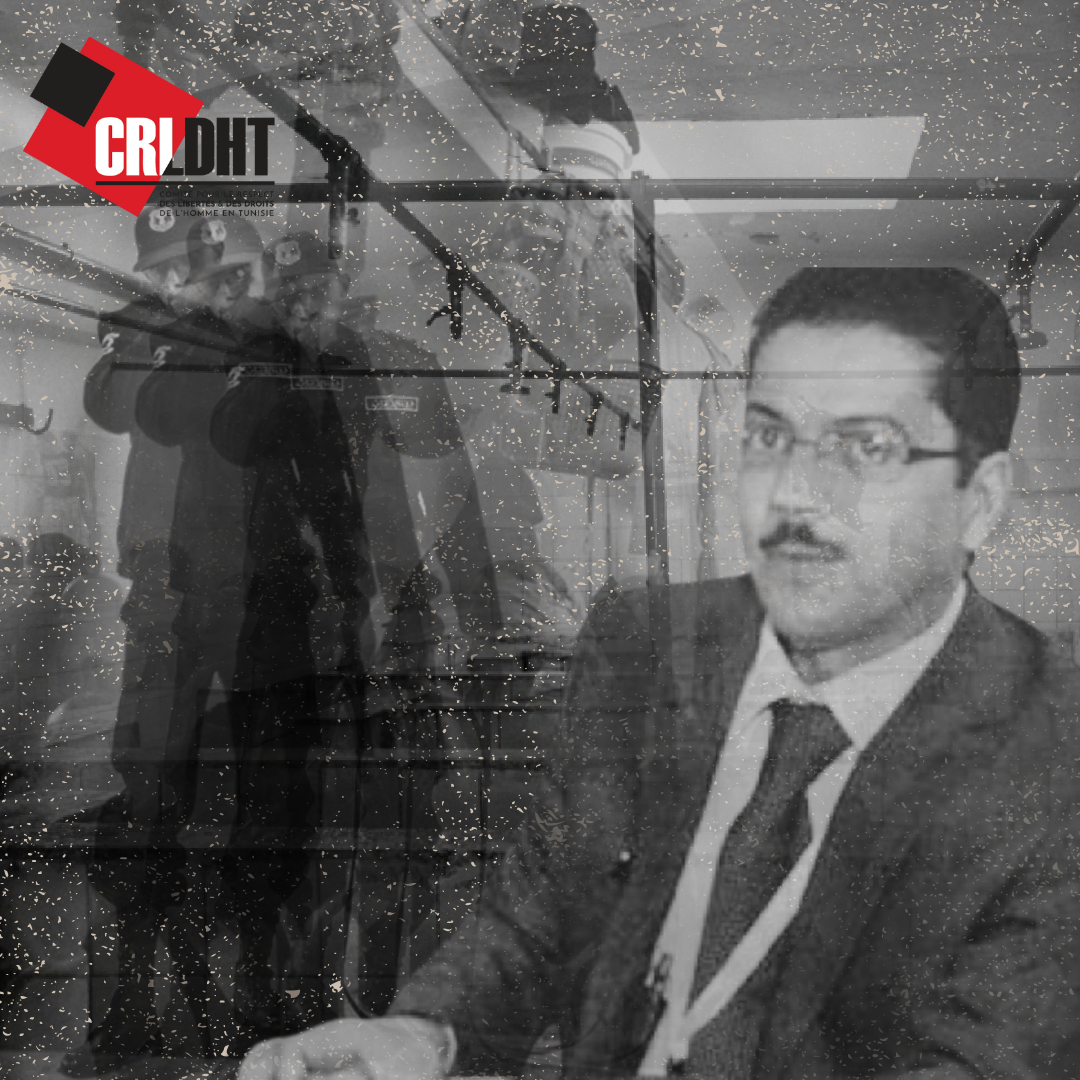
On April 6, 2025, Adel Dridi, a controversial businessman at the heart of a vast financial scandal, was found dead in his cell at Mornaguia prison. His body, discovered by fellow inmates in the early hours of the morning, was transferred by order of the Public Prosecutor's Office to the Forensic Medical Institute to clarify the cause of death. Dridi was serving a ten-year sentence for fraud, having initially been sentenced to 32 years in the resounding "Yosr Développement" Ponzi scheme that shook post-revolutionary Tunisia. Officially, he had been in custody since 2013. But beyond Dridi's case, his death once again raises major questions about the reality of prison conditions in Tunisia.
A prison to die in?
The disappearance of A.Dridi is not an isolated case. It comes just a few weeks after that of businessman Fadhel Ghedamsi, who died in opaque circumstances after a long hunger strike in protest against his prolonged pre-trial detention. The recurrence of such deaths in prisons raises the question: have Tunisian prisons become death-houses where individuals - whether convicted or not - are abandoned to their fate without care, without dignity, without justice?
Why did this man, incarcerated for over ten years, die in this way, with neither the prison authorities nor the justice system having anticipated or prevented his physical and mental deterioration? The mere fact that his death was discovered by fellow inmates testifies to an almost total abandonment.
Alarming prison conditions
Tunisia is regularly singled out by international bodies for its detention conditions. Overcrowding, insalubrity, lack of access to medical care, inter-prisoner violence, psychological pressure and even torture... In 2024, the United Nations Special Rapporteur on Torture had already sounded the alarm. More recently, several NGOs have denounced the absence of independent control mechanisms, the weakness of prison medicine and the political instrumentalization of detentions.
Prolonged pre-trial detention, often used as a weapon of intimidation against opponents, is also accompanied by a denial of their fundamental rights: access to healthcare, a fair trial, minimum dignity. Hunger strikes - such as the one currently underway by Sonia Dahmani - have become the ultimate means of expression for detainees to denounce their fate.
Adel Dridi: swindler or scapegoat?
Adel Dridi doesn't leave a crystal-clear image. For some, he remains the "Tunisian Madoff", responsible for one of the country's biggest financial scams, with over 60,000 victims. For others, he is also a man who disturbed the banking and political system, notably because of his alleged links with Islamist figures, his opposition to the dominant economic power and his ability to drain millions outside traditional channels. At the time, some associations condemned this as judicial harassment.
Whatever one's opinion of the man, his death in prison without transparency, without official communication, without an independent inquiry, is unworthy of a state governed by the rule of law. This death, like that of F. Ghedamsi, calls for particular vigilance: prison must not become a place for political, social or judicial vengeance.
Breaking the silence, shedding light
The recurrence of suspicious deaths in custody, whether involving controversial figures or political opponents, demands a clear institutional response. It is urgent to :
- Carry out a public and independent autopsy of Adel Dridi's body, with access for his relatives, lawyers and human rights organizations;
- Publish medical and judicial reports on the exact circumstances of his death;
- Set up an independent mechanism to investigate conditions of detention and treatment of detainees in Tunisian prisons - or failing that, seize and strengthen the role of the National Mechanism for the Prevention of Torture (INPT), set up in 2016 but often prevented from fully fulfilling its mission by administrative obstacles, a lack of cooperation from prison authorities, or even restrictions on access to places of detention ;
- Strengthen parliamentary and judicial control over the prison administration, by facilitating access to prisons for NGOs, families and journalists;
- Put an end to arbitrary detentions and dehumanizing practices in prisons, particularly with regard to prisoners of conscience and media figures.
The Tunisian state cannot continue to respond to these deaths with silence or terse communiqués. This institutional inertia confirms the moral collapse of the State, the bankruptcy of its judicial system and the absolute denial of the principle of human dignity.