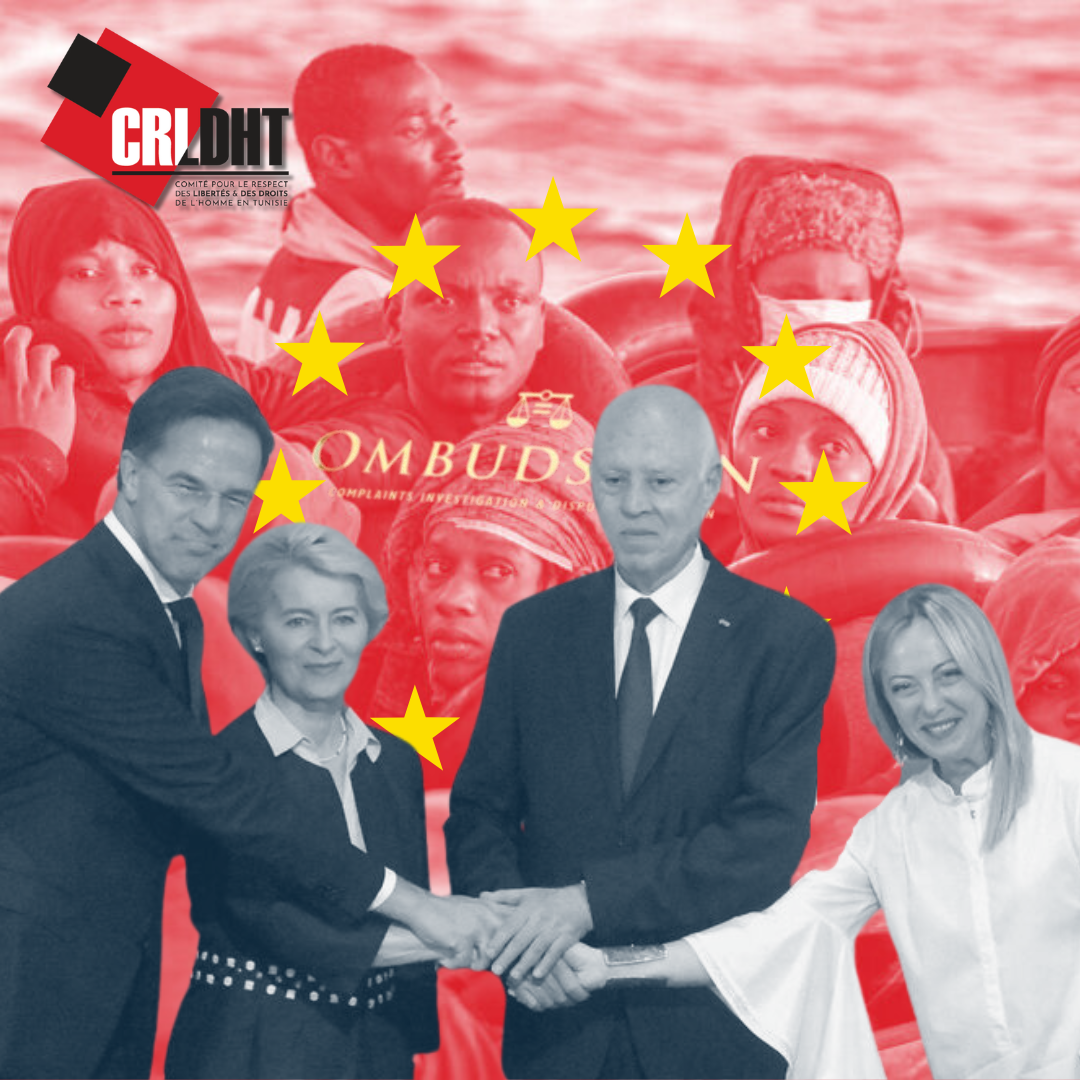
The agreement signed on July 16, 2023 between the European Union (EU) and Tunisia raises a number of concerns, particularly with regard to its "Migration and Mobility" pillar. This pillar provides for actions to reduce irregular migration, through European funding to support Tunisian border management, the fight against human trafficking and the strengthening of border controls.
This Memorandum of Understanding (MoU), although presented as a strategic step forward in the management of migratory flows, highlights grey areas, particularly in terms of respect for human rights and transparency. The European Ombudsman, Emily O'Reilly, is playing a key role in this controversy, highlighting the shortcomings and failings of the European Commission in implementing this agreement.
A controversial agreementé
The agreement, with a budget of 150 million euros, provides for the reinforcement of Tunisia's borders and the fight against irregular migration. However, it comes against a backdrop of deteriorating human rights in Tunisia, exacerbated by the re-election of President Kais Saied. He is accused of adopting repressive measures against sub-Saharan migrants, accompanied by openly racist rhetoric.
Revelations by the Guardian have documented serious abuses, including rape and violence inflicted by members of the Tunisian security forces who benefit from European funding, against sub-Saharan migrants, including children and women. Evidence documenting these systematic abuses has been transmitted to the International Criminal Court (ICC), raising questions about the EU's responsibility in supporting authorities accused of abuses.
L'lack of evaluation of'impact assessment
Emily O'Reilly pointed out a major omission: the absence of a human rights impact assessment (HRIA) before the agreement was signed. Such an assessment would have made it possible to identify and mitigate the risks of fundamental rights violations, and to put in place measures to mitigate them, even before the planned actions began.
The European Commission, for its part, preferred to rely on a "risk management exercise" for Tunisia, a standard procedure applied to all partner countries likely to receive EU funding, which assesses human rights, such as respect for democracy, the rule of law and fundamental rights. Despite the EU's commitment to the protection of fundamental rights, this method is deemed insufficient and non-transparent by the Ombudsman, given the lack of publication of the conclusions of this exercise. This opacity undermines the EU's credibility and fuels criticism of its double-speak on human rights, compromising the transparency and effectiveness of its mitigation measures.
Surveillance and liability in question
The Ombudsman also highlighted the lack of concrete mechanisms for monitoring the impact of EU-funded projects under the MoU. Although the Commission requires regular reports from its partners, such as the International Organization for Migration (IOM) and the Office of the United Nations High Commissioner for Refugees (UNHCR), these measures appear insufficient in view of the risks identified.
Ombudsman Emily O'Reilly has recommended :
- Explicit criteria for suspending funding in the event of proven human rights violations.
- Complaint mechanisms accessible to victims.
- Increased transparency, including the publication of information on funded projects.
The implications for'EU
This case exposes a central dilemma: reconciling the management of migratory flows with respect for the EU's human rights commitments. At a time when Tunisia is becoming a key partner in stemming migration to Europe, shortcomings in the implementation of the agreement highlight contradictions.
Criticism of the Commission underlines the need for a more ethical and transparent approach. The Ombudsman insists on the importance of not sacrificing fundamental rights on the altar of migration cooperation. As the EU positions itself as a global player in the field of human rights, its strategic partnerships must reflect these values.
The EU-Tunisia memorandum of understanding illustrates the growing tension between migration objectives and ethical imperatives. While migration management remains a priority for the EU, it cannot be achieved at the expense of human rights. The European Ombudsman's recommendations underline the urgent need to reform current practices to ensure that migration policies comply with the Union's fundamental principles. This lack of transparency risks undermining the EU's credibility as a global player in the field of human rights.