The independence of the judiciary, under Kaïs Saïed's constitution and decree laws, is a myth in which only patriots - in the sense he gives them - can still pretend to believe.
The judicial function, as defined by the 2022 Constitution drafted by Kaïs Saïed, lives up to its name: it is no longer a judicial power responsible for dispensing justice and settling disputes according to the law, but an apparatus that plays two essential roles in its conception.
Firstly, it's a tool of repression against any dissident personality or voice, or against anyone who needs to be condemned to corroborate the presidential narrative. Secondly, it is a propaganda tool, as the merciful "vigilante" Kaïs Saïed and his communication present these victims, supposedly thugs, as hunting trophies or hostages in his so-called "war against corruption". To hell with respect for the principles and standards of the right to a fair trial.
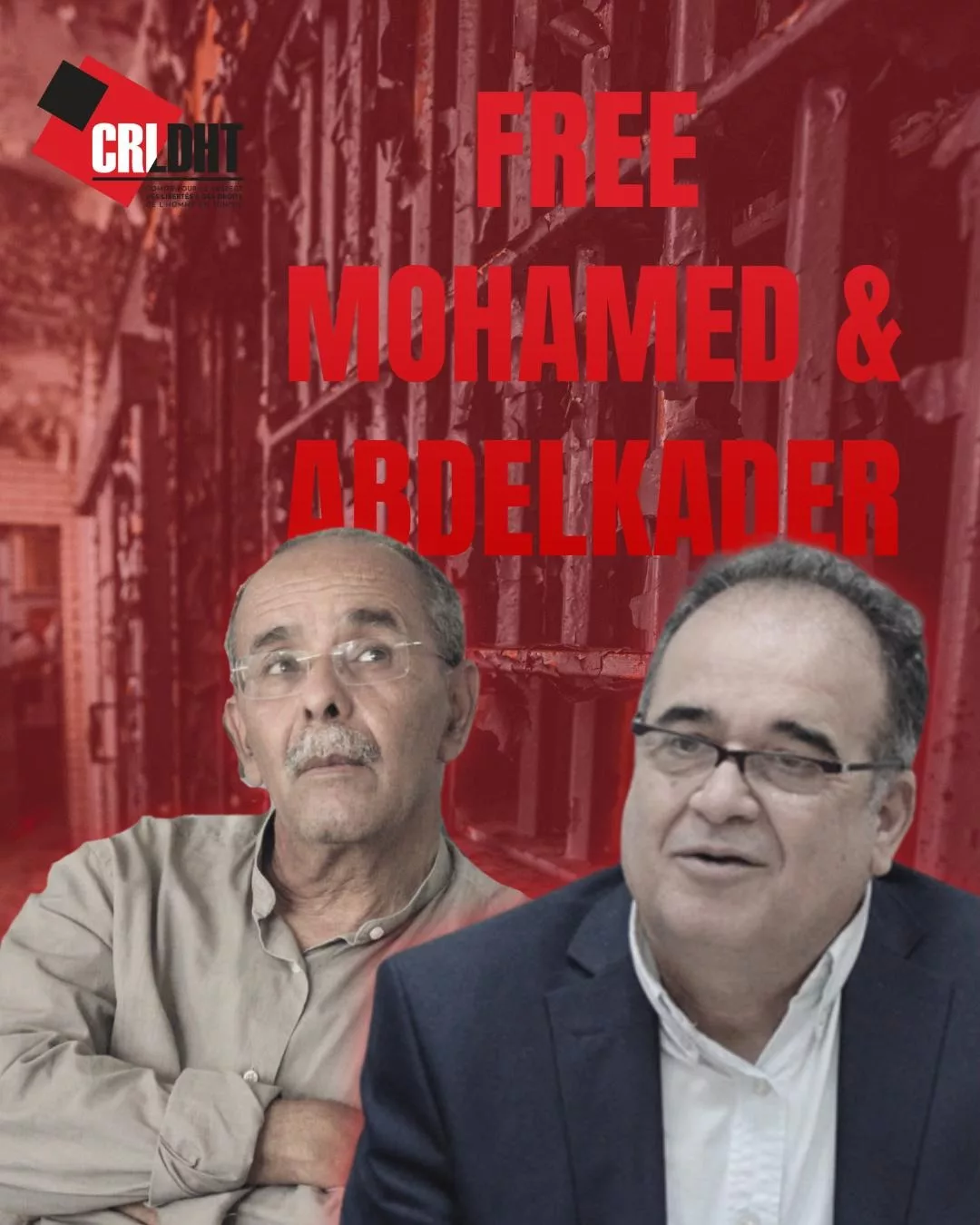
Late on the night of October 6, 2025, the specialized criminal division of the Tunis Court of First Instance's anti-corruption unit handed down a judgment against the former Minister of Social Affairs, Mohamed Trabelsi, sentenced in absentia to six years in prison, and the former Director General of the Office des Tunisiens à l'étranger, Abdelkader Mhadhebi, sentenced to three years in prison. These convictions are based on alleged corruption in connection with the appointment of social attachés abroad between 2017 and 2019 - curiously without the beneficiaries themselves being convicted.
Mohamed Trabelsi holds degrees in social sciences and press and information sciences. He also trained at the National Defense Institute. An activist and trade union leader, former deputy secretary general of the UGTT and director of workers' activities for North Africa at the International Labor Organization's regional office, he has served in several governments since 2016 as Minister of Social Affairs, as well as acting Minister of Health, before being unconstitutionally dismissed after the coup d'état of July 25, 2021.
Like all the political figures of the decade of democratic transition - dubbed the "black decade" by Kaïs Saïed and his supporters - Mohamed Trabelsi has been the subject of trumped-up legal proceedings, with scenarios that wouldn't even fit in a film comedy.
In the aforementioned case, the classic abstract scenario of article 96 of the Penal Code is applied indiscriminately to all former officials deemed to be opponents of Kaïs Saïed, or whose conviction is necessary to justify the presidential narrative of the "corruption" of the officials of the aforementioned decade.
The recipe is simple: a decision by a minister or an official under his or her authority, allegedly to the detriment of the State, and there you have it. This is corruption as defined in the very vague article 96 et seq. of the French Penal Code, which criminalizes any advantage granted to oneself or to another person, or any damage suffered by the administration, as a result of a public official using his or her position.
Jurisprudence, shaped under the instructions of Justice Minister Leïla Jaffel, who appoints and dismisses magistrates by simple memo and under constant threat of dismissal by the President of the Republic, has transformed these texts into weapons of mass judicial destruction. Everything now qualifies as corruption, even when the person in charge was not competent to make the decision in question, or when the matter was simply a matter of administrative expediency. A veritable trawl.
The CRLDHT :
- Firmly condemns this incessant and disfiguring instrumentalization of Tunisian justice for political and propagandist ends;
- Expresses its sincere solidarity with Mr Mohamed Trabelsi and reiterates its support for all victims of the aberrations of the current regime;
- Calls on the Tunisian people and civil society to persevere and multiply initiatives of peaceful resistance against this existential threat to the rule of law and the Republic embodied by Kaïs Saïed's regime, in order to restore the democratic experiment in a more mature and methodical way.