UN confirms abusive nature of detention
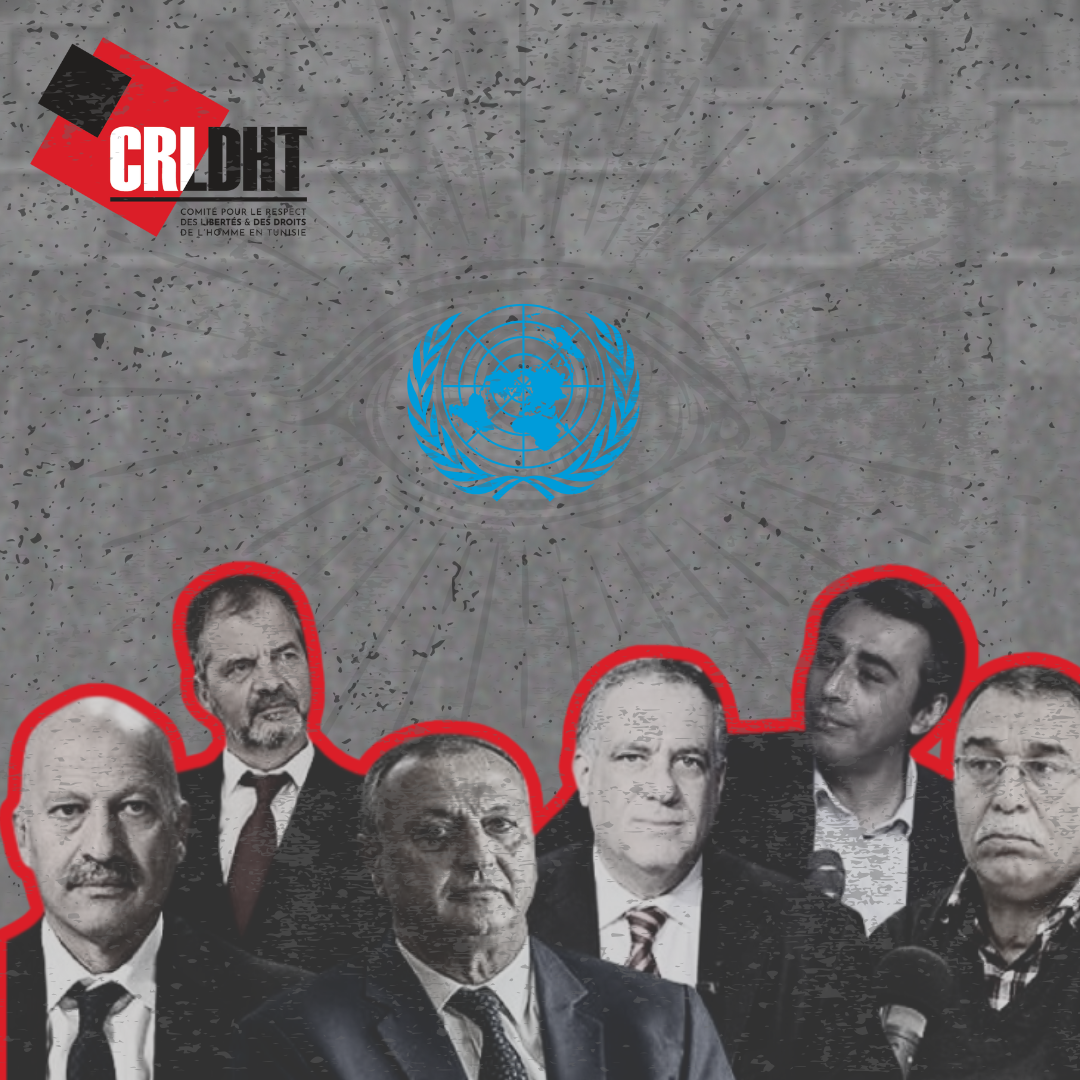
The Working Group on Arbitrary Detention of the UN Human Rights Council has published its opinion no. 34-2024 concerning eight Tunisian detainees in the case known as "l'affaire du complot contre la sûreté de l'État", and states that they have been victims of arbitrary detention.
Who is the Working Group on Arbitrary Detention?
The Working Group on Arbitrary Detention is a UN-mandated body of independent human rights experts. It is responsible for investigating cases of deprivation of liberty imposed arbitrarily or in any other manner incompatible with the relevant international standards set out in the Universal Declaration of Human Rights or in the relevant instruments of international law accepted by the States concerned.
The Working Group investigates alleged cases by sending communications and urgent appeals to the governments concerned, asking them to provide further details or to take the cases into account. The Group also examines complaints from individuals under its ordinary procedure, which may lead to the adoption of opinions on the arbitrary nature of detention. The Working Group also carries out country visits to assess the situation of deprivation of liberty in the country concerned.
Who are the eight inmates?
1.Mohamad Khayam ben Ibrahim ben Mustafa al Turki
2.Chaima bent Issa ben Ibrahim ben Hoagui Issa
3.Abdelhamid ben Abdelkader ben Mohamad al Jelassi
4.Issam ben Abdelaziz ben Ahmed al Chebbi
5.Ghazi ben Mohamad ben al Hadi al Chaouachi
6. Ridha ben al Bachir ben Mohamad Belhaj
7. Jaouhar ben Ezzedine ben Mohamed al Habib ben M'barek
8. Mohamad Lazher al Akremi
The provisional release of Chayma Issa and Mohamed Lazher Al Akremi, which occurred during the proceedings before the working group, does not prevent their cases from being processed.
How does it work?
The Working Group examines cases according to adversarial procedures, i.e. the complainants' allegations and evidence are communicated to the respondent state for it to issue its conclusions and evidence, and vice versa. In this case, the Tunisian State chose not to respond to the complaint. In this case, the Working Group continues to examine the case on the basis of the elements provided by the complainants which it considers admissible.
The content of the notice
After examining the documents, the working group concluded that the detention of the eight applicants was (was, in the case of the two provisionally released) arbitrary. This qualification is based on several grounds:
Grounds relating to the arrest and detention procedures
Notably the violation of article 9 (paragraph 2) of the International Covenant on Civil and Political Rights, which imposes the obligation to inform the detained or arrested person of the reasons for his arrest and to notify him of the charges against him as soon as possible, so that he can defend himself effectively. The Working Group concluded that the arrest had no legal basis. The Tunisian authorities also failed to meet their obligation to bring the detainees before a judge as quickly as possible.
Grounds relating to the purpose of detention
The working group concluded that the arrest and detention constituted reprisals against the detainees for exercising or attempting to exercise their rights to freedom of expression, association and assembly, as well as their right to participate in the public affairs of their country, rights enshrined in the International Covenant on Civil and Political Rights and the Universal Declaration of Human Rights.
Reasons relating to their right to a fair trial
Notably the serious attacks on the independence of the judiciary, manifested in the public remarks of the President of the Republic, the pressure exerted by the government, and the proceedings against the defense lawyers. These factors led the working group to conclude that "the violations of the eight individuals' right to a fair trial are so serious as to render their deprivation of liberty arbitrary".
The working group's recommendations
The working group invites the Tunisian government to :
- Free the prisoners still in jail;
- Compensation for released prisoners;
- Notify the Working Group of changes in legislation or practices undertaken to better comply with international law obligations;
- Notify us of any further action taken in response to this notice.
Is Tunisia obliged to respect this opinion?
Tunisia is legally obliged, under international law, to do so, since it has ratified the UN Conventions and accepted the submission and examination of individual complaints by the Working Group, albeit in the form of an opinion and not a judicial decision.
However, like most international mechanisms, there are no coercive means of compelling the State to comply.
However, failure to comply with this advice may have legal repercussions before European courts or administrative authorities, particularly with regard to Tunisia's qualification as a safe country. It may also have political repercussions, notably on relations between the regime in place and the countries of the European Union or the United States, which could consider it even more unfriendly.