Climate change threatens the most fundamental human rights, including the right to life, water and health.
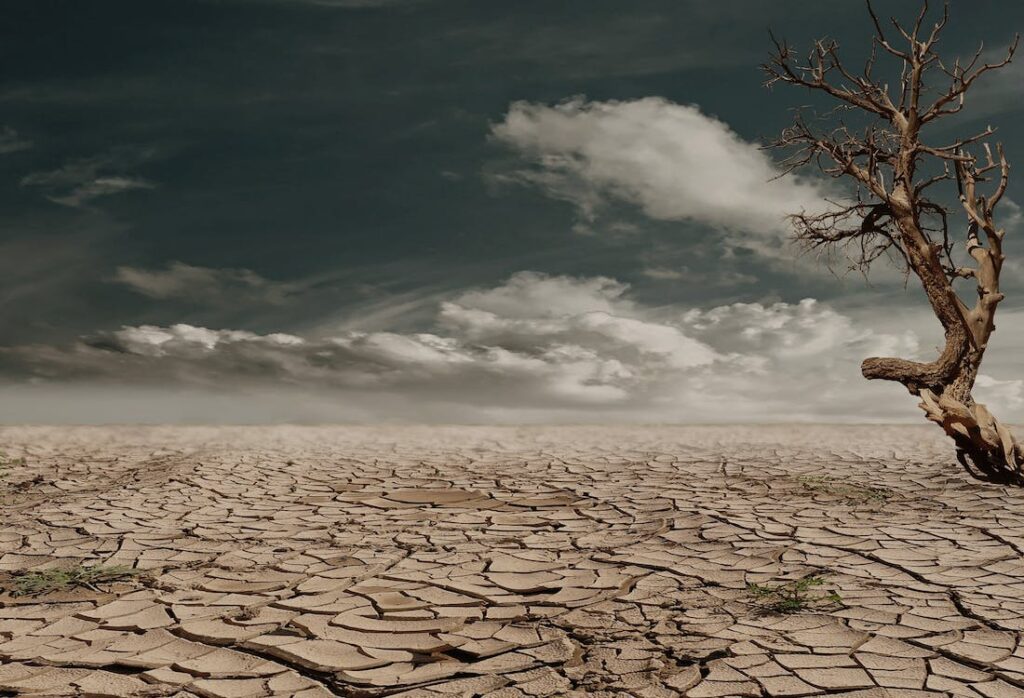
Tunisians have had a taste of it this summer: successive heatwaves, drought, forest fires, water problems... The greenhouse effect is making itself felt, as are the consequences of global warming. A time bomb waiting to explode.
While the stakes are global, Tunisia cannot avoid taking part in this salutary joint effort to tackle climate change and combat inequalities.
Political instability, general complacency and abuses of all kinds with impunity have had a heavy impact on the environment, hampered the implementation of numerous programs and caused serious damage. The acceleration of climate change threatens to tip Tunisia into multiple vulnerabilities.
Urgent need for action, but general lethargy seems to be setting in
Although limited compared to other countries, Tunisia's greenhouse gas emissions amount to 35 million tonnes of CO2 equivalent. The main sources are energy (60%), agriculture (22%), industry (11%) and waste (6%). The country's ambition is to reduce its carbon intensity by 45% by 2030, compared with its 2010 level.
The projects are as numerous as they are urgent. From industrial conversion to energy transition, agriculture, healthcare, construction, tourism and transport, all sectors are concerned.
Where to find this financing? Under what conditions? Is the international community ready to put its hand in its pocket to contribute? It's hard to believe.
Although the most informed people in Tunisia believe that action is urgently needed, a general lethargy seems to be setting in. Lacking stability, follow-up action, continuous capacity building, renewed education and massive campaigns, Tunisia is still far from the necessary mobilization.
Admittedly, public authorities are not helping enough, and democracy is threatened by climate change.
Clarifying the transition debate paves the way for the necessary forks in the road
The adopted national low-carbon strategy defines a global trajectory for reducing emissions, with sectoral breakdowns and a battery of indicators, but its influence on national and local public policies remains marginal.
There are several reasons for this difficulty:
- The very long time horizon of climate change, incompatible with the "short-termism" of most public and private players;
- Uncertainty linked to the emergence of new risks generated by the climate crisis is holding back investment;
- The volumes of financing required for the transition are beyond the capacity of most public players, while private finance still does not seem ready to contribute except marginally;
- The absence of binding targets for sectors and types of activity;
- The limited involvement of social partners and civil society in the changes required by the transition.
In a word, reassuring illusions and "green washing" risk locking us into unsustainable trajectories. The greening of facades, the recuperation of an environmentalist discourse emptied of its substance, the introduction of innovations with dubious "ecological" effects, skew public debate and prevent enlightened democratic choices, with the risk of the transition being captured by dominant interests.