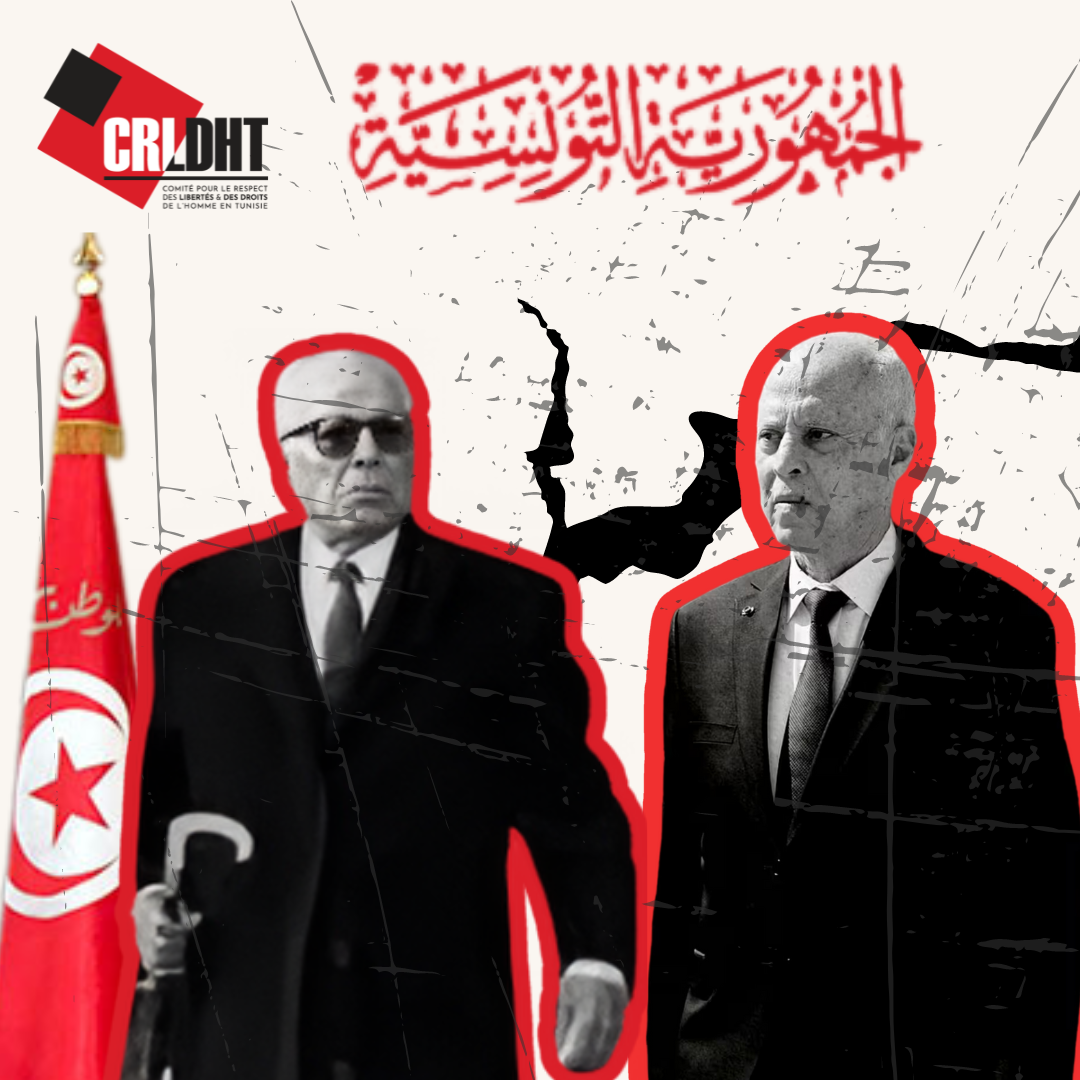
Republic Day is a key moment for reflecting on the history and evolution of Tunisia. Initially, this celebration symbolized the victory of freedom and democracy. Over the decades, however, its significance has taken on a more complex and nuanced dimension. Today, the ideals of freedom, democracy and prosperity seem to be facing major challenges. To fully grasp the significance of this celebration, it is essential to examine the political, social and economic evolution of Tunisia, from the modernist vision of Habib Bourguiba to the current realities under the reign of Kais Saied. This historical journey reveals the struggles and aspirations of a nation determined to forge its own destiny.
Habib Bourguiba: reformer or autocrat?
Habib Bourguiba, the father of the Tunisian Republic, is often hailed for his modernizing reforms, particularly in the fields of education, health and women's rights. His modernist vision led to significant advances in many sectors, laying the foundations for a modern Tunisia. However, his reign was also marked by growing authoritarianism and severe political repression. Opponents were regularly imprisoned or exiled, and the concentration of power in the hands of the president stifled public space in the political sphere and freedom of expression. The duality of his legacy remains a subject of debate: on the one hand, social and economic achievements, on the other, the erosion of political freedoms.
The reign of Zine El Abidine Ben Ali: light and shade
Under the presidency of Zine El Abidine Ben Ali, Tunisia plunged into endemic corruption and brutal repression. Elections were rigged, the media censored and civil society stifled. Ben Ali established a regime where fear and corruption were commonplace, undermining the foundations of democracy and human rights. Republic Day was used as a propaganda tool to mask the dark realities of the regime, where human rights were systematically trampled underfoot. This period left deep scars in the national consciousness, reminding us all of the weight of dictatorship and corruption.
The 2011 Revolution: hopes and realities
The Tunisian revolution of 2011, which brought down Ben Ali, was a moment of great euphoria, hailed as a triumph of democracy. Tunisians showed immense courage in overthrowing an authoritarian regime, ushering in a new era of hope and opportunity. However, this euphoria soon gave way to chronic political and economic instability. Successive governments failed to meet citizens' expectations in terms of social justice, employment and security, leading to profound disenchantment. The democratic transition has proved more complex and chaotic than expected, marked by persistent structural challenges and unfinished reforms.
Kais Saied and authoritarian drift
Since his election in 2019, Kais Saied has attracted a great deal of criticism, notably by suspending Parliament and granting himself exceptional powers in July 2021. This coup, which took place on July 25, marked a turning point in Tunisia's recent history. These actions, perceived as an authoritarian drift, were justified by K. Saied as necessary to combat corruption and stabilize the country, but they were widely seen as a coup d'état in disguise, undermining the hard-won democratic foundations. The concentration of power in the hands of the president, without institutional counterweights, threatens to return Tunisia to authoritarian rule. K. Saied's unilateral decisions have exacerbated political and social tensions, calling into question the gains of the 2011 revolution.
The assassination of Mohamed Brahmi and Chokri Belaid
On July 25, 2013, the assassination of Mohamed Brahmi, a political figure and member of the Constituent Assembly, shook Tunisia. This crime followed the assassination of Chokri Belaid , a figue of the left, on February 6, 2013. These acts of violence exacerbated political and social tensions in an already fragile context. Brahmi was a fervent defender of secularism and democracy, and his assassination was seen as an attack on the values of the Republic. This tragic event marked a dark point in Tunisia's journey towards democracy, underlining the continuing dangers of political extremism and instability.
Taking stock of Kais Saied's reign
Since his election, Kais Saied has set about concentrating executive, legislative and judicial powers in his own hands. By suspending Parliament in July 2021 and dissolving the government, he established a state of exception that lasted well beyond the limits set by the Constitution, raising concerns about the restoration of democratic order. This concentration of power has been interpreted as an erosion of fundamental democratic principles.
K. Saied initiated several constitutional reforms without proper public consultation or parliamentary debate. These reforms, including the introduction of a new constitutional order validated by a referendum with very low turnout, were perceived as a means of strengthening his personal power rather than a response to the country's democratic needs. The lack of transparency and inclusiveness in this process further aggravated political and social tensions.
Criticism of the current electoral process
The electoral process underway under the presidency of Kais Saied is a major point of concern for human rights defenders and international observers. Since Saied's announcement of the electoral reforms, many concerns have arisen about the transparency, integrity and legitimacy of the process.
One of the main problems is the lack of transparency in the organization of elections. Electoral reforms were implemented without consultation with political parties, civil society organizations or the public. The concentration of decision-making power in the hands of Saied and his entourage led to accusations of manipulation and bias. The absence of clear mechanisms for the independent supervision of elections raises serious doubts about the possibility of a free and fair ballot.
Credible reports indicate that political opponents, activists and journalists are victims of intimidation and repression. Arbitrary arrests, biased trials and restrictions on freedom of expression have become commonplace. This atmosphere of fear and coercion compromises the ability of citizens to participate freely in the electoral process.
The media play a crucial role in any electoral process, but under the current regime they have been largely manipulated to serve the interests of the president. The state media, in particular, broadcast pro-government messages while marginalizing critical voices. This manipulation limits voters' access to balanced information and prevents open and informed public debate.
Of particular concern is the lack of respect for electoral legal standards and the independence of the Independent Superior Electoral Institution (ISIE). The ISIE, which should guarantee the integrity and transparency of the electoral process, has come under pressure and its independence has been compromised. Unilateral changes to electoral rules by the President without consultation or consensus have weakened the ISIE and undermined confidence in the electoral process. Accusations of political manipulation and bias in the ISIE's decisions are seriously damaging the credibility of the elections.
Political arrests under decree 54
Decree 54, designed to combat cybercrime, has been widely used to justify the arrests of numerous political opponents and activists. Since July 2021, the increase in arrests under this heading has shown a worrying worsening of political repression. Arrested political figures, human rights activists and journalists are often accused of plotting against the state without substantial evidence, in defiance of the right to a fair trial and the presumption of innocence.
Women's rights and Tunisians' rights in decline under Kais Saied
Under the reign of Kais Saied, women's rights, long a strong point of Tunisia compared to other countries in the region, suffered significant setbacks. Initiatives to promote gender equality and combat domestic violence have been neglected or even abolished. Women's rights organizations have reported an increase in discrimination and gender-based violence, exacerbated by official rhetoric that does not firmly condemn these acts.
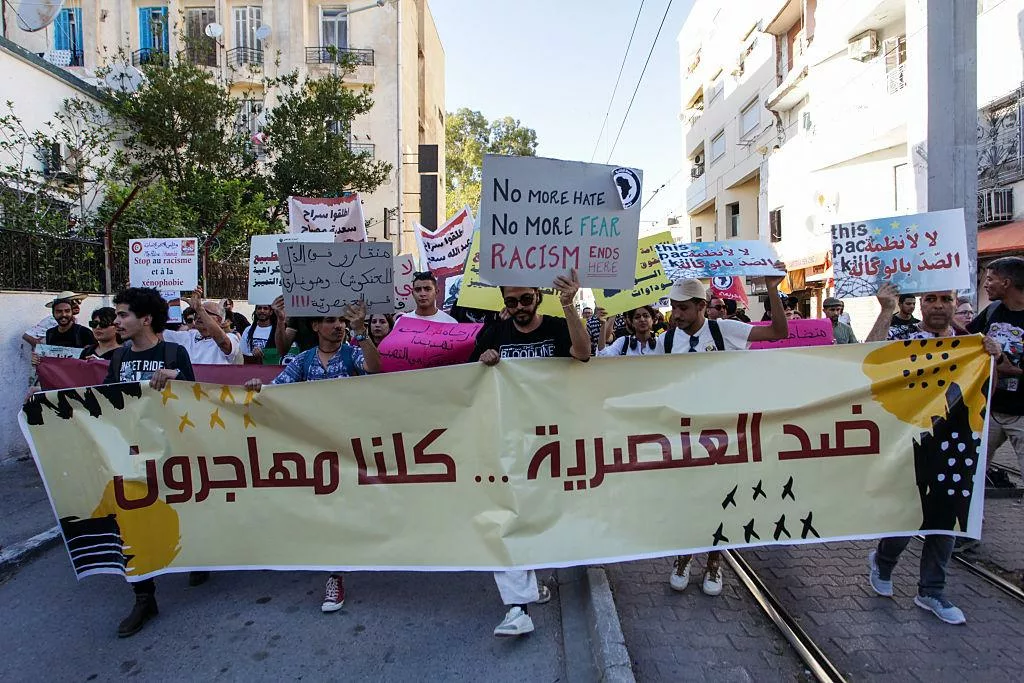
The civil liberties of Tunisian citizens were severely curtailed under the presidency of K. Saied. Increased surveillance, restrictions on freedom of assembly and limitations on non-governmental organizations have created a climate of repression. The ability of citizens to express their opinions freely, protest peacefully and organize to defend their rights was severely compromised.
Media manipulation and intimidation
Under K. Saied's reign, the media were widely manipulated to broadcast pro-government messages while marginalizing critical voices. Arbitrary arrests of journalists and restrictions on freedom of expression became commonplace. This climate of fear and coercion has also discouraged many citizens from becoming actively involved in politics, creating an environment where government critics prefer to remain silent rather than risk reprisals.
Obstacles for presidential candidates
Administrative and financial hurdles imposed on presidential candidates have made political participation increasingly difficult. Restrictive candidacy criteria and barriers to equitable access to media resources and platforms have limited the ability of independent and opposition candidates to campaign effectively. This situation has undermined the credibility of the electoral process and compromised the principle of free and fair elections.
Impact on human rights
The current climate in Tunisia, marked by increasing restrictions on civil liberties and human rights, makes it difficult to organize free and fair elections. Human rights violations, such as the arrests of activists and journalists, and the suppression of peaceful demonstrations, undermine the credibility of the electoral process and threaten the very foundations of democracy in Tunisia.
The meaning of Republic Day has evolved over time, reflecting Tunisia's victories and challenges. From the optimism of Bourguiba's reforms to the authoritarianism of Ben Ali, from the hope of the 2011 revolution to the current concerns under Kais Saied, each stage has marked Tunisian history. Today, this celebration is a call to critical reflection and action to safeguard democratic gains and human rights. By understanding the lessons of the past, Tunisia can better navigate current and future challenges, and continue on its path towards a more just and prosperous future.