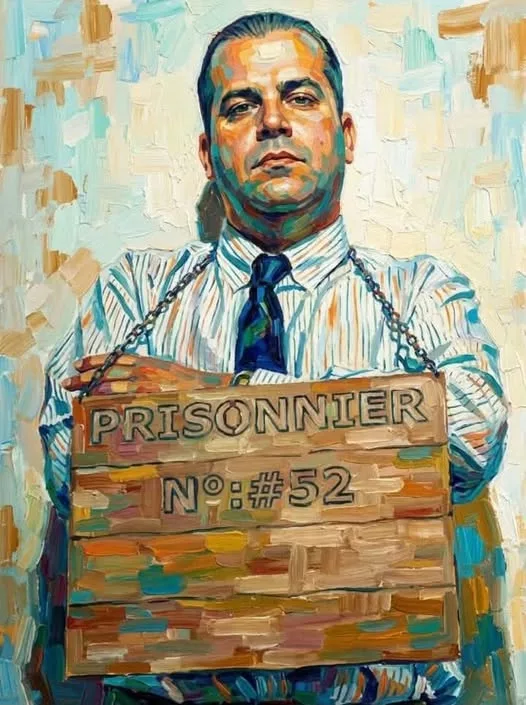
The arrest of attorney Ghazi Mrabet on September 3, 2026, was immediately accompanied by a particularly sensational account: his presence at the home of a wanted man, the seizure of narcotics and a large sum of money, and suspicions of drug trafficking and money laundering.
This is a serious matter. It calls for a thorough, independent, and adversarial investigation. But it cannot be turned into a verdict until the courts have examined the facts, the evidence, and the defense’s arguments.
This is because, to date, no judgment on the merits has been publicly issued.
An arrest followed by an ongoing investigation
Ghazi Mrabet was arrested on the evening of September 3, 2026, at the home of a man who was wanted and had been sentenced in absentia to forty years in prison in connection with drug-related cases.
According to information attributed to judicial sources, the search of this residence reportedly led to the seizure of more than eight kilograms of cocaine and cannabis, as well as approximately 394,000 dinars. The public prosecutor’s office at the Tunis Court of First Instance ordered five days of police custody on suspicion of conspiracy to traffic narcotics and money laundering.
We need to keep in mind what these points say—and what they don't say.
The goods and funds were presented as having been seized from the other suspect’s residence. At this stage, no public court ruling allows us to assert that they belonged to Ghazi Mrabet, that he possessed them, that he had control over them, or that he was involved in their trafficking.
The mere presence of a person at a location where seizures have taken place is not, in and of itself, sufficient to establish that person’s criminal liability.
A proceeding that is expanding, not a proven guilt
On September 8, the period of police custody was extended by five days. Several other people were subsequently arrested as part of the investigation.
On September 11, the case was referred to the Economic and Financial Crimes Unit. The number of individuals under investigation has risen to twenty-one. This expansion indicates that the case is still developing and that investigators are seeking to determine any possible links between several individuals.
On September 16, the investigating judge questioned Ghazi Mrabet and other suspects, then issued detention warrants for nine people. The case was then described as involving an alleged international drug trafficking and money laundering ring.
On September 29, provisional measures targeting the assets and property of certain defendants were announced.
These are the steps in a criminal investigation. They are not the steps leading to a conviction.
A warrant of committal is not a guilty verdict. Police custody is not evidence. An expanded investigation does not authorize the indiscriminate attribution to each of the persons involved of the acts, property, or intentions attributed to others.
Allegations that must be proven
It is alleged that Ghazi Mrabet attempted to obstruct the security forces’ intervention in order to allow the other suspect to escape. This account, attributed to a judicial source, does not constitute evidence: it must be established during the investigation.
It is up to the court to review the police reports, witness statements, any recordings, the precise sequence of events during the operation, and the defense’s arguments.
Other claims have circulated regarding his residence and his conduct during the operation. These cannot be presented as facts until they are confirmed by verifiable evidence in the proceedings or a court ruling.
In a case as serious as this, every charge must be based on specific, personal evidence that has been examined in an adversarial proceeding.
Defending a client does not mean becoming their accomplice
Ghazi Mrabet’s defense team, supported by Lawyers Without Borders, asserts that he was at the home of the wanted man while performing his duties as a lawyer, as the man was one of his clients.
This explanation will have to be examined as part of the investigation. But it serves as a reminder of a fundamental rule: a lawyer may meet with a client who is wanted by the authorities, has been convicted, is unpopular, or is accused of the most serious crimes.
In fact, that is the very essence of the right to a defense.
A lawyer does not become an accomplice to his or her client simply by meeting with the client, listening to the client, preparing the client’s defense, or explaining the client’s rights. Treating this professional relationship as a presumption of guilt directly threatens the entire legal profession.
This obviously does not place any lawyer above the law. If there is personal and substantial evidence against him, it must be established. But it must be established by means other than conflating his profession, his client’s profile, and the location of his arrest.
Ghazi Mrabet's Journey and the Freedom to Defend
Ghazi Mrabet is known for vigorously defending young people, artists, rappers, activists, and individuals facing charges in cases related to civil liberties, freedom of expression, and drug policy.
His commitment to the fight for reform of Law 52, as well as his defense of people who are stigmatized or criminalized, does not grant him immunity. Nor is it proof of innocence.
But this path requires particular vigilance: defending a client must never be equated with endorsing the client’s alleged actions. No attorney should be discredited or subjected to public condemnation for having practiced law on behalf of individuals whom public opinion or the authorities already deem indefensible.
The right to a defense is meaningful only if it also applies to those most at risk.
The Role of the Prosecutor's Office and the Need for Transparency
The initial arrest and the first steps taken during police custody were handled by the public prosecutor’s office at the Tunis Court of First Instance, which was headed at the time by Ahmed Aouini.
A few days later, unofficial reports surfaced claiming he had been ousted. This close timing warrants clarification. However, it does not, on its own, establish a link between his departure and the Ghazi Mrabet case.
Nor is there any reliable source to support the claim that Ahmed Aouini attempted to flee across the Tunisian-Algerian border. Such an accusation should not be reported without verifiable evidence.
In a judicial system severely weakened by repeated attacks on the independence of the judiciary, the need for transparency is all the more critical. Society must know on what grounds each measure is taken, what safeguards are provided to the defense, and how investigative actions are monitored.
Preserving Fairness in the Media Trial
The issue is not to demand immunity for Ghazi Mrabet or to prevent an investigation. It is to demand that this investigation respect the rights of the defense, the right to a fair hearing, effective access to attorneys, and the presumption of innocence.
The initial difficulties reported regarding the meeting between Ghazi Mrabet and his attorneys while he was in police custody serve as a reminder that these safeguards are not merely abstract concepts. They are essential to a detainee’s ability to challenge the charges, prepare a defense, and protect his rights.
It is up to the courts to determine, following a fair trial, what has been proven and what has not.
Until then, no appearance, no seizure from a third party, and no police or judicial statement can take the place of a verdict. The presumption of innocence is not a favor: it is the minimum threshold below which there is no longer justice, but only premature punishment.