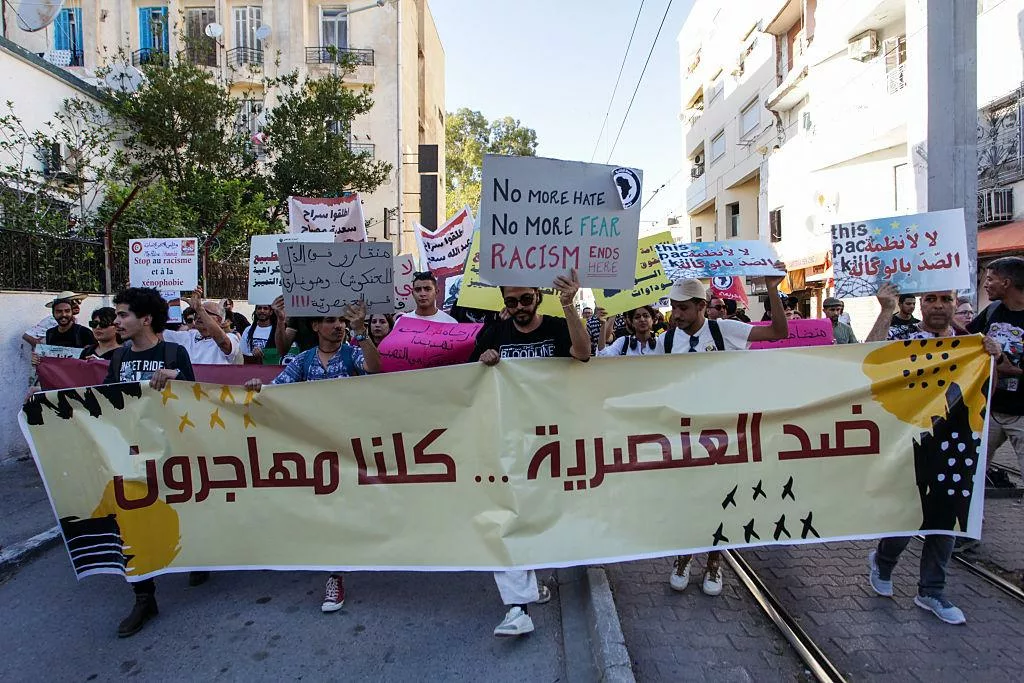

One year in prison in absentia: this is the sentence handed down to environmental activist Kheireddine Debaya for participating in a peaceful sit-in in front of the regional headquarters of the Tunisian Chemical Group in Gabès in 2020.
The ruling, handed down on March 8, 2023, also sentenced twelve activists to one year in prison and another to eight months for "obstructing freedom of work." The convicted individuals were reportedly not informed or regularly summoned, and were not given the opportunity to effectively exercise their rights of defense.
In Gabès, the message seems clear: peaceful environmental activism can now be subject to criminal prosecution.
The world turned upside down: a reversal of responsibilities
For years, the population has been complaining about toxic waste, the persistent smell of ammonia, coastal degradation, and respiratory diseases. The fight waged by Stop Pollution activists is not aimed at individuals, but at industrial practices whose effects have been documented.
However, in this case, it is not the economic actors accused of environmental impacts who are appearing in court. It is the citizens who have mobilized.
The public company becomes legally the "injured party." Local residents become "defendants." The unbreathable air, however, remains outside the scope of criminal law.
What is questionable is not only the severity of the sentence, but also its legal logic.
A peaceful sit-in is reclassified as an infringement on "freedom to work." Citizen mobilization is equated with a disturbance of public order. A health-related demand becomes a criminal offense.
Such an interpretation calls for analysis in light of the fundamental principles of criminal law.
Criminal classification, legality, and proportionality
At the heart of the case lies the classification of the facts. Criminal law, by virtue of the principle of legality and strict interpretation of criminal offenses, cannot be extended beyond what is clearly provided for by law.
The use of the offense of obstruction of freedom of work in the context of peaceful social mobilization raises the question of the proportionality of the criminal response.
Freedom of peaceful assembly and freedom of expression are constitutionally guaranteed and enshrined in international instruments ratified by Tunisia. Any restrictions must be provided for by law, pursue a legitimate aim, and be strictly necessary in a democratic society.
The question remains: was the criminal response adopted necessary and proportionate in light of these requirements?
Fair trial and public safety
The conviction in absentia also raises serious questions about compliance with procedural safeguards.
The right to a fair trial requires that defendants be informed in advance, summoned in accordance with the law, and given the opportunity to organize their defense. The alleged failure to notify defendants, as well as the reactivation of proceedings several years after the events took place, fuel a legitimate debate on legal certainty and the predictability of criminal proceedings.
The issuance of search warrants amid renewed tensions in Gabès over pollution reinforces the impression of a belated judicialization of a dispute with significant social implications.
Public order, economic activity, and fundamental rights
Maintaining public order and protecting economic activity are legitimate objectives. However, they cannot lead to the neutralization of the exercise of fundamental freedoms through a broad interpretation of criminal law.
The conviction of Kheireddine Debaya goes beyond this individual case. It is part of a structural tension between protecting industrial activity and guaranteeing civil rights, in particular the right to peaceful protest and the right to a healthy environment.
Is the repression of peaceful protest an appropriate response to environmental and social disputes? Condemning an activist for participating in peaceful action effectively shifts the debate from the environmental dispute to the repression of protest.
The rule of law is measured precisely by its ability to guarantee, even in times of tension, respect for the principles of legality, proportionality, and effective protection of fundamental freedoms.
In light of this situation, several requirements must be met:
- The immediate suspension of the enforcement of sentences and the guarantee of the right of convicted persons to fully exercise the legal remedies provided for by law;
- Strict compliance with fair trial guarantees, including the right to information, defense, and effective adversarial proceedings;
- Effective protection of the right to peaceful assembly and freedom of expression, in accordance with Tunisia's constitutional and international commitments;
- The opening of a transparent public debate on environmental responsibility in Gabès, including independent and contradictory expert opinions;
- The implementation of concrete measures to guarantee residents' right to a healthy environment, which is inseparable from the right to life and dignity.