“Take the nutcase to Razi Hospital!”
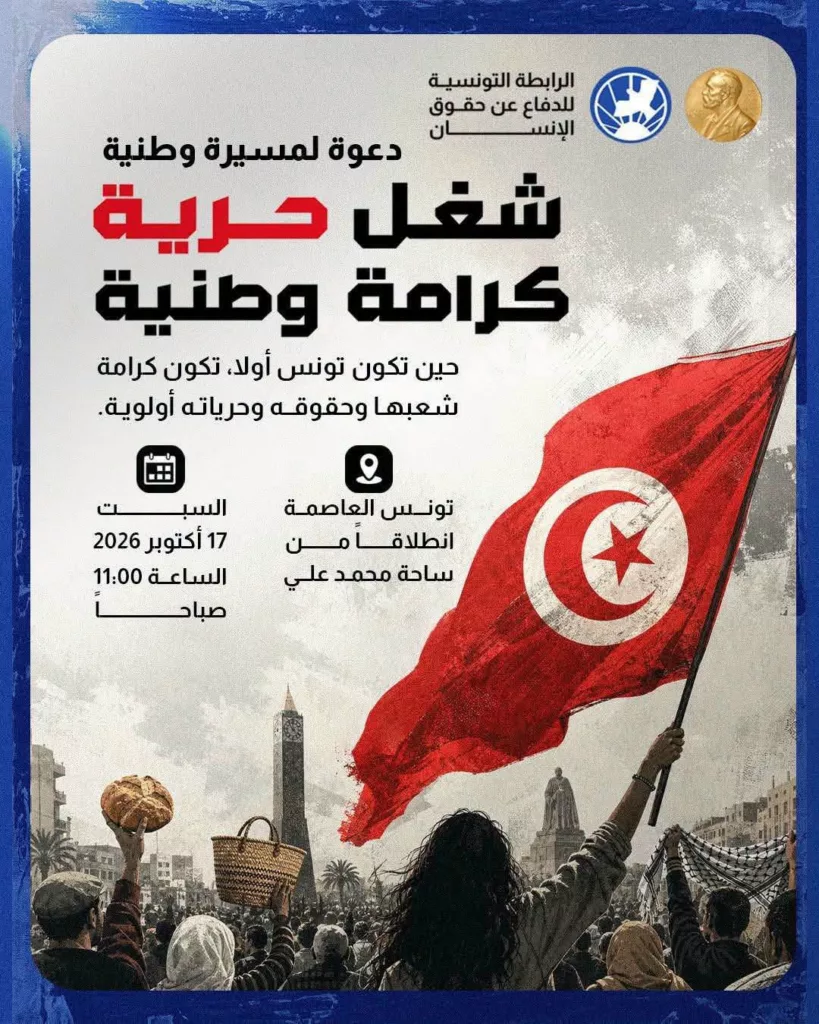
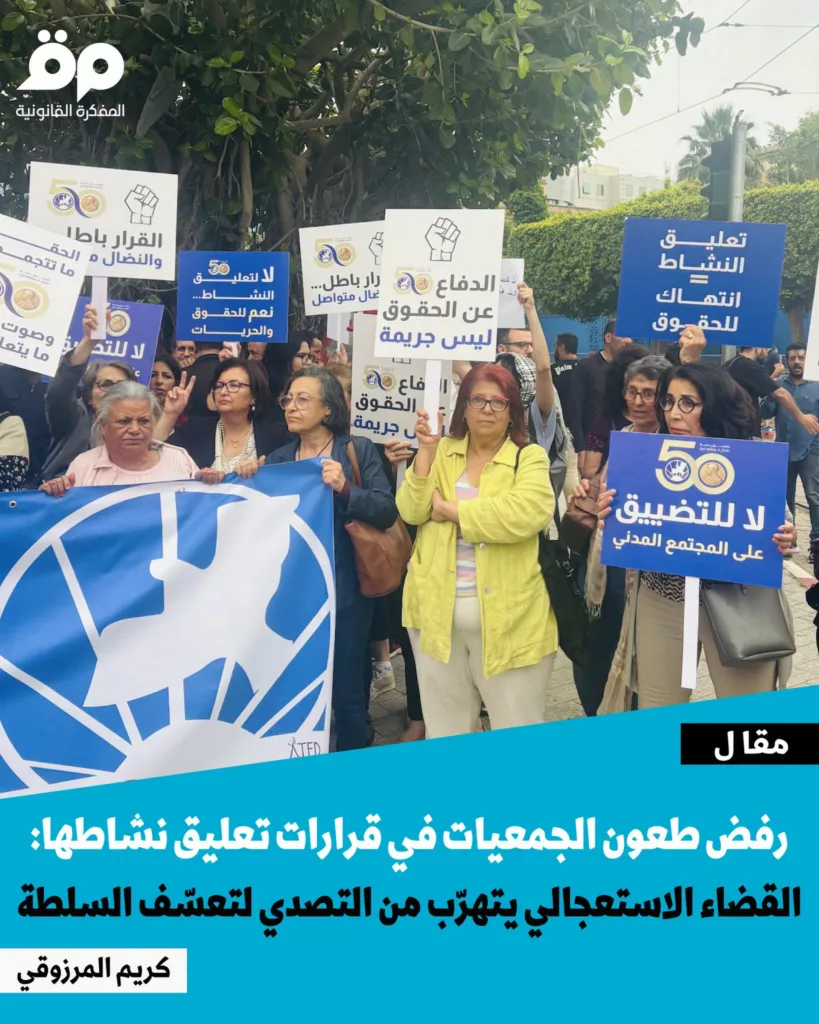
This was one of the slogans that stood out at the demonstration organized in Tunis on August 20, 2026, by the Nafas collective, protesting not only the erosion of civil liberties and fundamental rights but also an economic and social situation that was growing more difficult by the day.
In many ways, this event was a test of every kind of challenge.
First, there was the issue of the timing. Mobilizing in mid-August—in the middle of the vacation season and amid the sweltering heat of Tunis—was no easy task. Summer is also traditionally a time when public life slows down, a period that Tunisian governments—dating back to the time of Hédi Nouira—have often taken advantage of to push through unpopular measures. The current authorities have not resisted this temptation, notably with sharp price increases on medications, even as purchasing power continues to decline.
But the main challenge was political: bringing Tunisians with different viewpoints together in the streets.
In a country where the conflicts that have built up since 2011 have left deep divisions, getting civil society activists, independent activists, and members of different political factions to demonstrate side by side is almost a feat in itself. The controversy sparked before the demonstration by a poster depicting Kaïs Saïed and Ben Ali as the same face made this clear: some Destour Party activists threatened to boycott the march until the controversial image was removed.
Under these circumstances, numbers alone cannot serve as the sole criterion for measuring the success of a mobilization. Fear of repression, discouragement, distrust of political parties, and economic hardship have driven a large portion of Tunisians away from public life.
For Nafas, however, it was important to maintain the momentum generated by its previous initiatives, particularly the one on July 25. A decline in participation could have weakened a movement that, on the contrary, should logically be gaining momentum as economic and social difficulties worsen and a particularly difficult start to the school and university year approaches.
However, the August 20 demonstration drew a significant number of participants and, above all, a truly diverse group of people.
From “Show Us the Results of Your Rule” to “Down with Kaïs Saïed”
It is, above all, the evolution of the slogans that deserves attention.
In 2025, the protests were still largely centered on the release of political prisoners, the independence of the judiciary, and the defense of civil liberties. The famous slogan “الشعب يريد إسقاط النظام”—“The people want the regime to fall”— had certainly made a comeback in the streets as early as the spring of 2025, but it still coexisted with demands that were primarily defensive in nature.
In the spring and summer of 2026, the discourse shifts.
On June 5, Nafas once again chose a slogan: “هات حصيلة حكمك” — “Show us the results of your rule.”
On July 25, a milestone was reached with: “ارحل” — “Get out!” and the massive return of:
“The people want to bring down the regime” — “The people want the regime to fall.”
Other slogans were directed specifically at the president:
“It’s your turn now, Kaïs, you dictator.” — “It’s your turn now, Kaïs, you dictator.”
On August 20, the personalization becomes even more explicit:
“Down with Kaïs Saïed, down with him!” — “Down with Kaïs Saïed!”
“Down with the coup, down with the coup!” — “Down with the coup!”
“No fear, no terror; the streets belong to the people.” — “Ni peur ni terreur, la rue appartient au peuple.”
In just a few weeks, the slogans shifted from “هات حصيلة حكمك” — “Show us the results of your rule, ” to “ارحل” — “Get out!,” and then to “يسقط يسقط قيس سعيد” — “Down with Kaïs Saïed! Down with him!”
This development is politically significant. The protests are no longer merely calling for the release of detainees or the restoration of civil liberties; they are beginning to explicitly identify Kaïs Saïed’s continued hold on power as a central part of the problem.
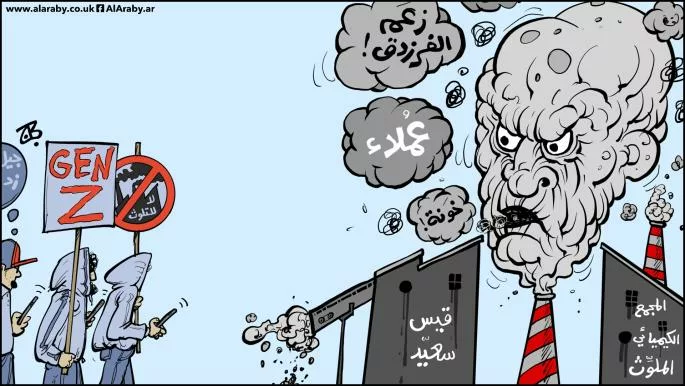
Above all, the demands for democracy are now converging with a much broader wave of social anger: inflation, unemployment, medications that are too expensive or unavailable, shortages, water and power outages in the midst of a heat wave, and the deterioration of public services. Political protest and everyday discontent are beginning to take to the same streets.
"Take that weirdo to Razi!"
It was in this context that the slogan that would spark controversy first emerged:
“Take the nutcase to Razi Hospital!”
The pun was immediately interpreted as a reference to Kaïs Saïed and the Razi Psychiatric Hospital in La Manouba: in other words, “Take Kaïs to Razi!”
But the slogan does not explicitly mention Kaïs Saïed.
The irony of the matter is that it was precisely some of his supporters who, on social media, were quick to assert that the mysterious “الكازي”—“the oddball, ” in the sense given to the slogan by its interpreters—could only be the president. A campaign then gained momentum to denounce the phrase as insulting and unworthy of the head of state and to call for legal action.
We must, of course, distinguish political satire from a medical diagnosis. There is no basis for asserting as a medical fact that Kaïs Saïed suffers from a psychiatric disorder. The statement is an example of political caricature and derision, however harsh it may be. Yet this freedom to mock those in power is precisely one of the tests of freedom of expression.
From the Streets to the Courtroom
The demonstration had neither been banned nor violently dispersed. This could have been seen as an effort to prevent the situation from escalating.
But the very next day, Seifeddine Arfaoui, a young Nafas activist, was arrested.
The public prosecutor's office remained tight-lipped about the initial reasons for his arrest, while a campaign by supporters of Kaïs Saïed openly linked his arrest to the slogan “هزّ الكازي للرازي” — “Take the nutcase to Razi Hospital!”
The case then took a specific legal turn. After being held in police custody, a warrant for Arfaoui’s detention was issued. Contrary to initial assumptions that he had committed a specific offense of insulting the president, charges were ultimately brought under Article 86 of the Telecommunications Code, specifically regarding the reposting of protest slogans on social media.
He is accused of: “الإساءة إلى الغير عبر الشبكات العمومية للاتصالات” — “harming others through public telecommunications networks.”
This incident illustrates a strategy: to avoid, if possible, collective confrontations in the streets, and then to apply pressure individually on certain activists.
The message to others is easy to understand: protesting is still possible, but everyone should be aware that they may subsequently be summoned, prosecuted, or imprisoned.
However, repression sometimes has the opposite effect of what was intended.
By arresting Arfaoui and bringing the case to court, the authorities and their supporters gave the slogan “هزّ الكازي للرازي”—“Take the nutcase to Razi Hospital!” —a level of publicity it likely would never have received otherwise. A provocative phrase that might have faded away once the protest ended has become a national political issue.
When Fear Begins to Switch Sides
The issue, therefore, goes beyond the fate of Seifeddine Arfaoui.
It concerns the ability of Nafas—and, by extension, of all democratic, social, and political forces—to maintain this momentum, to overcome their past divisions, and to bring together the defense of freedoms with economic and social demands.
For perhaps the most significant development is not merely that the slogans are becoming more radical. It is that the number of people who might take them up in the future is growing, and they are becoming more diverse.
When political prisoners, the justice system, and civil liberties are the main issues driving activists, the government can still try to isolate the protest. But when these are compounded by water shortages, power outages, medicines that are unavailable or too expensive, unemployment, the high cost of living, and the deterioration of public services, the nature of the protest can change.
The challenge now is to channel this anger into a peaceful, civic-minded, and responsible movement—one broad enough to gradually shift the balance of fear and make it possible to move away from authoritarianism with as little violence and damage as possible.
Because the real goal cannot be simply to get a man to leave.
Once this authoritarian interlude has come to an end, a far more difficult task will begin: restoring the rule of law, rebuilding institutions, reviving the economy, reestablishing trust among Tunisians, and relearning the art of democratic compromise.
Ousting an authoritarian regime is just one step. Rebuilding what it has destroyed will be the real challenge.