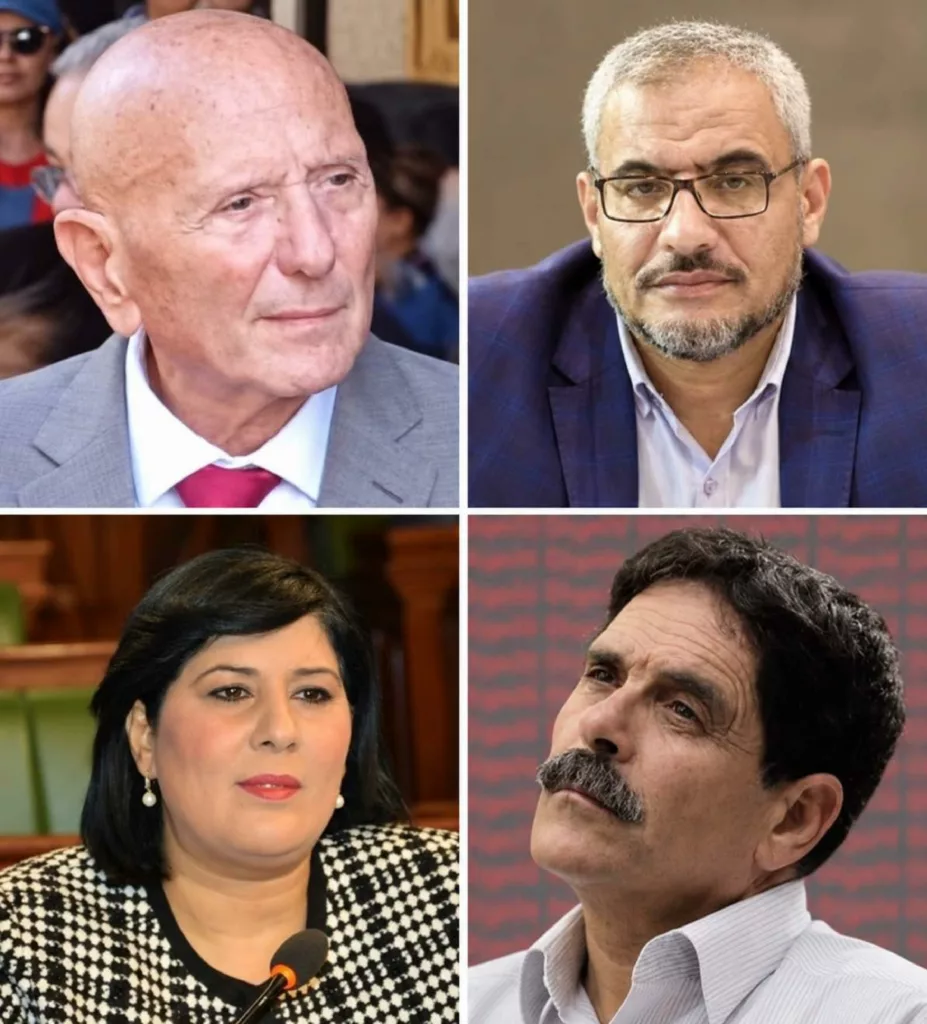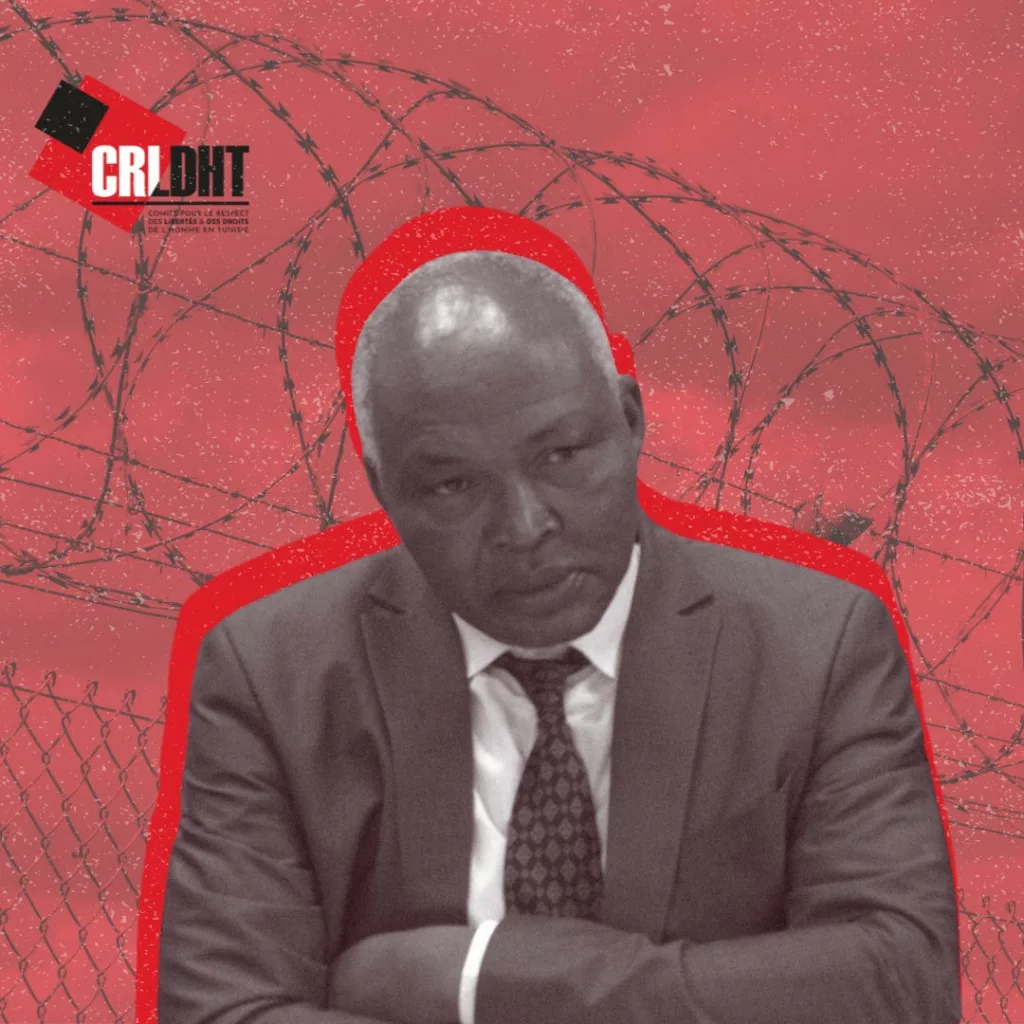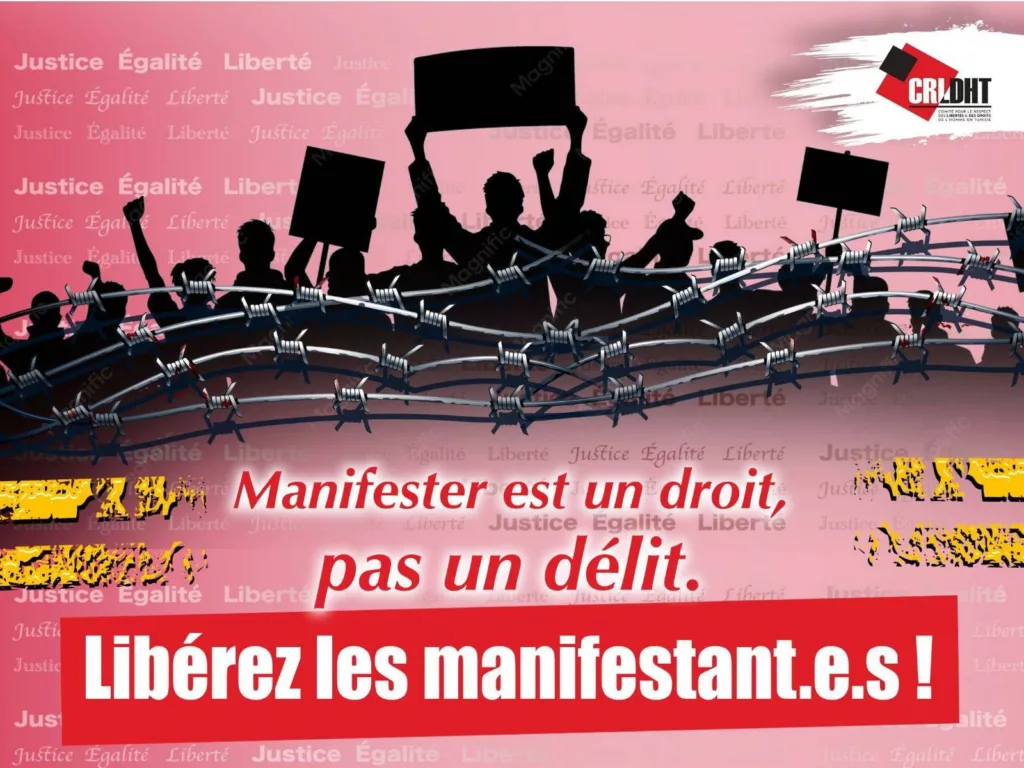
Hardly a day goes by in Tunisia without a political trial or trial of conscience, or without heavy sentences being handed down to leading politicians, civil society activists, bloggers, and journalists. These judgments suggest that those who have upheld their right to freely express their opinions, or who have rejected injustice and oppression by remaining faithful to the principles of the revolution—freedom, democracy, independent justice, and peaceful alternation of power—have no place in the state of the president and his absolute power. Even more seriously, many of them risk spending the rest of their lives in prison if this regime continues.
But in reality, this regime is bankrupt on every level. Not only because it is incapable of producing a credible political discourse, contenting itself with branding its opponents and critics as traitors and recycling a fictitious and hackneyed warlike discourse on supposed "battles for national liberation," in a quixotic rhetoric that fights imaginary windmills of "conspirators" and "traitors," ," when in reality it is he who has betrayed the constitutional trust and the nation by seizing power, overthrowing institutions, violating the Constitution, repressing freedoms, and turning himself into the guardian of European borders in exchange for silence on his attacks on democracy and human rights. But above all because the country is going through a stifling economic and social crisis: a public finance crisis marked by exploding debt and debt servicing, a lack of development, a derisory growth rate of no more than 2.4%, a steady decline in investment, paralysis in the public and private sectors due to political deadlock, businessmen caught between state blackmail and the threat of imprisonment, and almost daily social protests caused by the alarming deterioration of the social situation...
Even those who were close to power eventually understood that this regime is completely incapable of offering realistic alternatives, and that the authoritarianism it pursues is utterly devoid of any concrete achievements. With the exception of a minority who have specialized in insults and abuse, the others have either taken refuge in silence or chosen to jump ship from a vessel whose demise now seems inevitable.
As for the march on December 17, 2025, designed to distort the history of the revolution, confer legitimacy on a power that lacks it, and replace a discredited political discourse, it proved—despite the vast propaganda campaign that preceded it on social media and in media outlets whose narrative was completely monopolized by the regime, and despite the mobilization of dozens of buses financed by public funds from all regions of the country—to be a profound disappointment for the regime and its supporters. It was further proof of the erosion of its popularity. The marches in Gabès, calling for the dismantling of the deadly units of the chemical complex, and in Sidi Bouzid, demanding work and freedom on the anniversary of Mohamed Bouazizi's martyrdom, far surpassed it in terms of numbers, scope, international interest, and clarity of slogans and demands.
Faced with this disastrous political and social situation and a string of failures, both internally and externally, positive signs are nevertheless beginning to emerge. The demonstrations that have multiplied in recent months have brought together all opposition parties and civil society organizations. Almost all of them have now rallied to the position defended for years by the Committee for Freedoms and Human Rights in Tunisia: salvation cannot be individual or partisan and narrow-minded; exclusion only perpetuates authoritarianism; political conflict does not mean denying the other or stifling their voice; and the strategy of power based on division has been unmasked. At the same time, international support is growing and making itself heard, demonstrating that the cause of restoring democracy in Tunisia has supporters around the world. The rally held on December 16 at the Bourse du Travail in Paris, bringing together French social movements, political parties, and trade unions, as well as human rights organizations from many countries, is an eloquent illustration of this. It reflects a growing awareness of the flagrant injustice suffered by political prisoners and prisoners of conscience in Tunisia, as well as the dangers of authoritarianism in our country, and will help to increase international pressure to further isolate the regime and make it understand that it has no choice but to comply with the true will of the people.
It is thanks to this growing awareness, the unification of all our civil and political forces, and the support of democratic forces both inside and outside the country, that we will be able to regain hope for the release of political prisoners and prisoners of conscience, and reclaim the principles of our revolution—freedom, democracy, and justice. Politics, in its ethical and realistic sense, will then be able to regain its rightful place.