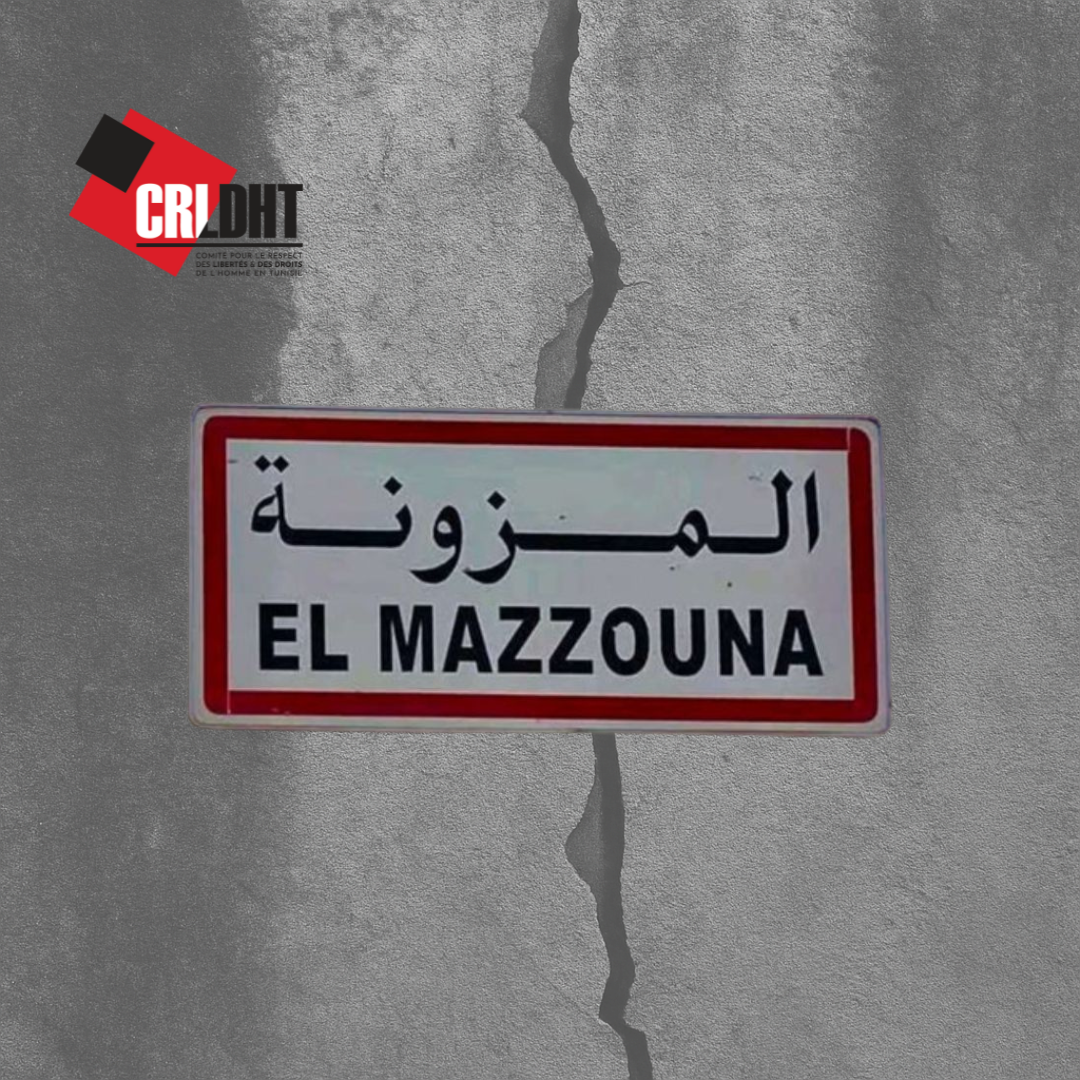
On April 14, 2025, in El Mazouna, in the governorate of Sidi Bouzid, three high school students were crushed to death by a collapsed wall in their school. Two other students were seriously injured. The wall, which has been cracked for years, is the stark image of a structural violation of human rights: the right to education in dignified conditions, the right to security, the right to a state that protects.
This tragedy is not inevitable. It is the result of a policy of abandonment, of state disengagement, of prolonged disregard for the economic and social rights of the populations of marginalized regions. It reveals a power that has ceased to assume its fundamental obligations.
An avoidable tragedy, legitimate anger
Alerts had been issued as early as 2022. The principal of the high school, now detained, had written to the authorities. Local residents published photos of the cracked wall. But nothing. Not a building site, not a single intervention. And today, it's the young people who are paying with their blood. This is no accident. It's a systemic flaw in access to rights.
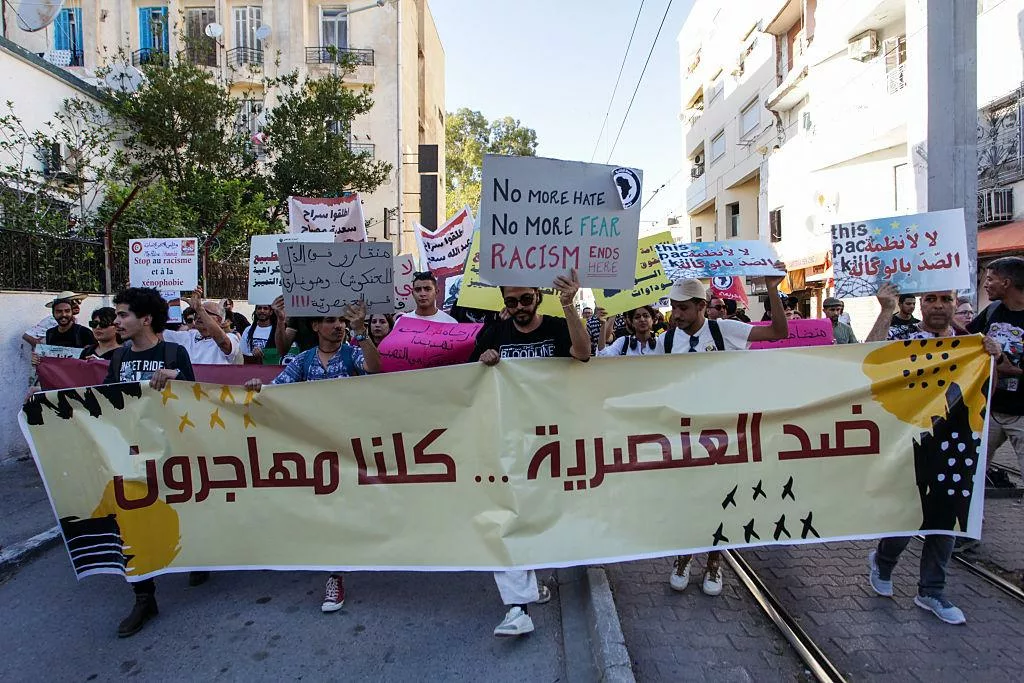
The people of El Mazouna have not given up. They took to the streets to demand justice, to refuse to allow their children to become statistics. The right to demonstrate, guaranteed by the Constitution, was met with repression: tear gas, arbitrary arrests, intimidation of the press. Instead of guaranteeing rights, the Tunisian state hinders them.
A visit at dawn, a wandering power, a sinking economy
On April 18, Kaïs Saïed sneaked into El Mazouna at dawn. Without alerting the press. Without listening to the families. Without confronting the anger. This gesture, supposed to embody proximity, was nothing more than a solitary masquerade. In his speech, the president denounced "foreign financing" and "invisible hands", using a rhetoric of suspicion to delegitimize any protest.
Instead of responding to the crisis with clear commitments to social and economic rights - health, education, housing, infrastructure - the Head of State prefers to brandish imaginary enemies. His solitary power stifles collective discourse, scorns intermediary bodies and ignores the legitimate demands of citizens.
Tunisia is going through a deep recession, aggravated by an erratic economic policy. The country is sinking into inflation, de-industrialization and job insecurity, while the President governs by exception and withdrawal. Sovereignty, brandished like a talisman, is meaningless without a public policy based on human rights.
The State violates its own commitments
Tunisia is bound by its Constitution and the international treaties it has ratified to guarantee all its citizens the right to quality education, decent living conditions and social protection. In El Mazouna, all these rights have been flouted. This collapsing wall is the symptom of a generalized abandonment of public services, of a policy of austerity that is killing people, of an absence of a fair vision for the country.
Education is not a luxury, it's a fundamental right. And this right begins with access to safe infrastructures. When a child dies at school, the Republic collapses.
The citizens of El Mazouna are not waiting for charity from the State. They are demanding what is rightfully theirs. They don't want to be silenced by fear or oblivion. They want to be seen, heard and respected.
Tunisia will not recover without social justice. Without reinvestment in fundamental social rights. Without real equality between regions, between children, between citizens. The tragedy of El Mazouna calls for an awakening. It demands that we rebuild - not just walls, but the republican promise.
The Tunisian people are not asking for visits at dawn. They are calling for a Republic in broad daylight.