The shipwreck off the coast of Zarzis in August 2026 is not just another tragedy involving migrants. It reveals a deeper crisis: that of Ben Guerdane, its border economy, and a youth that no longer sees a future in its own region.
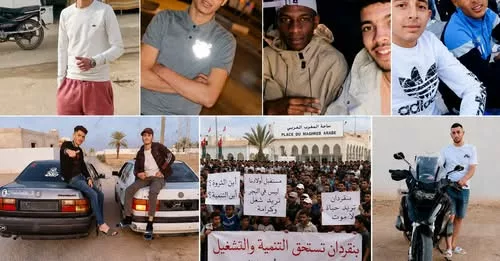
Fifteen Tunisians were on board the boat that set sail on August 19, 2026. According to the latest report, twelve have died, two remain missing, and only one has survived. Fourteen were from Ben Guerdane and one was from Zarzis.
Beyond the grief, one question stands out: How did these young people—many of whom were between the ages of 18 and 25—come to view the Mediterranean as a more acceptable option than staying at home?
A town that thrived on its border
Ben Guerdane developed around its location on the border. For decades, Ras Jedir did not merely separate Tunisia from Libya; it served as an economic and social lifeline. Formal and informal trade, transportation, and the movement of goods and people provided a livelihood—directly or indirectly—for thousands of families.
This economy was fragile and largely informal. But it was a reality that no public policy could ignore.
On March 7, 2016, when ISIS launched a large-scale attack on Ben Guerdane, the local population, alongside military and security forces, played a decisive role in thwarting that attempt. It is important to remember: Ben Guerdane was not merely a region exposed to terrorism; its population was a key player in the resistance against ISIS.
Ten years later, the contrast is striking. The city that once paid with blood to defend the nation’s territory is now burying young people who left to seek elsewhere the future they could no longer find at home.
The border security measures implemented following the 2016 attack were necessary. However, the responses to the region’s problems have remained primarily security-focused, without a genuine economic and social policy that meets its needs.
Tighter controls and trade restrictions have gradually undermined the cross-border economy without creating sufficient alternatives.
That is part of the problem: you cannot dismantle an economy that has been built up over decades around the border without offering new opportunities to those who depend on it for their livelihood.
The city that once welcomed young people from other parts of Tunisia in search of work now sees its own young people looking for ways to leave.
Ras Jedir and the Closing Horizon
The ongoing difficulties in Ras Jedir have exacerbated this situation. Closures, reopenings, restrictions, and uncertainty have immediate consequences for residents’ livelihoods and incomes.
At the same time, local mediation mechanisms—based on family, social, and historical ties between the two sides of the border—have lost some of their significance.
A border, however, cannot be merely a line to be secured. For the people who live there, it is also an economic, social, and human space.
When this space closes off without another economic horizon opening up, the search for a way out shifts. And for some young people, that other frontier is now the Mediterranean.
Prevent people from leaving or save lives?
The shipwreck also raises questions about Tunisian and European immigration policies.
For several years now, significant resources have been allocated to coastal surveillance, border control, and the interception of boats. A portion of European funding also supports search-and-rescue capabilities, but preventing departures remains at the heart of the migration policy.
The tragedy in Ben Guerdane therefore raises a crucial question: How could a boat carrying fifteen people disappear in such a closely monitored area, while its sole survivor remained at sea for nearly two days before being rescued by a commercial vessel?
This question alone is not sufficient to establish liability. However, it justifies an investigation into the timeline of the shipwreck, the alert, and the rescue efforts, as well as the resources that were actually mobilized.
This is all the more understandable given that southeastern Tunisia had already experienced the Zarzis shipwreck in September 2022. Four years later, another tragedy has struck virtually the same region.
A City in Mourning
As the bodies were recovered, Ben Guerdane entered a period of mourning that now extends beyond the victims’ families alone. An entire city is burying its children.
On Wednesday, August 26, several of the victims were laid to rest at the Sidi Khlif Cemetery amid an atmosphere of deep sorrow. Families, loved ones, and a large number of residents took part in the funeral processions. The photographs published by Legal Agenda – Tunis capture this collective dimension of mourning: behind the statistics of yet another shipwreck lie coffins, families, and an entire city reeling from the loss of its young people.
The victims have names, families, and stories. They cannot be reduced to an administrative category of “irregular migrants” or to just another line in the statistics on deaths in the Mediterranean.
These are the children of Ben Guerdane who left in search of a better life and whom their town saw return in coffins.
The contrast with the city’s recent history is particularly painful. Ten years ago, following the terrorist attack on March 7, 2016, Ben Guerdane was burying those who had died defending their city and their country. In August 2026, it is burying another generation: young people who did not die trying to stay in Ben Guerdane, but while trying to leave it.
Between these two funeral processions, separated by ten years, lies part of the assessment of the policies implemented in this region.
And where was the government?
Another image will remain from this funeral: that of the absence of the country’s top officials.
While families were burying their children and Ben Guerdane was experiencing one of the most painful tragedies of recent years, no prominent national political figure attended the funerals to publicly demonstrate the government’s solidarity with the families and the community, according to available information and eyewitness accounts.
This absence is all the more striking given that Ben Guerdane holds a special place in the country’s recent history. In March 2016, when the city withstood the ISIS offensive, it was celebrated as a national symbol. For a few days, Ben Guerdane had become, symbolically, the capital of Tunisia’s resistance.
Ten years later, as that same city buries young people who died trying to leave the country, it seems much more alone.
This is not merely a matter of protocol. At a time of collective mourning, the presence of public officials also serves as a sign of recognition: recognition of the families’ suffering, of the gravity of what has happened, and of the government’s responsibility to provide answers.
However, silence or absence also take on political significance when a population already feels abandoned.
From Grief to Social Anger
In Ben Guerdane, grief quickly turned to anger. The protests initially called for an intensification of the search efforts. But they also gave voice to long-standing grievances: unemployment, the hardships in Ras Jedir, stalled development projects, and a lack of prospects.
The police response to some of these protests—particularly the use of tear gas—stands in contrast to the lack of a strong national political message addressed directly to the families and residents.
The National Guard has certainly stated that the search efforts are being monitored by the president. But operational oversight is no substitute for a political statement, a presence among the families, or a response to the root causes of the tragedy.
The contrast then becomes hard to ignore: the government appears when it is necessary to monitor the border, control border crossings, intercept boats, or quell protests; it seems much more distant when it is necessary to create jobs, open up opportunities, or simply share in a population’s grief publicly.
Yet Ben Guerdane is not asking for sympathy. For years, it has been calling for its unique role in Tunisia’s economy and geography to finally be recognized.
For behind the recurring talk of “smuggling” lies another reality: Ben Guerdane is also one of the oldest examples of successive governments’ inability to develop a genuine policy for the development of border regions.
It is easy to criticize a population for relying on the informal economy. It is much harder to answer the key question: What alternatives have actually been offered to them?
The shipwreck begins on land
The victims are not just “undocumented migrants.” They are, first and foremost, young Tunisians who were looking for a chance to live a different kind of life.
We must combat the networks that exploit their distress and prosecute those responsible for dangerous crossings. But that will not be enough.
When cross-border trade dwindles with no alternatives in sight, unemployment takes hold, Ras Jedir becomes synonymous with uncertainty, opportunities for legal migration are limited, and development policies fail to produce the expected results, the sea eventually comes to be seen as a way out—even when everyone knows it can become a grave.
The Ben Guerdane shipwreck, therefore, goes beyond the issue of migration alone. It raises questions about the development of border regions, Tunisian-Libyan relations, European and Tunisian migration policies, and, above all, the role given to young people in the country.
But the funeral on August 26 now raises yet another question: How can a city that was once celebrated for defending its border feel so alone as it buries the children whom a lack of prospects drove toward another, far more dangerous border—the sea?
The real alternative to dangerous migration is not just a better-patrolled border. It is a society in which leaving remains a choice and staying once again becomes a possibility.
This raises a question: How did it come to this—that young people from Ben Guerdane see more hope in a rickety boat and the Mediterranean than in their own country?
Because a shipwreck doesn't begin when the ship starts taking on water.
It begins long before that, when the horizon closes in on the earth.