The so-called "conspiracy against state security" trial, initially scheduled for February 7, 2025 and postponed to March 4 without explanation, reflects the authoritarian excesses of Kaïs Saïed's regime and the instrumentalization of justice to destroy the opposition. The postponement comes at a critical time for the regime, which appears to be seeking to limit popular mobilization by scheduling the hearing for the beginning of the month of Ramadan, a period generally marked by a retreat into religious and social practices.
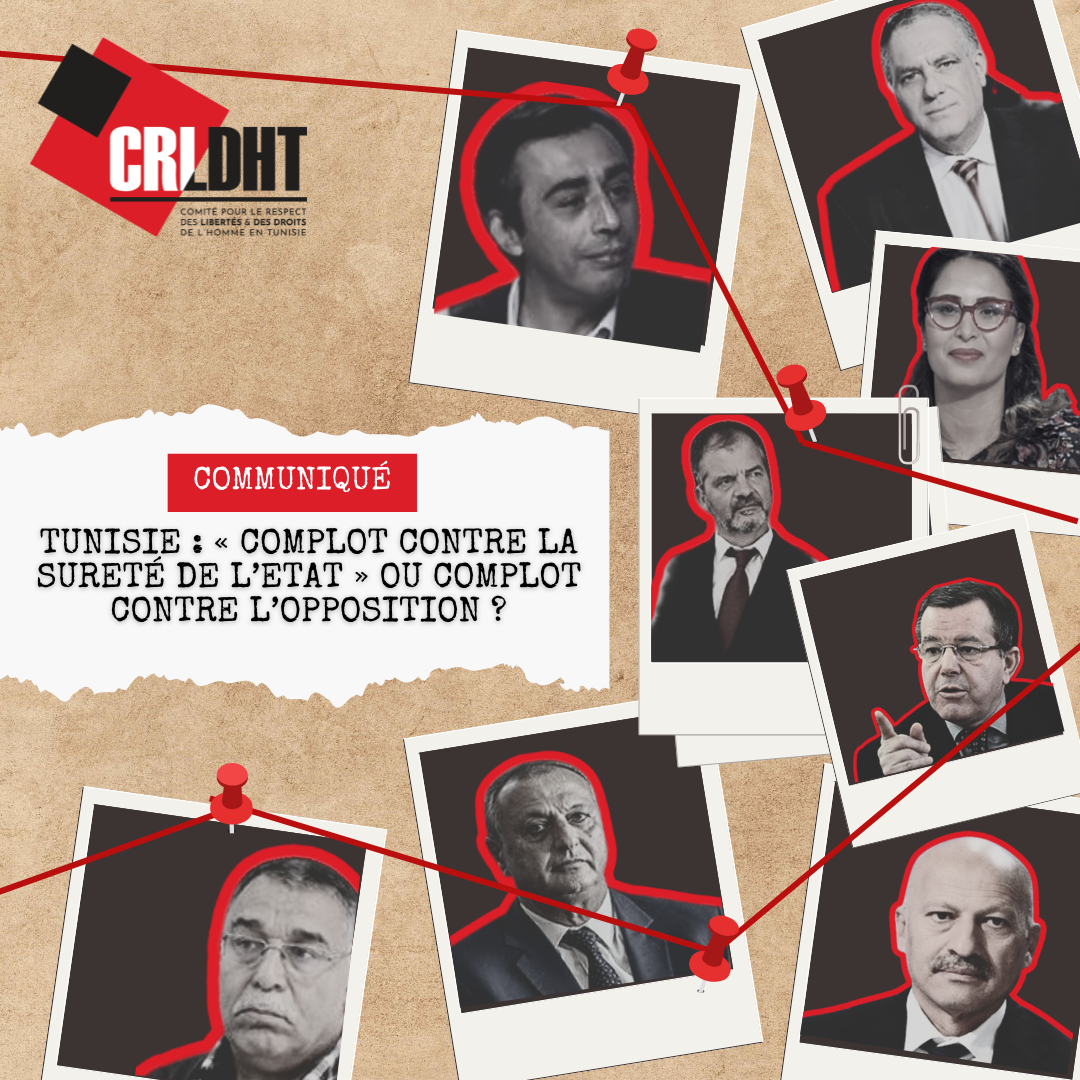
The case concerns 40 political figures, journalists, lawyers and civil society activists, accused on the basis of an empty file of "plotting against the state". Among the charges are secret meetings, contacts with foreign parties and alleged attempts to destabilize the regime. However, the lack of solid evidence and the vague nature of the charges point to the political instrumentalization of justice to suppress dissenting voices. Seven defendants, including public figures such as Kamel Letaief, Khayem Turqui, Issam Chebbi, Jaouhar Ben Mbarek, Ghazi Chaouachi, Abdelhamid Jelassi and Ridha Belhaj, are in arbitrary detention, while other opponents, such as Noureddine Bhiri, Sahbi Atig and Saïd Ferjani, are incarcerated on separate charges. Among the accused are former ministers, political party leaders and public figures known for their opposition to Kaïs Saïed and the coup d'état of July 25, 2021.
Since the spectacular arrests in February 2023, the defendants have been denouncing serious violations of their fundamental rights, such as failure to respect the presumption of innocence, exceeding legal detention periods and arbitrary restrictions on the right to defense. In October 2023, the African Court of Human Rights ordered Tunisia to take measures to guarantee detainees access to lawyers and doctors of their choice, and to provide information on the factual and legal grounds for their detention. However, these recommendations remain unheeded.
Aware of the futility of the accusations and the arbitrariness of the proceedings, the examining magistrate and the indictment division of the Tunis Court of Appeal have forbidden the disclosure of any information or media coverage of the case.
The detainees' lawyers, such as Me Essid Abdelaziz, Me Islam Hamza and Me Dalila Mssadek, have themselves been targeted by legal proceedings, demonstrating a desire to intimidate human rights defenders and restrict the exercise of the legal profession. The United Nations Working Group on Arbitrary Detention concluded that the detention of several defendants was arbitrary on more than one count, calling for their release and compensation.
The postponement of the trial may be seen as a manoeuvre to limit the risk of popular protest, or as an attempt by the authorities to gain time to adjust their strategy in the face of mounting pressure. However, this choice could have the opposite effect and reinforce the anger of a population already tested by a deep economic and social crisis. Internationally, this affair has heightened the concerns of Tunisia's partners, who are keeping a close eye on the evolution of fundamental rights in the country.
This trial symbolizes the authoritarian drift of a regime which, in the name of state security, which it is itself undermining, flouts the fundamental principles of human rights, muzzles the opposition and uses institutions to establish its control. The resistance of civil society and international attention will be decisive for the future of this case and, more broadly, for the defense of democratic gains in Tunisia.