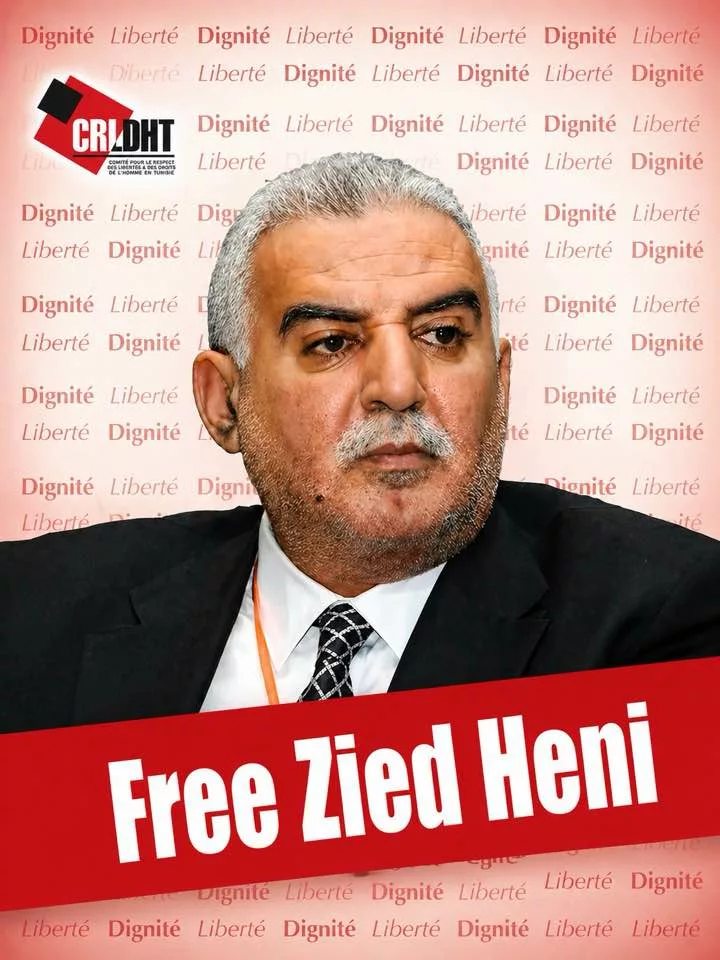
The Committee for the Respect of Freedoms and Human Rights in Tunisia expresses its deep concern and anxiety regarding the upcoming verdict in the case of journalist Zied El Heni.
We don’t know what might happen to Zied El Heni following tomorrow’s scheduled verdict, and we don’t wish to dwell on that question. For our real concern does not begin at the time of the verdict, but rather at the time of his arrest.
We want to know: Why is Zied El Heni on trial?
In connection with this case, Zied El Heni was arrested on April 24, 2026, following remarks he made during a speech at the Tunis Faculty of Law, in which he criticized court rulings concerning his fellow journalists. He was subsequently charged with “defamation” in connection with these remarks, before being placed in detention.
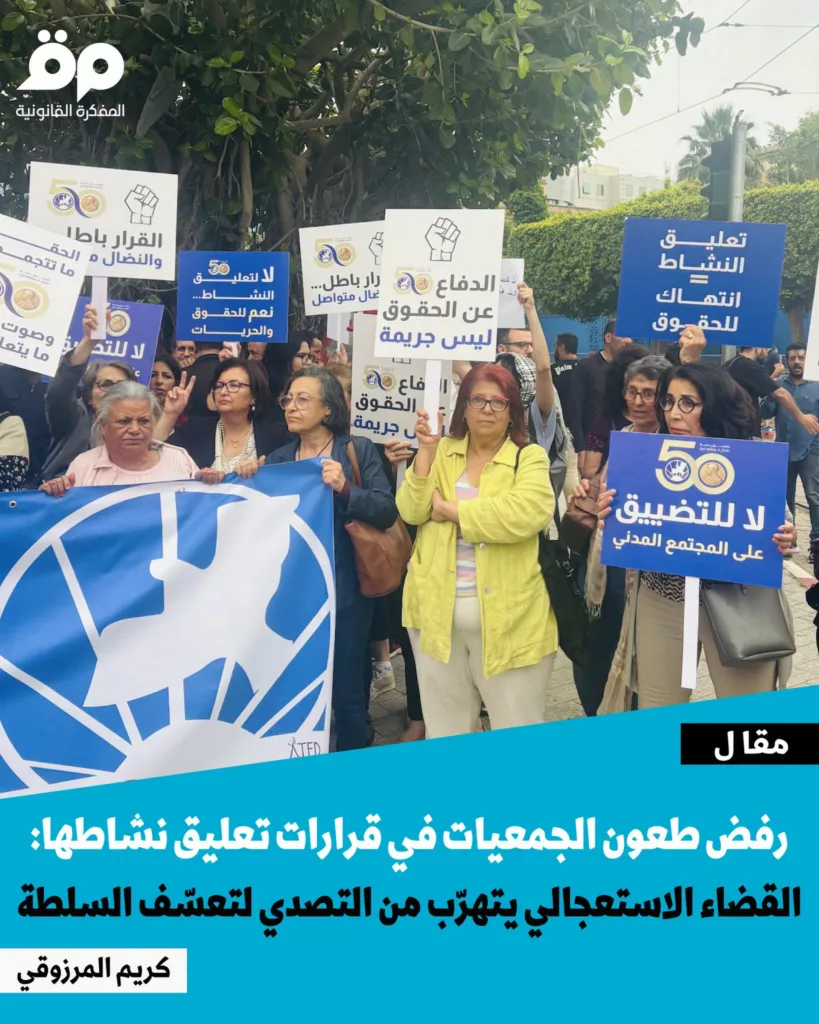
This arrest is part of a broader trend marked by an intensification of legal action against journalists and critics in Tunisia. Several organizations and unions view these cases as indicative of a decline in freedom of expression, particularly since the concentration of power in the hands of the executive branch in recent years.
We all know that the allegations in the case files—namely, “harming others via public telecommunications networks”—do not correspond to reality. The charges against Zied El Heni clearly fall within the scope of free journalism. In any democratic system based on justice, his criticism would have been considered an expression of free, constructive opinion—necessary for the emergence of a conscious and balanced society.
Consequently, the alleged “offense” is nothing more than a flimsy pretext in the face of a glaring truth: that of injustice.
So what is Zied El Heni’s fault?
His fault is that he is unsettling, convincing, and free.
Kaïs Saïed’s regime rejects these qualities, not on legal grounds, but out of a desire to exclude. It has no tolerance for dissenting voices, strong convictions, or free-thinking individuals. Yet what defines Tunisians is precisely their freedom… and their willingness to challenge the status quo.
What bothers Kaïs Saïed about journalists in general—and Zied El Heni in particular—is their Tunisian identity: free… and unsettling.
What will be on trial on May 7 is not only Zied El Heni—the citizen, the journalist, the labor activist, the father, the husband, the brother—but also the right of Tunisians to be free, their right to speak out, and their right to be full-fledged citizens.
- Consequently, we call for:
the immediate release of journalist Zied El Heni, as well as all journalists detained for their opinions;
the dismissal of all charges related to freedom of expression and the practice of journalism;
an end to the misuse of laws, particularly Article 86 of the Telecommunications Code, to restrict press freedom;
a guarantee of the independence of the judiciary and its immunity from political manipulation;
the protection of journalists against all forms of pressure, intimidation, or abusive prosecution;
respect for Tunisia’s international commitments regarding human rights and press freedom;
and the immediate cessation of targeting critical voices and anyone exercising their right to free expression.
The Committee for the Respect of Freedoms and Human Rights in Tunisia