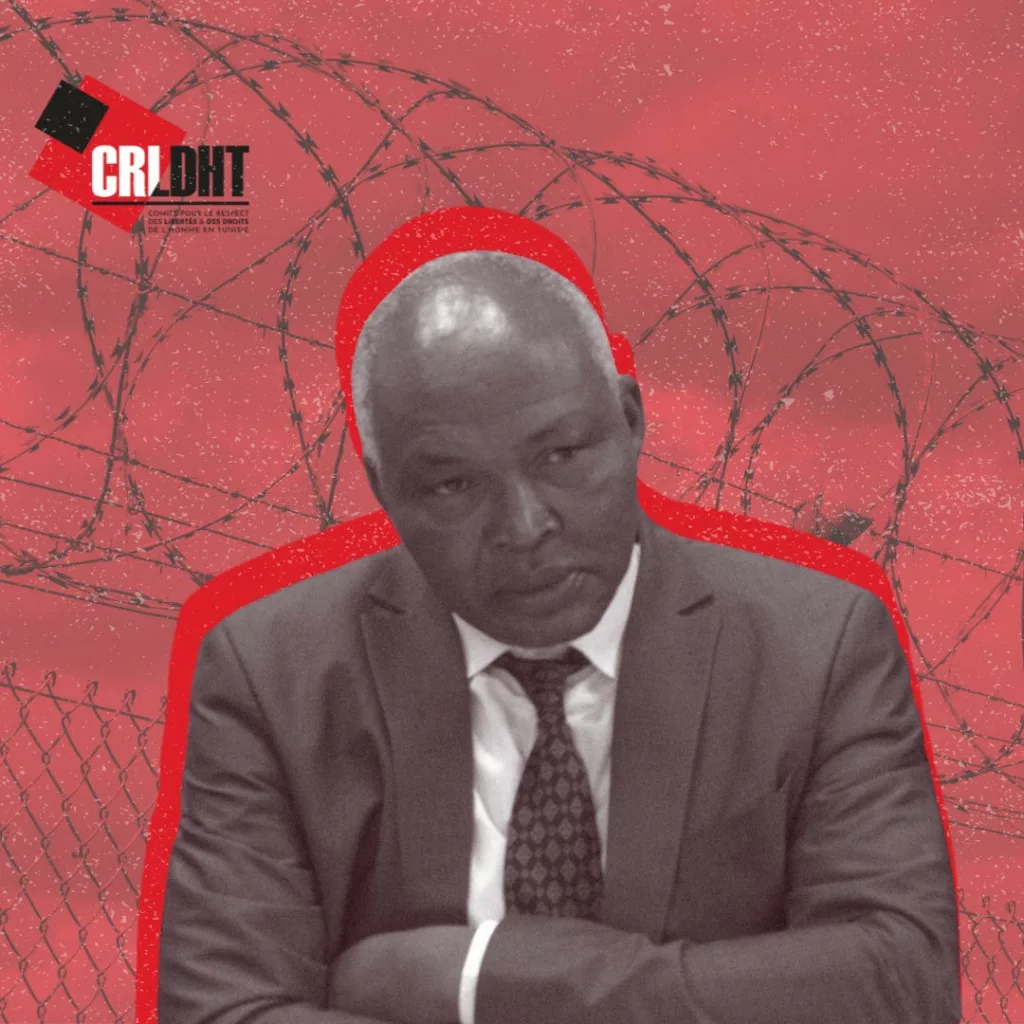
(More than 100 days since Abdallah Saïd was arrested on January 11, 2025 for his civic commitment and support of migrant women, refugees and their children. Cynically, the State submitted a report to UN bodies praising the role of civil society in supporting and protecting migrant women, refugees and their children).
In response, the official document submitted by the Tunisian government to the UN mechanisms highlights the role of civil society and the authorities' commitment to the rights of migrants and refugees(HRC/NONE/2024/SP/29 ). However, a critical reading reveals a profound discrepancy between the official discourse and the reality on the ground, notably with the arrest of Abdallah Saïd for his commitment to migrant and refugee women. This contradiction illustrates a cynical and opportunistic approach to human rights on the part of the Tunisian authorities.
1- official lip service to international bodies
In its response to the UN, the Tunisian government emphasized several key points:
- A strategic partnership framework with the European Union: the document calls for international cooperation to "address the phenomenon of irregular migration" and ensure "respect for the human rights of migrants".
- A commitment to the rights of migrants and refugees: the Tunisian government mentions its efforts to ensure their protection and combat abuse.
- A valued role for civil society: the document states that Tunisia works in partnership with local NGOs and organizations to defend migrants' rights.
This speech is aimed at international bodies and seeks to give a positive and committed image of the Tunisian authorities in terms of human rights.
2. reality: repression of human rights defenders
Despite this official rhetoric, the concrete actions of the Tunisian state totally contradict these declarations:
- Abdallah Saïd's arrest: his imprisonment illustrates the criminalization of activism in favor of migrants' rights. This type of action aims to dissuade any independent initiative in the field.
- Repression and obstacles to NGOs: many Tunisian and international associations are denouncing growing restrictions, increased surveillance and administrative pressure against human rights defenders.
- Violations of migrants' rights: several reports from NGOs and international bodies point to cases of illegal refoulement, police violence and exploitation of migrants, far from the protective framework presented in the official response.
This contrast highlights a blatant double discourse: on the one hand, the state claims to support migrants and work with civil society, and on the other, it persecutes those who actually work for these causes.
3. a double discourse: instrumentalizing human rights
The Tunisian state seems to be strategically using the issue of migrants' rights to serve its own interests:
- It uses diplomatic language to address international bodies, claiming to protect migrants and cooperate with civil society to secure international funding and partnerships.
- On the domestic front: It applies a policy of repression of independent players on the domestic front, sometimes accusing them of meddling in "sensitive" affairs or collaborating with foreign interests.
- He highlights their efforts in his report, but without guaranteeing them a free and secure space for action.
This cynicism is all the more blatant given that Abdallah Saïd's arrest coincides with a strengthening of the official discourse on the protection of migrants. This is no mere paradox, but a conscious manipulation designed to mask human rights violations under a diplomatic veneer.
4 Dangerous political cynicism
The case of Abdallah Saïd illustrates the flagrant contradiction between official discourse and the reality of human rights in Tunisia. This situation reveals :
- An instrumentalization of migrants' rights for diplomatic purposes, in particular to reassure the European Union.
- The criminalization of human rights defenders is jeopardizing the work of independent NGOs.
- A double standard in the application of rights, where international commitments are no more than a facade for donors and international partners.
This political cynicism endangers not only activists like Abdallah Saïd, but also the migrants and refugees themselves, who find themselves in an extremely precarious situation, with no real protection.