January 14, 2011 was a long time ago, when Tunisians felt free. Rid of a regime that oppressed them, they saw the moment coming to write their own history, and take their destiny into their own hands.
Fourteen years later, on January 14, 2025, there is no longer any question of commemoration. In fact, Kaïs Saïed, the country's new ruler, has replaced the anniversary of the revolution with December 17, the day of Mohamed Bouazizi's self-immolation by fire and the starting point for uprisings across the country. This is not the only change made by the man who was democratically elected for a first term in October 2019, with 72% of the votes cast. After his coup de force on July 25, 2021, Saïed methodically unraveled all the gains of the transition, attacking institutions and intermediary bodies, enslaving the justice system and hunting down opponents by accusing them of "plotting against state security" and "colluding with foreign powers".
Having assumed full power, with the support of the security forces and the benevolence of the army, Saïed was keen to consolidate his legitimacy by winning a large victory for a second presidential term. Thanks to a tight grip on the ISIE, the independent higher authority for elections, created after the revolution, his main rivals were ousted and Kaïs Saïed was re-elected with over 90% of the vote on October 6. But the victory must be put into perspective, as voter turnout was much lower than in 2019, dropping from 58% to 28%, with a particularly low turnout among young people (aged 18-35), only 6% of whom voted.
Dissatisfaction could only be expressed through abstention, as the presidential election took place without an electoral campaign or televised debate, making it impossible to revisit the results of the Head of State's five years in power. Not to mention the fact that opposition parties have been wiped out, their leaders often imprisoned, exiled or forced into silence.
Tunisians, who are witnessing a marked slowdown in economic activity and watching with despair the massive departure of their young people abroad, cannot be satisfied with the president's rhetoric against the elites and corruption as a political program, and arbitrary arrests cannot legitimize this political system by force.
It was to denounce this authoritarian drift and intensified repression that Sihem Ben Sedrine began an unlimited hunger strike on January 14. At the age of 75, and from the depths of her cell, this tireless human rights activist, who has mercilessly opposed the authoritarianism of Ben Ali, and chaired the Truth and Dignity Commission (IVD) from 2014 to 2018, has sent a message to the Tunisian authorities to, she says, "extract me from this black hole where I have been arbitrarily thrown".
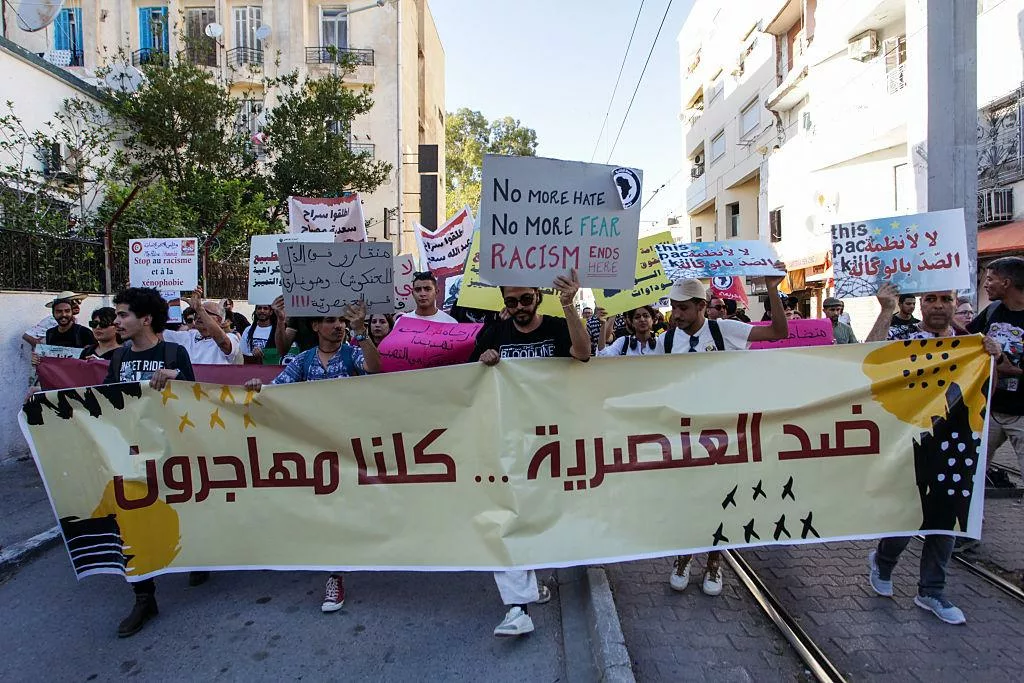
Despite this climate of insecurity, resistance to this leaden blanket is taking shape to demand the release of opposition figures, such as the demonstrators who responded to the call of the National Salvation Front (FSN) to gather in Tunis on January 14, or, surprisingly, the eleven MPs who launched an initiative calling for the opening of a national dialogue and the release of prisoners of conscience.