The recent demonstrations in Tunisia have highlighted a flagrant contradiction within Kaïs Saïed's government. On the one hand, the regime proclaims itself solidly pro-Palestinian, brandishing speeches of solidarity with the Palestinian people. On the other, repressive actions against Tunisians who dare to express their disagreement reveal a populism that merely masks a far more complex reality.
The Tunisian government, which proclaims its support for the Palestinian cause, seems more concerned with a populist façade than with concrete action in favor of Palestinian rights. While calls for solidarity are multiplying at the verbal level, the government's recent actions, such as participation in NATO military maneuvers, cast a pall over these declarations.
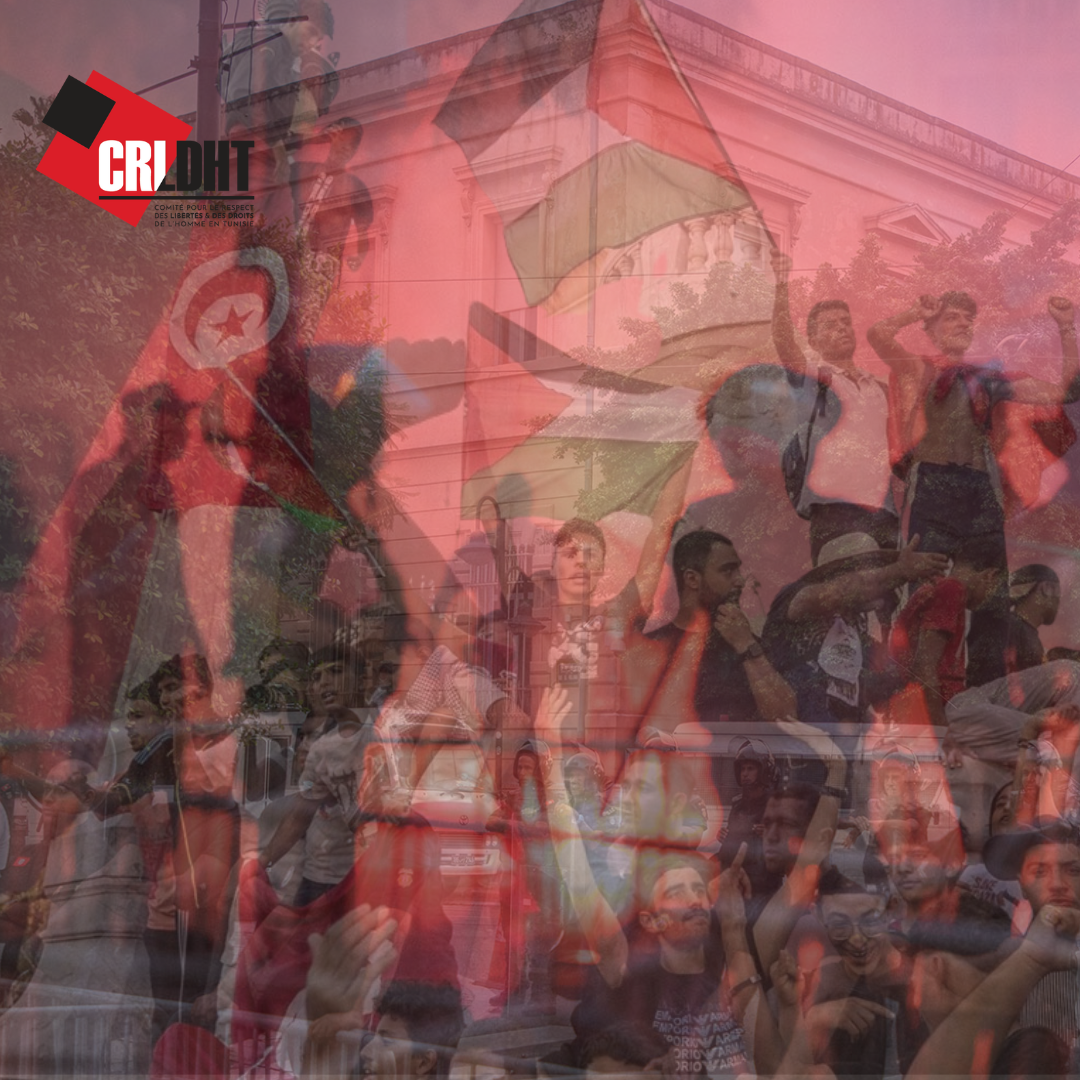
On October 7, during the commemorative demonstration, the reality of this populism was brutally brought to light. Police officers dispersed the demonstrators, one of whom had the audacity to shout over a loudspeaker: "You are not worthy of the freedom we have given you. This is the last demonstration you will ever make on Habib Bourguiba Avenue. You are an unworthy people." These words, laden with arrogance and contempt, underline not only an insult to the collective intelligence of Tunisians, but also a denial of the legitimacy of their struggle for freedom.
Women were dragged to the ground, beaten by police officers, and arrests were made, illustrating the stark contrast between rhetoric of solidarity and acts of repression. In a climate where the government preaches a commitment to Palestine, it's hard not to see in this violence an attempt to muzzle any dissident voice, while clinging to a populist discourse that aims to strengthen the ruling power.
This discrepancy between the words and deeds of the Tunisian government calls for critical reflection. If solidarity with Palestine is to be meaningful, it must be accompanied by a genuine mobilization for human rights at home. Tunisians cannot be seen as symbols of the struggle for freedom abroad, while being repressed and humiliated at home.
The events of October 7 illustrate the struggle of Tunisians for real change and the defense of their rights. While the government waves the flag of solidarity with Palestine, it is urgent that this solidarity be translated into a real and tangible commitment to the rights of its own people. Populism cannot replace action, and support for Palestine cannot be at the expense of Tunisians who aspire to live in a country where freedom and dignity are respected.
In conclusion, the contradiction between government rhetoric and the realities experienced by Tunisians must be brought to light. The struggle for human rights, both in Tunisia and in Palestine, must be waged with integrity and consistency, far from populist maneuvers that only serve to reinforce authoritarianism. Tunisians deserve a future where their voice is heard, their dignity respected, and where their solidarity with other peoples in struggle is translated into concrete, meaningful action.