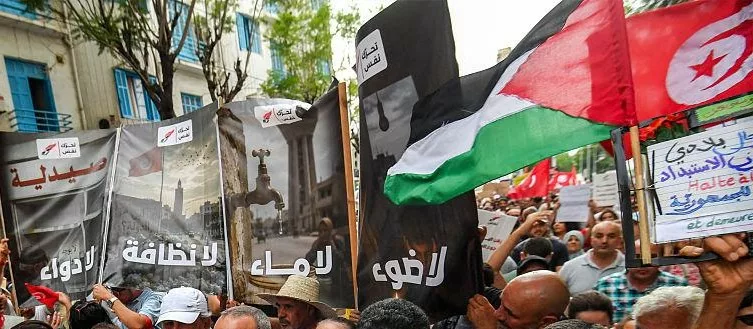
The gap between those in power and the reality faced by Tunisians continues to widen. The population is facing hardships that now affect their most basic needs: water, electricity, medicine, health care, sanitation, employment, and public services. Added to this are heat waves, fires, and the effects of climate change.
Faced with this situation, however, the government continues to repeat the same rhetoric, attributing its difficulties to “conspirators,” “enemies,” and those who would seek to weaken the state.
But after several years, a simple question arises: What is the point of a state if it is no longer capable of meeting the basic needs of its citizens? Someone who has concentrated all power in their own hands cannot continue indefinitely to blame others for their failures.
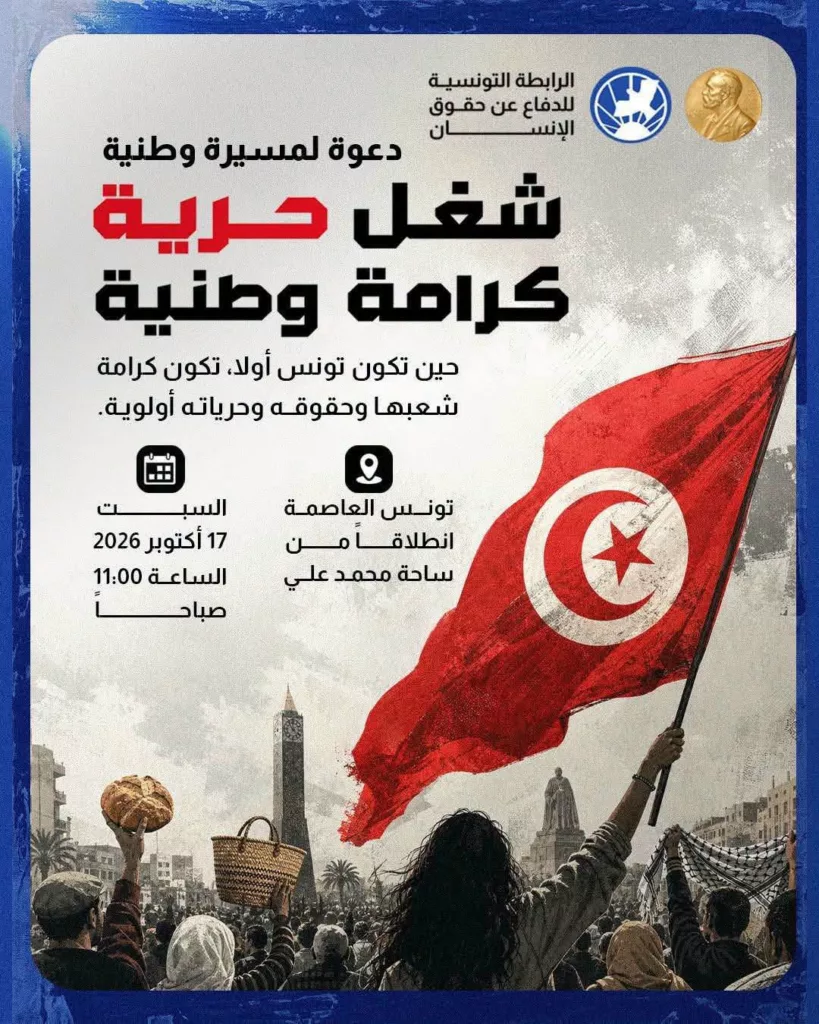
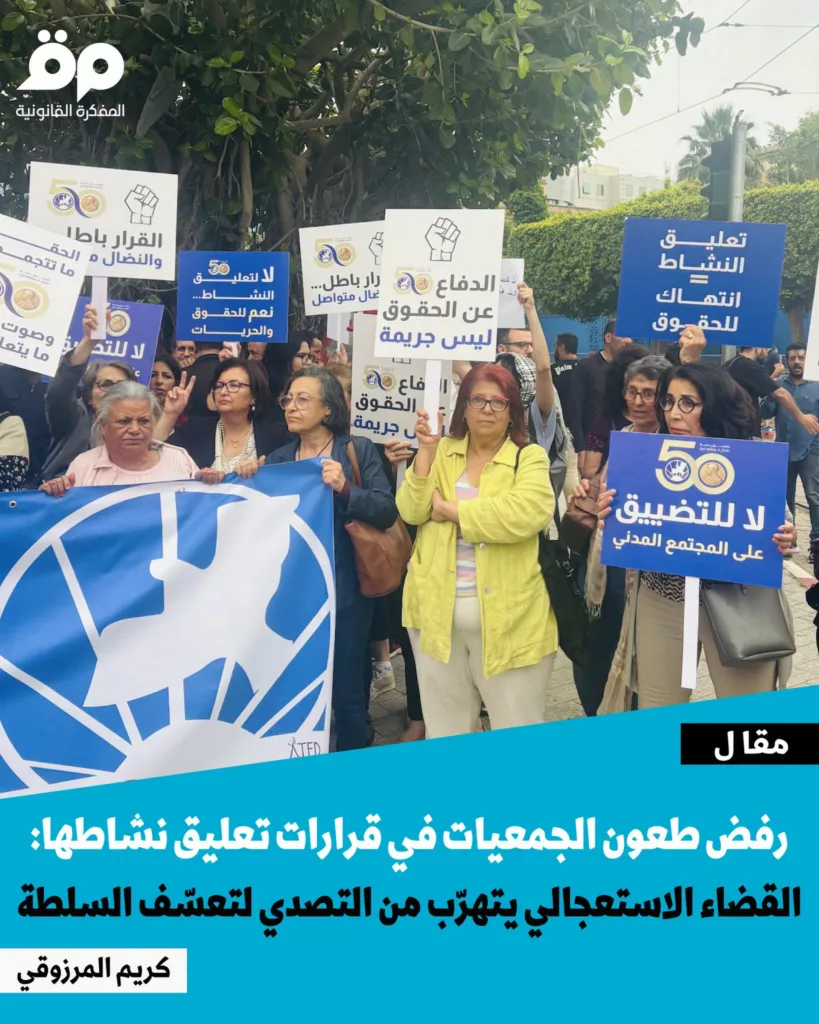
It is in this context that the demonstration on August 20, 2026, takes on its full significance. Despite the heat, the summer season, and the risk of repression, hundreds of people took to the streets peacefully. They demanded freedoms and democracy, but also water, electricity, healthcare, jobs, and public services worthy of the name.
This mobilization echoes the social movements that are spreading in Mahdia, Kairouan, Bizerte, Jendouba, Kasserine, and other regions. Citizens are increasingly refusing to silently endure shortages and the deterioration of their living conditions.
Yet the government’s response often remains one of security. In Mahdia, protests against water cutbacks even led to very serious charges of “conspiracy” and “forming a terrorist organization.” Demanding water should never lead a citizen to stand trial on such charges.
These protests show, however, that the wall of fear is beginning to crack. Citizens are speaking out again and taking to the streets. But this anger will remain fragile if it stays scattered.
The goal is not to erase the differences between political parties, unions, associations, and civic movements. The goal is to build a common ground centered on a few essential principles: freedom, democracy, the rule of law, social justice, dignity, public services, and the right to hold those in power accountable.
The challenge now is to connect local movements and transform scattered outbursts of anger into a social, civic, and peaceful force capable of making an impact.
Because water and freedom, electricity and democracy, health and the rule of law, work and dignity are no longer separate struggles. They all raise the same question: that of a state that functions, protects its citizens, and is accountable to them.
The crisis in Tunisia is therefore no longer merely political. It now affects the very conditions of daily life.
Under these circumstances, uniting democratic, social, and civil forces is no longer merely desirable. It has become a necessity to defend democracy, rights, and the lives and dignity of Tunisians.