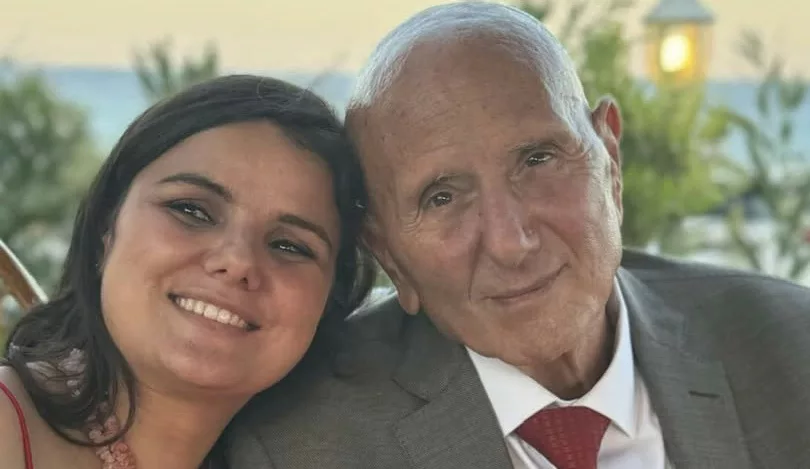
The tears shed by Haïfa Chebbi, a lawyer, as she left the prison after visiting her father, Ahmed Néjib Chebbi, her uncle Issam Chebbi, and several other political prisoners, were not merely those of a heartbroken daughter and lawyer. They were sincere, searing tears that encapsulated two forms of suffering at once: that of prisoners unjustly deprived of their freedom, facing injustice, illness, oppressive heat, and deprivation behind bars; and that of an entire country, weighed down by a succession of crises that make life more difficult every day for millions of Tunisians. These tears thus seemed to embody the state of Tunisia today: a battered country, where some suffer behind bars while others struggle to survive outside the prisons.
Haïfa Chabi left prison in tears, at a time when Tunisia is going through one of the most difficult periods in its recent history. Repeated power outages, water shortages, forest fires, dozens of deaths in hospitals, and mounting economic and social crises: citizens struggle every day to meet their most basic needs. But behind prison walls, this suffering is tenfold. Inmates endure it without even being able to protest their conditions of detention or seek a slightly more bearable refuge.
What does it mean for an elderly political prisoner, already ravaged by illness, to spend his days in this suffocating heat? What does it mean for families to wait for hours under the blazing sun, not only to catch a glimpse of their loved ones, but above all to find out if they will have the strength to endure one more day? These questions are neither a luxury of activism nor a mere debate on human rights reserved for the opposition. They concern us all. They challenge us and hurt us collectively.
For the most serious thing in a society is the moment when a political opponent ceases to be seen as a human being worthy of compassion. When the suffering of “the other” becomes a source of indifference—or even joy—it is society itself that begins to lose an essential part of its humanity.
It is true that, since the 2011 revolution, Tunisia has experienced deep political divisions. But what is at stake today goes far beyond the scope of an ordinary political confrontation. We are facing a crisis that strikes at the very heart of the state and raises a fundamental question: Do we want a state designed to protect human beings and guarantee their freedom, dignity, and rights? Or do we want a state to which citizens must submit without question, even if it means paying the price for their mistakes, choices, and failures?
Today, crises are multiplying in every direction: an economic crisis, an institutional crisis, a crisis of confidence, a crisis of civil liberties, a crisis in public services, and a political crisis that is worsening day by day. At the center of this landscape is power concentrated in the hands of a president who holds all the levers of decision-making but seems incapable of understanding the reality of the country. Instead of facing the consequences of his misjudgments, his stubbornness, and his inability to govern, he reduces the crisis to narratives of conspiracies, lobbies, and imaginary enemies created by his own rhetoric.
Today, all of Tunisia—both inside and outside prisons—is hoping for the same thing: that the state will rediscover its true purpose, that politics will regain its humanity, and that human beings will once again become the ultimate goal of power rather than its victims.
Haïfa Chebbi’s tears remind us, in a moment of rare sincerity, that what we risk losing in this succession of crises is not just water, electricity, or purchasing power. Above all, we risk losing our ability to recognize the humanity of those with whom we disagree and to reject injustice when it strikes others before it reaches us. The era of Kaïs Saïed has taught us a painful lesson: what affects others today will eventually affect us as well. Silence in the face of suffering protects no one; it only paves the way for more injustice and pain.
That is why Tunisia’s salvation will not come solely through the recovery of its economy or its institutions. It begins, first and foremost, with our ability to feel the suffering of our fellow citizens and to transform that empathy into commitment, responsibility, and action. It requires understanding that human dignity is indivisible, that its defense transcends political affiliations and ideological divides, and that what unites us in the face of injustice is infinitely stronger than what divides us in political debate.
For nations are not saved by lamentations over their decline, nor by the resignation of those who watch their collapse as mere spectators. They are saved when their citizens, despite their differences, decide to collectively shoulder their shared responsibility and take action to save their country before it is too late.