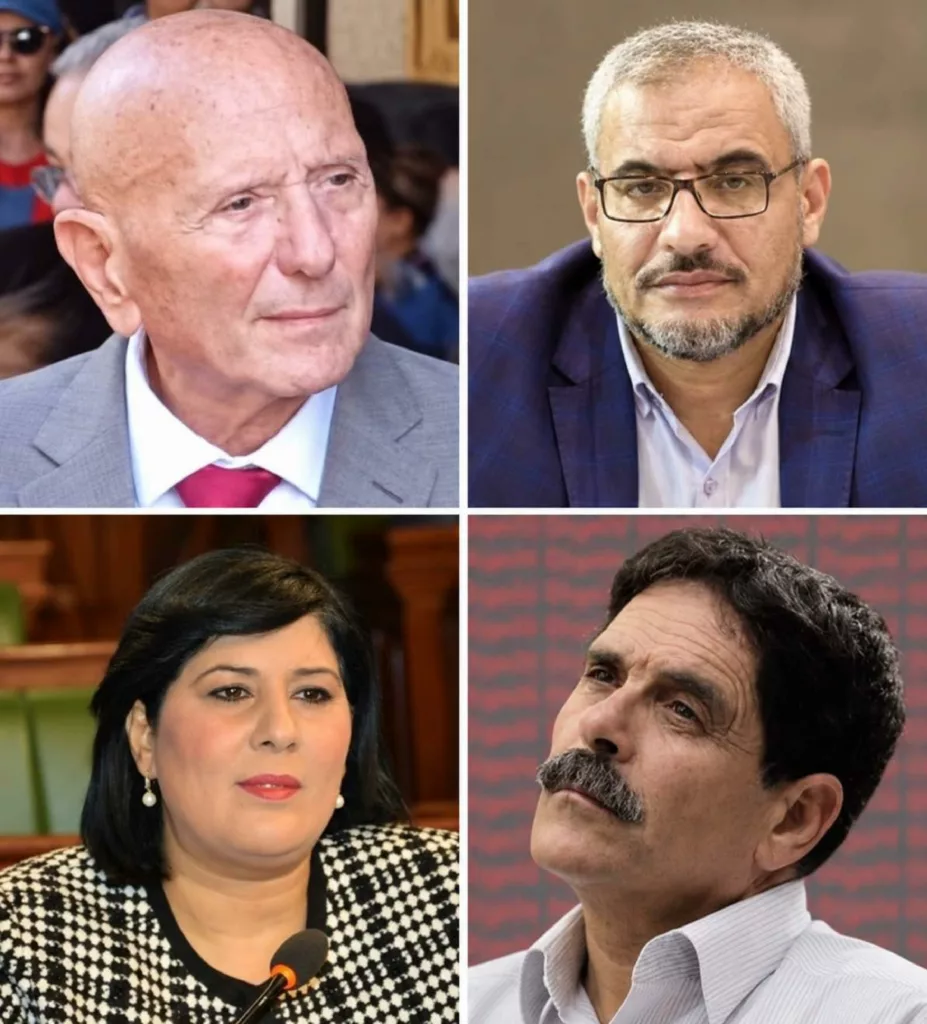
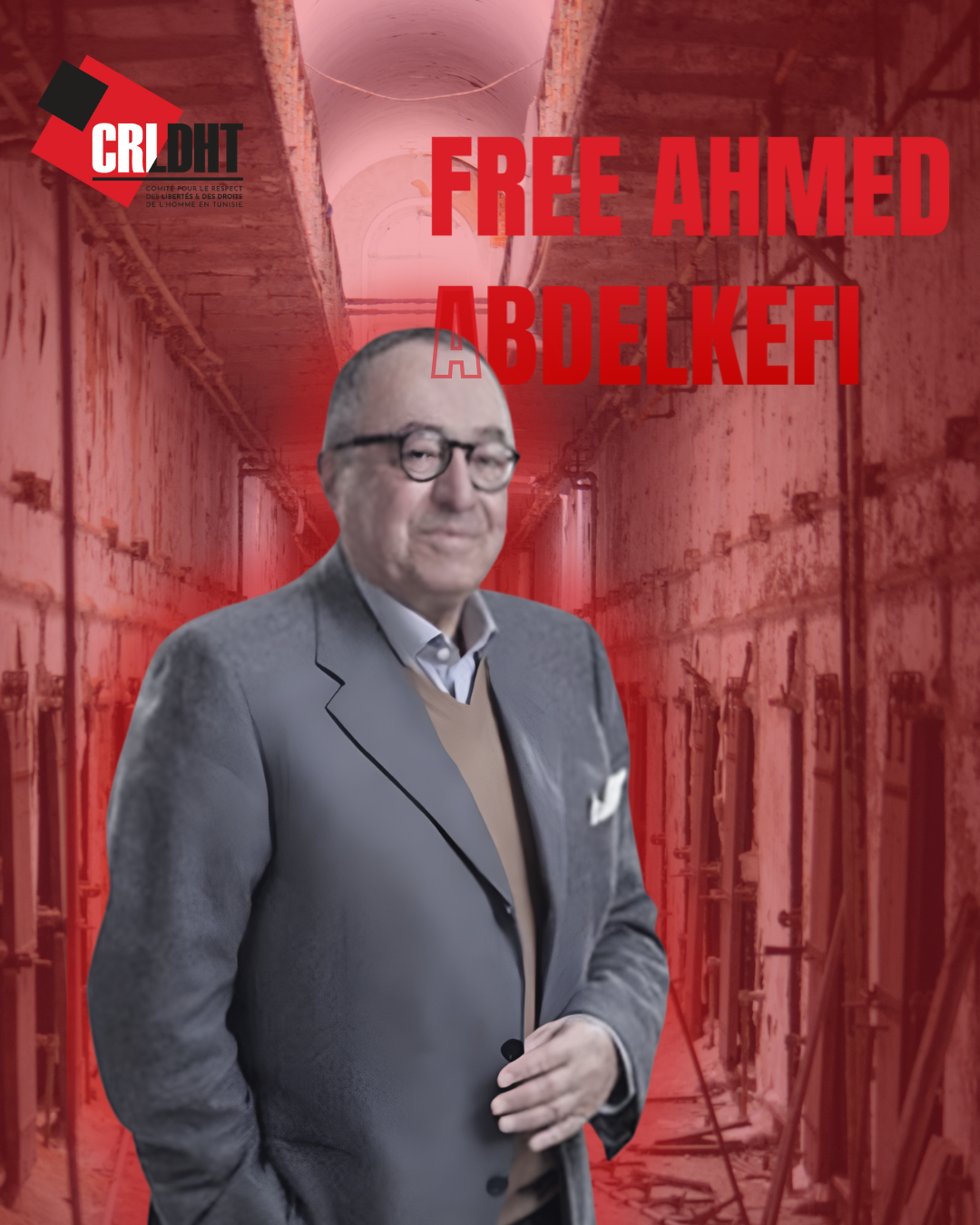
The imprisonment of Ahmed Abdelkéfi, 85, a respected figure and pioneer of the Tunisian financial sector, is a clear violation of the principles of the rule of law and proportionality of sentences. This measure illustrates a worrying trend: the use of the judiciary as a tool of intimidation and blackmail.
Ahmed Abdelkéfi is an entrepreneur and builder of the Tunisian economy, responsible for many of the country's landmark projects. In the 1970s, he was the designer and promoter of the Port El Kantaoui project, the Maghreb's first integrated tourist resort, which has since become a flagship of Tunisian tourism and a model of regional development. His career bears witness to a modern economic vision and an unwavering commitment to investment, job creation and Tunisia's international reputation.
This arrest is part of a continuing campaign to systematically denigrate and question Tunisian businessmen, which has been underway for several months. In January 2024, businessman Abdelaziz Makhloufi, founder of olive oil company CHO group and a major player in the country's industrial fabric, was arrested and is still being held without trial. These prosecutions, like the one against Ahmed Abdelkéfi, are part of a climate of generalized intimidation and a political message of defiance towards the country's economic players.
According to article 27 of the Tunisian Constitution (2022): "The presumption of innocence is guaranteed to all persons until their guilt has been definitively established by a fair trial".
Similarly, article 9 of the International Covenant on Civil and Political Rights (ICCPR), ratified by Tunisia, enshrines this fundamental principle.
Under Tunisian law, pre-trial detention is an exceptional measure (articles 85 et seq. of the Code of Criminal Procedure). It can only be ordered in cases of proven danger of absconding, destruction of evidence or serious threat to public order.
In this case, however, none of these criteria has been established. Putting a sick octogenarian who has been out of business for several years under a committal order, instead of judicial supervision or house arrest, constitutes a violation of legality and proportionality.
A case symptomatic of a climate of widespread suspicion
The Abdelkéfi case is part of proceedings involving over forty individuals and companies, including Tunisie Valeurs, Tunisie Leasing, Tuninvest/AfricInvest, Al-Mizabi, Sima Corp, Jonimia.com, PC Retail Outlet, Mitigan, as well as well-known personalities such as Boutheina Ben Yaghlane, Hafedh Sbaa, Hédi Ben Ayed, Tahar Biayhi, Jamel and Walid Al-Arem, Lotfi Al-Nazer, Fethi Hachicha. The confusion between non-executive directors and operational decision-makers contravenes the principle of personal liability under criminal law (Article 1 of the Tunisian Penal Code: "No offence, no punishment without law"). Criminal liability can only be incurred on the basis of directly attributable facts and acts.
A repressive mechanism that goes beyond the individual case
The Ahmed Abdelkéfi case cannot be considered an isolated one. It is part of a systemic repressive dynamic which, far from being limited to the economic sphere, indiscriminately affects players in the private sector, political opponents and representatives of civil society. This approach reflects a deliberate strategy of instrumentalizing justice for the purposes of social and political control and repression, in clear violation of the principles of the rule of law, the presumption of innocence and Tunisia's international commitments, notably under the International Covenant on Civil and Political Rights (art. 9 and 14) and the African Charter on Human and Peoples' Rights (art. 6 and 7).
Instead of applying the United Nations Convention against Corruption (ratified by Tunisia in 2008), which requires rigorous, transparent and fair investigations, the regime fosters a climate of arbitrariness that paralyzes the economy and weakens society.
This exceptional justice has destructive effects:
- it destroys investor confidence, in contradiction with Article 12 of the Constitution, which guarantees entrepreneurial freedom;
- it accelerates the flight of capital and skills, depriving Tunisia of its most precious human and economic resources;
- it delegitimizes the judicial institution, perceived as an instrument for settling political scores.
The inaction of the Utica, which is supposed to defend the interests of the private sector, constitutes a serious breach of its mission. Neither the denunciation of judicial abuses, nor the challenge to economically disastrous laws (the law on cheques, the law banning subcontracting and fixed-term contracts) have been made public. This silence is tantamount to complicity by omission.
In the light of constitutional and international principles, we demand :
- The immediate release of Ahmed Abdelkéfi, in accordance with article 85 of the Code of Criminal Procedure and the principle of proportionality.
- An end to the abusive use of preventive detention, contrary to article 27 of the Constitution and article 9 of the ICCPR.
- Full transparency of proceedings, with publication of charges, full access to lawyers and respect for the adversarial process (article 108 of the Constitution, article 14 of the ICCPR).
- Clarification of criminal liability, making a legal distinction between non-executive directors and operational managers.
- The creation of an independent control mechanism for economic and financial affairs, guaranteeing the effective application of the Merida Convention.
- The firm commitment of the Tunisian authorities to respect their international obligations in terms of human rights, economic freedom and fair trials.
We express our solidarity with the family of Ahmed Abdelkéfi and all victims of arbitrary procedures. We call on :
- Tunisian civil society to oppose the trivialization of arbitrariness;
- professional organizations and trade unions to defend the independence of the judiciary and entrepreneurial freedom;
- international partners to remember that all cooperation must be conditional on Tunisia's respect for its international commitments.
Tunisia does not need show trials or scapegoats. It needs impartial justice, transparency and respect for the fundamental principles of its Constitution and its international obligations. The true strength of a state lies not in the humiliation of its builders, but in the solidity of its institutions and the rule of law.