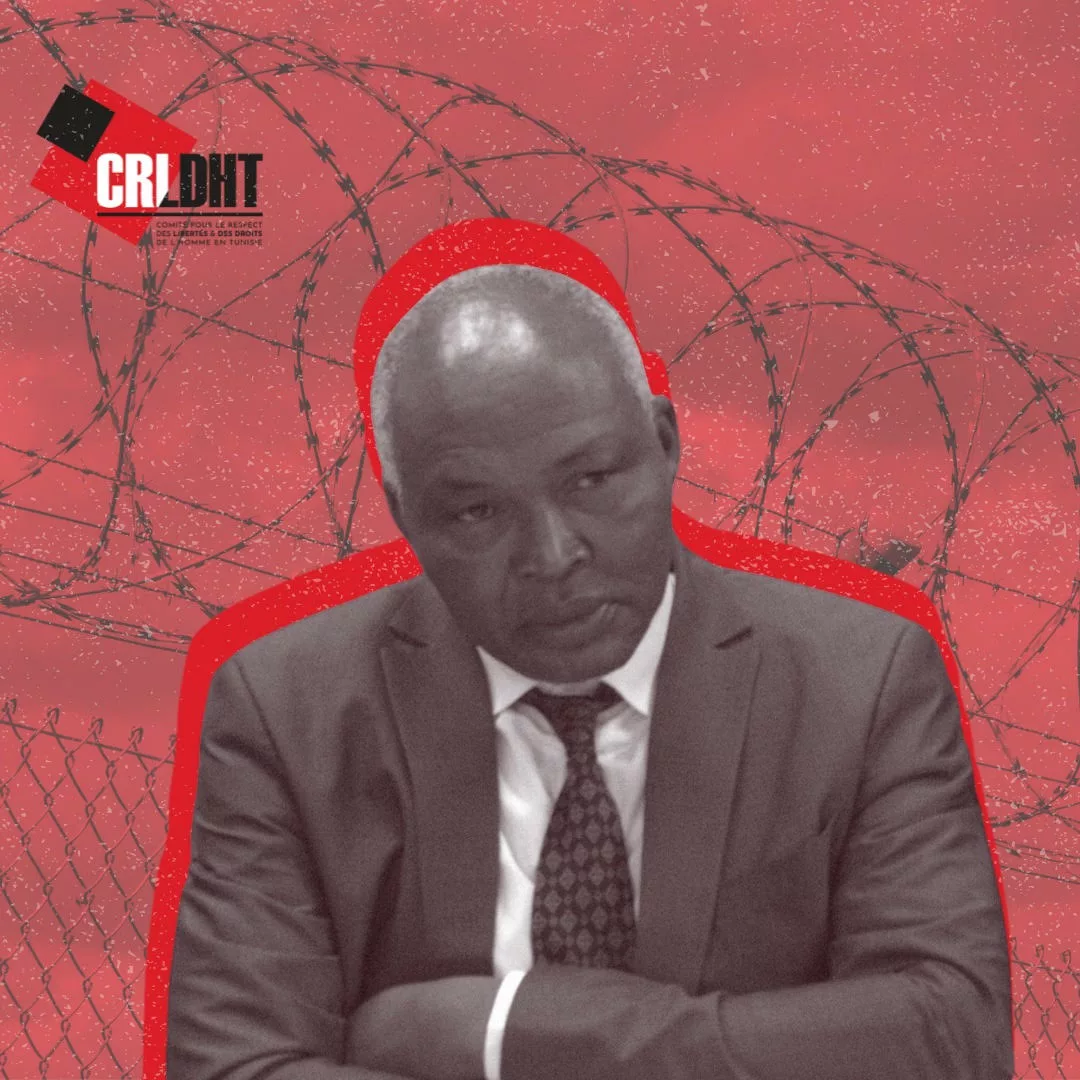
On September 28, 2026, the Médenine Court of Appeals increased the sentence imposed on Abdallah Saïd, president of the Enfants de la Lune de Médenine association. Originally sentenced to one year in prison at the trial court level, he was ultimately sentenced to two years in prison without parole under Article 297 of the Penal Code in a financial case.
This decision extends a detention that has been ongoing since November 2024. It delays by several weeks a release that should have taken place after the sentence handed down in the first instance was served. Above all, it represents a relentless judicial campaign against a man whose commitment to serving the most vulnerable people is well known and widely recognized throughout the Médenine region.
A case built step by step, as the charges unfolded
Abdallah Saïd was arrested as part of the crackdown on solidarity organizations and activists, particularly those working with migrants and vulnerable populations.
At the outset of the case, the charges were particularly serious: undermining the external security of the state, terrorism, and money laundering. Ultimately, these charges were not upheld. The case then focused on financial charges. Subsequently, in its April 21, 2026, ruling, the Médenine Court of First Instance dismissed the charge of embezzlement of private funds due to lack of evidence and replaced it with the charge of “simple treason,” as defined in Article 297 of the Penal Code.
The prosecution appealed this decision. This appeal prevented Abdallah Saïd’s release, even though he had already served a prison term longer than the one-year sentence handed down in the first instance. The Court of Appeals ultimately doubled that sentence.
This series of charges—ranging from counterterrorism to endangering national security, then to money laundering, and finally to a financial offense—paints a picture of a “case with a thousand charges,” in which the most serious charges are dropped one after another, while the defendant remains in custody.
A humanitarian effort turned into suspicion
Before the Court of Appeals, Abdallah Saïd explained the nature of his organization’s work and the connection between the disputed expenses and its humanitarian activities: providing care for vulnerable individuals; offering medical, psychological, and social support; and assisting children with xeroderma pigmentosum—known as “moon children’s disease”—as well as other marginalized groups.
He also explained that the banking difficulties faced by the association had led him to use his personal account to pay salaries and cover expenses related to its activities. The defense highlighted the errors and methodological shortcomings in the expert report on which the investigation largely relied. It pointed out that the donors monitored expenses, received supporting documents and financial reports, and that none of them had filed a complaint against the association.
Abdallah Saïd’s detention itself made it more difficult to gather all the supporting documents needed for his defense. It also brought the association’s activities to a standstill, with direct consequences for the people who depended on its assistance.
The justice system should examine any management-related issue objectively, while respecting the rights of the defense and the presumption of innocence. But it cannot be used to criminalize community involvement or to destroy, through imprisonment, a solidarity effort that has been carried out openly for years.
A form of selectivity that raises the issue of racism
The case of Abdallah Saïd cannot be viewed in isolation from the political climate that has accompanied the criminalization of nonprofit and humanitarian work in Tunisia. Stigmatization campaigns have singled out organizations working with migrants as responsible for alleged “colonization” projects or forced resettlement. These campaigns have fueled dangerous hostility toward sub-Saharan foreigners, as well as toward Black Tunisians.
Abdallah Saïd is Tunisian, of Chadian descent, and Black. His defense team emphasized that he had been made a scapegoat for an official and public narrative that all too often equates humanitarian action with a threat to the nation.
The situation is serious: in several similar cases involving activists and community leaders, some individuals were eventually released, even after long periods of detention. But Saadia Mosbah and Abdallah Saïd, two prominent Black figures in Tunisian civil society, remain imprisoned. This reality raises questions about discriminatory treatment, the targeting of specific individuals, and the role of racial prejudice in a crackdown on solidarity activists.
When the crackdown on civic activism hits two Black activists—who are committed to helping the most vulnerable populations and migrants—so hard, silence is unacceptable. The authorities must respond to this issue with concrete actions: respect for equality, an end to stigmatization campaigns, and effective safeguards against all forms of racial discrimination.
Freedom for Abdallah Saïd
Abdallah Saïd should never have spent nearly two years in prison for acts related to the activities of a humanitarian organization. His detention, the successive prosecutions, the increase in his sentence on appeal, and the paralysis of his organization constitute a profound injustice.
We demand his immediate release, the overturning of his conviction, and the dismissal of the charges brought against him in connection with his civil and humanitarian work.
We also demand the release of Saadia Mosbah and an end to all legal proceedings intended to intimidate, discredit, or silence those who defend human dignity.
Standing up for vulnerable people is not a crime. Organizing solidarity is not treason. And no one should be imprisoned simply because they are Black, because they help migrants, or because they refuse to abandon those whom society has forgotten.