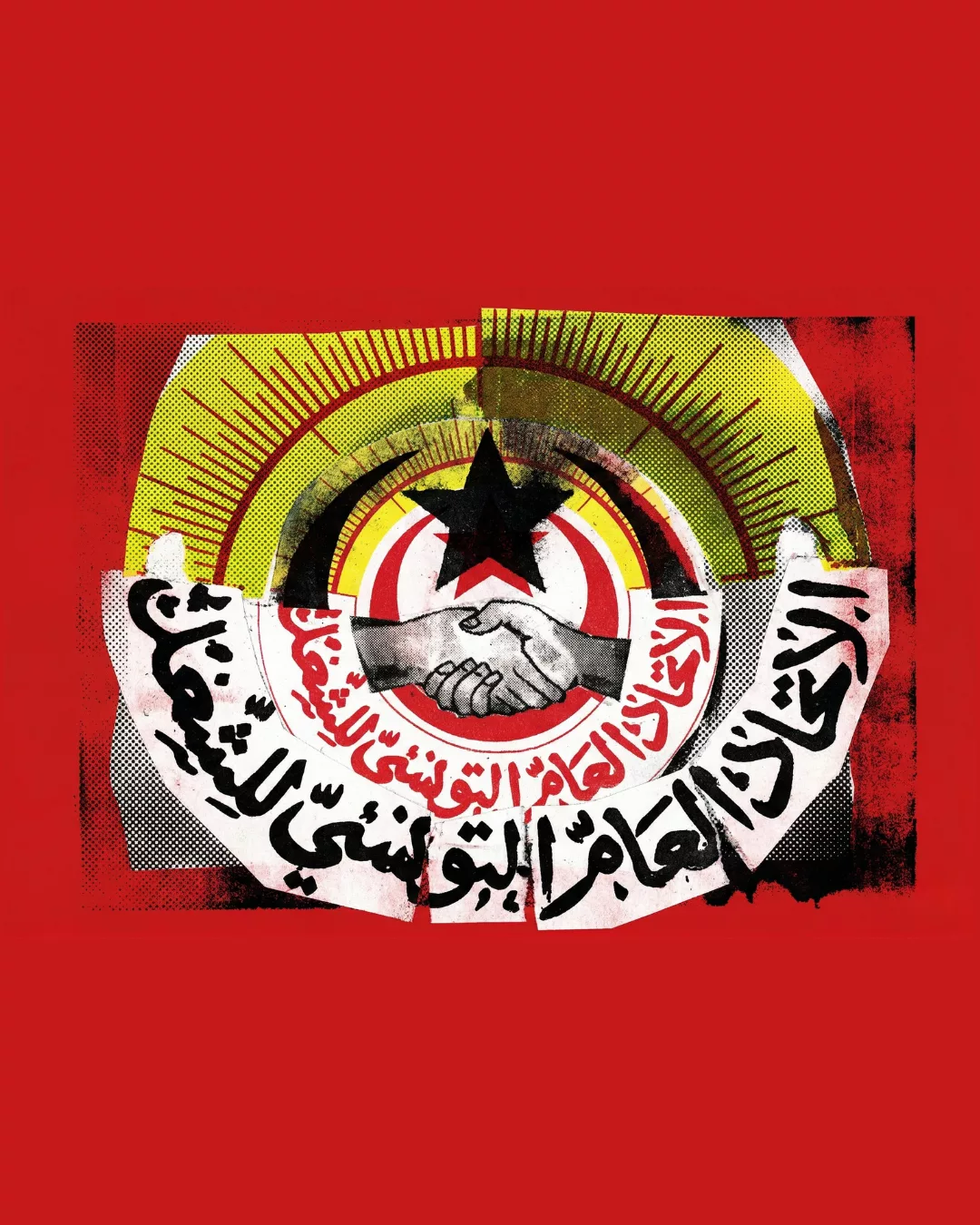
The decision to suspend the automatic deduction of union dues from civil servants' salaries cannot be interpreted as a simple administrative measure. It is an act with serious political and social consequences, aimed at weakening the country's main trade union organization: the Tunisian General Labor Union (UGTT).
Beyond the technical justifications put forward, this decision comes amid a context of shrinking civic space, marginalization of intermediary bodies, and concentration of power. It calls for a clear position: solidarity with the UGTT in defending its independence, its social role, and its historical legitimacy.
An attempt at financial suffocation
For more than half a century, automatic deduction of contributions—approximately three dinars per month for civil servants—provided a stable source of income for the union. Nearly 500,000 civil servants were affected.
These dues are not a privilege. They are the concrete expression of union rights and enable the organization to ensure:
- legal assistance for workers,
- union training,
- social expertise,
- the collective defense of professional interests.
Suspending this mechanism amounts to deliberately weakening the means of action of a major social actor.
The argument that the levy would undermine individual freedom does not hold water: membership is voluntary. Transforming a stable system into an uncertain collection system, in a context of crisis in purchasing power, exposes the organization to a sharp decline in its resources. It is political pressure disguised as administrative reform.
An organization facing a double challenge
The UGTT is certainly going through a period of internal tensions linked to differences over governance and preparations for the March 2026 congress. But these debates are part of its own democratic life. They must be resolved by its legitimate structures, not exploited to justify its weakening.
Every living organization experiences crises. The history of the UGTT—from 1946 to the revolution of 2011, through major social confrontations—shows its ability to overcome trials and reinvent itself.
Solidarity with the UGTT does not mean blindness. It means refusing to see its weaknesses exploited in order to diminish its role.
A pillar of social dialogue and national balance
The UGTT is not an ordinary trade union. It is a key player in national history, a partner in social dialogue, a mediator in major political crises, and a constant defender of social rights.
The deterioration in relations between the union and the government cannot justify calling into question its financial and organizational autonomy.
In a country facing inflation, debt, and precariousness, weakening the main intermediary body amounts to destabilizing the entire social system. Stability is not built by isolating collective actors, but by recognizing them.
The March convention: a moment of collective responsibility
On March 25, 26, and 27, the UGTT will hold its congress. This meeting will be crucial for clarifying internal orientations, strengthening organizational democracy, and consolidating its unity.
This moment should not be one of weakness, but one of awakening.
The union has raised the possibility of a general strike to defend social rights and collective bargaining. In any social democracy, striking is a legitimate right. Criminalizing or disqualifying this prospect in advance would be tantamount to denying the very essence of pluralism.
Necessary solidarity
Supporting the UGTT today means:
- defend freedom of association,
- protect the autonomy of social organizations,
- refuse to use financial drying up as a means of exerting pressure,
- remind that workers' rights are non-negotiable.
This is not a partisan alignment. It is a matter of principle: no power can govern sustainably by marginalizing social mediation.
The UGTT has helped shape the modern Tunisian state. It has paid the price for social and democratic struggles. It remains a forum for collective defense against inequality and injustice.
In the current crisis, national and international solidarity with the UGTT is not only legitimate, but necessary.
The March congress will reveal how the union intends to move forward. But one thing is certain: weakening the UGTT undermines the social balance of the entire country.