The situation in Tunisia is alarming. Under the government of Kaïs Saïed, the law of morality has become a powerful tool of repression, aimed at silencing all opposition. Initially intended to preserve "public morality", this vague and subjective law allows citizens to be charged for behavior or remarks simply deemed unseemly by those in power. The result: a wave of arrests targeting content creators, activists and journalists, whose only "crime" is to have expressed critical thought or an alternative lifestyle.
The law is shockingly ambiguous, with no clear definition of what constitutes a breach of "public decency". This vagueness allows the authorities to interpret and apply the law as they see fit, targeting anyone for arbitrary reasons. A simple online comment, a photo deemed provocative or even a joke can be enough for someone to be arrested, prosecuted and, in some cases, convicted. The question of morality thus becomes an alibi, a pretext for creating a climate of fear and controlling the population through targeted repression.
In a true constitutional state, such a law would be unacceptable. Modern democracies are based on transparent and precise laws, framing state action to prevent any abuse of power. In Tunisia, on the other hand, the "morality" law is a liberticidal instrument of oppression, incompatible with the freedom of expression guaranteed by the Constitution. It imposes widespread self-censorship and directly undermines the foundations of a democratic society by repressing independent voices.
The application of this law represents a worrying step backwards for a Tunisia which, after the 2011 revolution, had begun a transition towards democracy and freedom of expression. The current regime, however, seems determined to dismantle these gains. Every arrest, every trial symbolizes this desire to control minds and shape a society in line with the restrictive ideals of those in power. By targeting content creators, young people and critical voices, the government is undermining the very foundations of public space, preventing any dialogue and any questioning of authority.
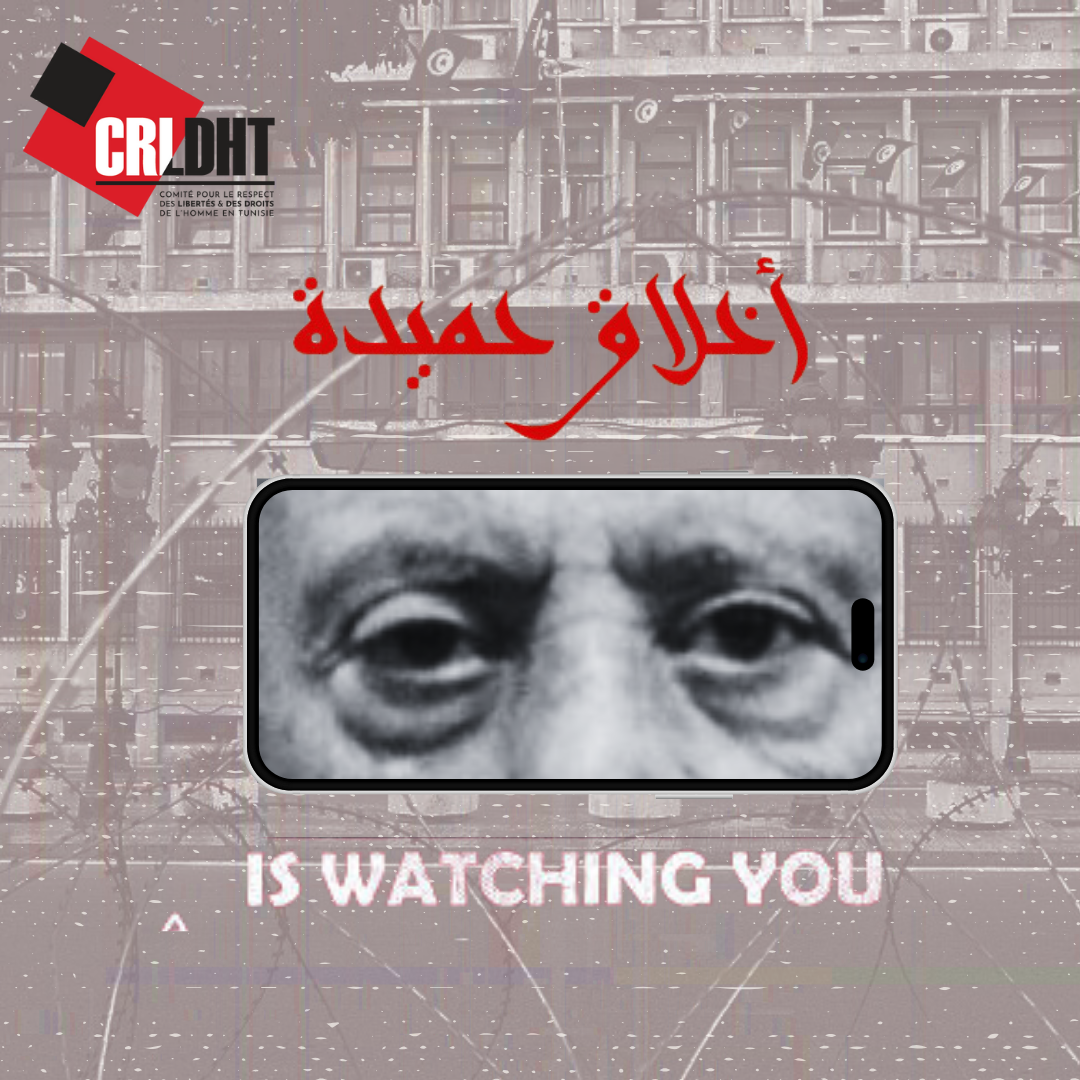
Far from guaranteeing public safety or preserving social values, this law creates a climate of fear. Tunisian citizens are reduced to watching their words, their publications and their behavior, in constant fear that the slightest gesture could earn them an accusation of immorality. This environment of self-censorship is characteristic of an authoritarian regime, where individual freedoms are sacrificed in favor of state-imposed order. Under such control, creativity, diversity of opinion and difference of thought are all threatened.
Faced with this authoritarian drift, it is imperative that the international community, along with human rights organizations, exert pressure on the Tunisian government. Tunisia, once a symbol of hope, deserves a legal system that protects and respects freedoms. Prolonged silence in the face of this oppression could not only legitimize this law, but also encourage other governments to use similar means to muzzle their own populations.
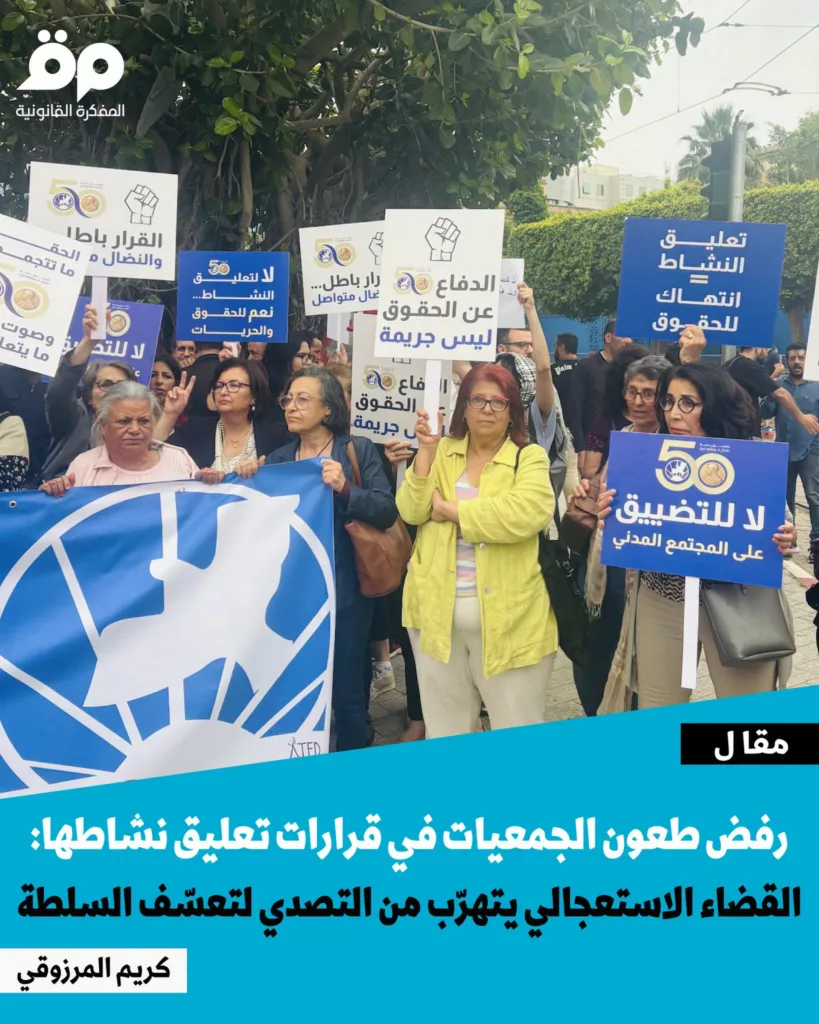
The fight for freedom in Tunisia cannot be abandoned. Despite the pressure, civil society is still holding out. It is our collective duty to support this resistance and to demand a future where Tunisian citizens no longer live under the threat of arbitrary laws, but in a state governed by the rule of law, where their voices are heard and respected.