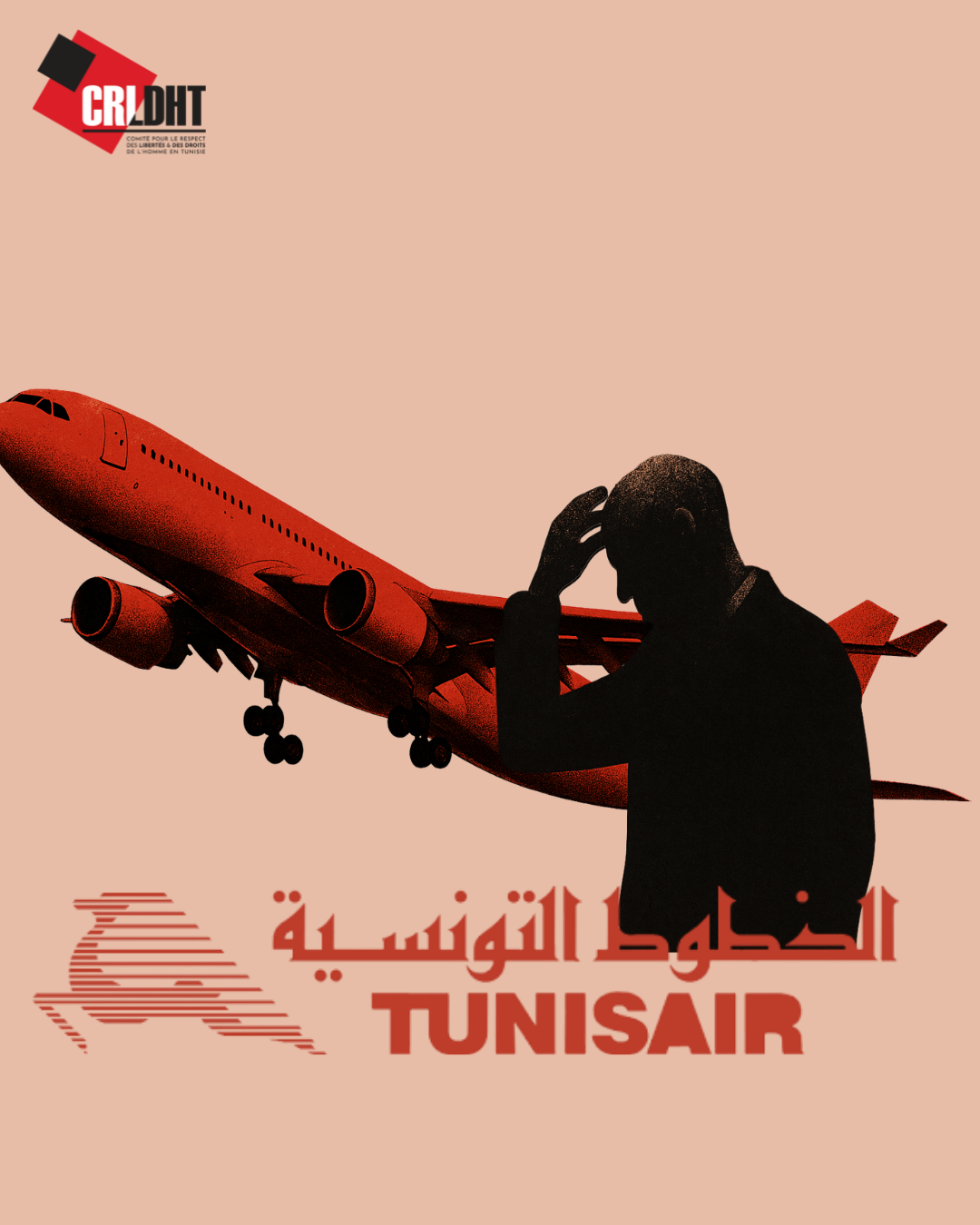
Since February-March 2025, the national airline Tunisair has been going through a new critical phase. Cancelled flights, cascading delays, growing passenger anger, internal malfunctions... all signs of a public service that's running out of steam. But more than the crisis itself, it's the way it's being managed - or rather, instrumentalized - that's attracting attention.
Once again, the president's reaction came late, against a backdrop of already widespread tension. The Ministry of Transport dismissed several officials, including Habib Mekki, Chairman of the Board of Directors, who was replaced by Tarak Bouazizi, and entrusted technical management to engineer Issam Hamam. These decisions, described as measures to "secure operations", were accompanied by disciplinary threats against station managers. But this institutional agitation does little to mask a deeper reality: Tunisair is hostage to a power structure that exploits failings rather than correcting them.
A late, theatrical presidential address
In early March, Chairman Kaïs Saïed called for a "recovery plan". He accused the company of having reduced its fleet from 24 to 10 aircraft, pointed to abnormally long maintenance times (123 days in Tunisia compared with 10 elsewhere) and denounced disastrous service quality. But behind these denunciations, there is no serious reform, no global project, just another staging, faithful to a now well-honed modus operandi.
As in the case of drug shortages, higher education strikes and the young doctors' crisis, Kaïs Saïed emerges a posteriori, in the posture of lone vigilante, without ever involving the institutions concerned or proposing structural solutions. Crises become political opportunities, not moments of transformation.
Governance of symptoms, not solutions
Presidential management of Tunisair embodies a power incapable of anticipating, which is content to react in spectacular fashion. Decisions are taken neither to plan nor to reform, but to preserve the image of an omniscient leader. Every crisis follows the same pattern: swift dismissals, loyalist appointments, accusatory speeches, and a deafening silence on the root causes.
The causes are well known: a weakened economic model, massive debt, dilapidated infrastructures and a management undermined by clientelism. The latest turnaround plan (2024) brought only a marginal improvement. CEO Khaled Chelly has been jailed for corruption. And yet, there has been no questioning of the political decision-making chain, no independent audit, no openness to dialogue with unions or employees.
Scapegoats for internal use
The sacking of Mekki and the threats against the technical staff were nothing more than a smokescreen. For while fuses are being sacrificed, others - closer to power - remain untouchable. Halima Ibrahim Khouaja, appointed Managing Director in December 2024 with presidential approval, is still in office. Yet she has been at the helm of Tunisair since the start of this crisis.
Several members of parliament, including those from the presidential camp, are asking: why this selectivity? Why is this director, whose appointment has been criticized for favoritism, not held accountable, while others, less exposed, are ruthlessly dismissed? Because in high places, political loyalty takes precedence over competence.
A crisis revealing a locked system
Tunisair is not just suffering from technical mismanagement. It is the symptom of a closed State, where public companies are run without transparency, without parliamentary control, and without the participation of intermediary bodies. No reform can take place in such a context, as all real decisions are centralized in the hands of a president who refuses to accept any co-responsibility.
The government acts alone, speaks alone, appoints alone. Unions are ignored, users scorned, experts dismissed. Anti-corruption policy is used for targeted purges. It's not the state that's facing up to the crisis: it's power that's staging itself, creating the illusion of action.
Without a change of method, Tunisair will remain in crisis
As long as crises are treated as presidential communication tools, and not as calls for reform, Tunisair will neither be recovered nor saved. Selective dismissals and media operations solve nothing. The only credible path is that of democratic governance, based on competence, openness and shared responsibility.
But this requires a radical change of method: we need to move away from authoritarian verticality, stop exploiting crises for their own ends, and put the public interest back at the heart of our actions. Otherwise, the national airline will simply repeat the same crash over and over again.